Key Takeaway
The cooling of the global AI hardware cycle signals a pivot from aggressive growth to defensive capital preservation. Indian IT investors must prepare for downward revisions in revenue guidance as global tech capex shifts from expansion to optimization.
A sudden contraction in South Korean semiconductor giants has sent shockwaves through global markets, signaling a potential peak in the AI investment cycle. We analyze the cascading effects on India's IT services giants and electronics manufacturers, providing a roadmap for navigating the ensuing volatility.
The End of the AI Supercycle? Decoding the Seoul Sell-off
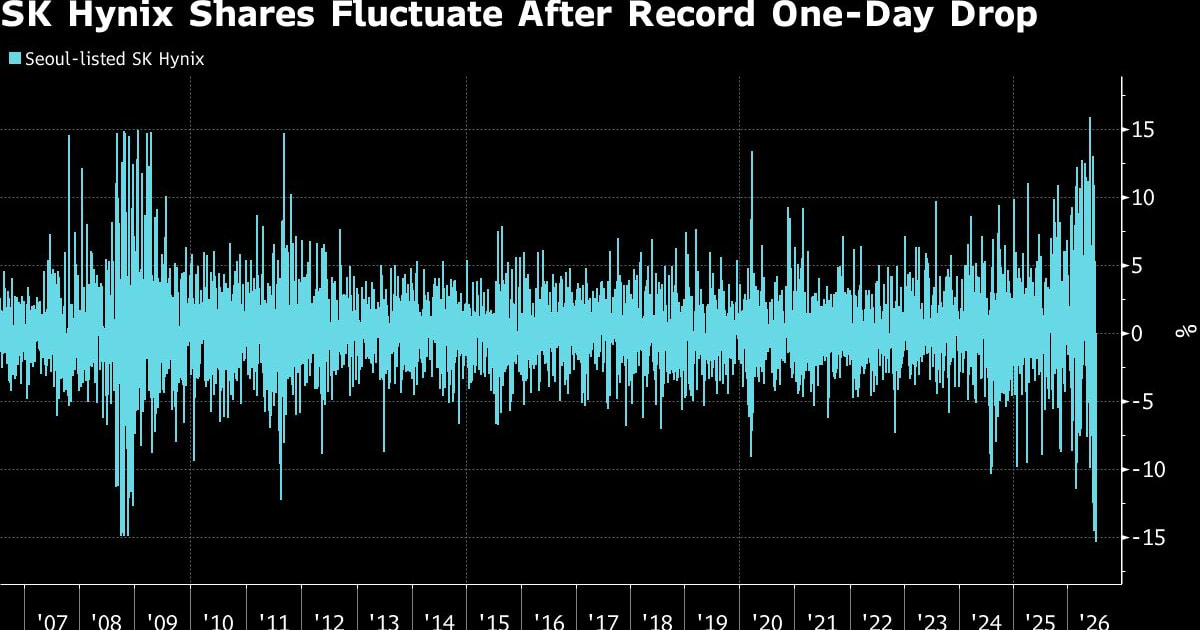
The global semiconductor industry, which has served as the primary engine for equity market gains over the past eighteen months, is flashing warning signals. The recent 8% cratering of the Seoul stock exchange—driven by heavy-weight losses in Samsung Electronics and SK Hynix—is not merely a localized correction; it is a structural reassessment of the AI hardware investment thesis. As the world’s primary memory chip suppliers face softening demand, the ripple effects are moving swiftly toward India’s IT-heavy benchmarks.
For years, the 'AI narrative' has allowed global tech firms to justify massive capital expenditure (capex) budgets. However, as the return on investment (ROI) for generative AI remains elusive for many enterprise clients, the appetite for high-cost hardware is beginning to wane. When the hardware cycle turns, the service layer—India's massive IT sector—is rarely spared.
How does the global chip glut impact Indian IT stocks?
The Indian IT services industry, which contributes significantly to the Nifty 50 and Nifty IT indices, operates on a lag-based relationship with global tech capex. When firms like Nvidia, Samsung, and SK Hynix throttle back production, it indicates that Western corporate clients are reaching 'AI fatigue.' Historically, when global tech spending decelerates, Indian IT firms see a compression in their deal pipelines, particularly in discretionary digital transformation projects.
During the 2022 tech correction, the Nifty IT index suffered a drawdown of over 25% as the market priced in a recessionary environment. While the current scenario is driven by supply-side dynamics rather than macroeconomic contraction, the outcome is eerily similar: a re-rating of valuation multiples that had become stretched during the AI frenzy.
Stock-by-Stock Breakdown: Who is Most Vulnerable?
The impact of this semiconductor slowdown is not uniform. We categorize the exposure as follows:
- TCS (Tata Consultancy Services): With a P/E ratio currently hovering near 30x, TCS remains a defensive play due to its massive scale. However, any reduction in client IT budgets will directly pressure their operating margins, which are already facing wage-inflation headwinds.
- Infosys: As a leader in large-scale digital transformation, Infosys is highly sensitive to shifts in North American tech spending. A cooling in AI infrastructure investment could lead to a 'wait-and-see' approach from their top-tier banking and retail clients.
- Dixon Technologies & Kaynes Technology: These firms are the direct victims of the hardware glut. As domestic electronics manufacturers, they rely on imported memory components. A supply chain disruption or a price-war in the global memory market creates significant inventory valuation risks and margin volatility.
- HCL Technologies: Given their heavy reliance on engineering and R&D services, HCL is uniquely positioned. If AI research spending slows, their high-margin R&D contracts may see renewal delays, impacting their bottom line more severely than the broader sector.
The Contrarian View: Bulls vs. Bears
"The correction is a healthy cleansing of speculative froth," argues the Bull case. They contend that AI infrastructure is a decade-long secular trend, and temporary supply-demand imbalances are typical of nascent technologies. The Bear case, however, points to the 'Capex Exhaustion' theory, suggesting that corporations can no longer justify the astronomical costs of AI deployment without clear, bottom-line revenue impact.
Actionable Investor Playbook
In a high-volatility environment, investors should shift their focus from 'growth-at-any-price' to 'value and yield.'
- Hedge with Gold: As a traditional safe-haven, gold remains the best hedge against tech-sector volatility. Increase allocation by 5-10% to protect against currency fluctuations.
- Rotate to Defensive Sectors: FMCG and Pharma offer the stability required during cyclical downturns. Look for companies with strong cash flows and low debt-to-equity ratios.
- Watch for Entry Points: Do not 'catch a falling knife.' Wait for the Nifty IT index to retest its 200-day moving average before adding to core positions in IT services.
Risk Matrix
| Risk Factor | Probability | Impact |
|---|---|---|
| Sustained AI Capex Slowdown | Medium | High |
| Supply Chain Cost Inflation | High | Medium |
| INR Depreciation vs. USD | Medium | Low |
What to Watch Next
Investors should closely monitor the upcoming quarterly results from US-based cloud providers (AWS, Azure, Google Cloud). Their 'Cloud Capital Expenditure' line items are the leading indicator for Indian IT revenue growth. Additionally, keep an eye on the upcoming RBI monetary policy committee meeting; any hint of a rate cut could provide a floor for domestic-facing stocks, partially offsetting the weakness in export-oriented IT firms.
Disclaimer: This content is generated by WelthWest Research Desk based on publicly available reports and is for informational purposes only. It does not constitute financial advice, investment recommendations, or an offer to buy or sell securities. Always consult a qualified financial advisor before making investment decisions.