Key Takeaway
Amazon’s transition from a retail platform to a global logistics behemoth forces a permanent margin compression for Indian courier firms. Investors must pivot from volume-growth narratives to operational efficiency metrics as captive delivery networks erode 3PL pricing power.
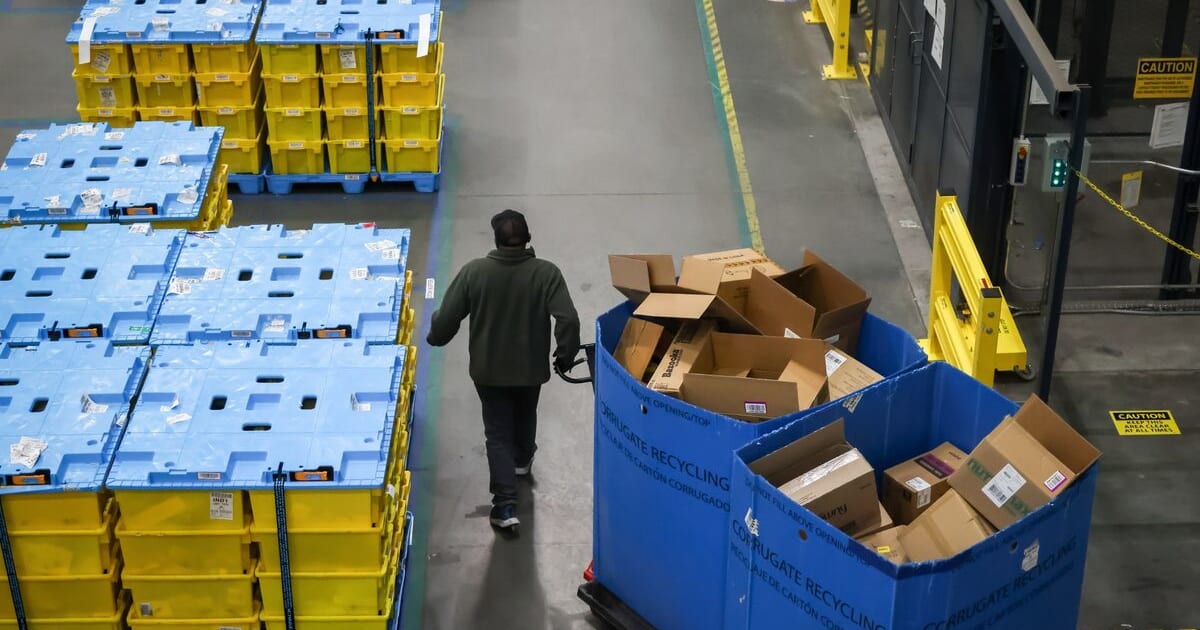
Amazon’s pivot to internal logistics is a structural shift that disrupts the traditional courier model. In India, this intensifies competition for firms like Delhivery and Blue Dart, triggering a potential margin war. We break down the winners, losers, and the critical risks facing the Indian supply chain sector.
The Amazon Logistics Pivot: A Structural Threat to Indian Logistics
The global logistics landscape is undergoing a tectonic shift. As Amazon aggressively scales its captive delivery infrastructure, it is no longer merely a retail platform; it is becoming a primary logistics service provider. This move, which has already sent shockwaves through global giants like FedEx and UPS, is now creating a ripple effect in the Indian market, where the battle for last-mile dominance has reached a fever pitch.
For investors, this is not just a competitive challenge—it is a structural re-rating of the Indian logistics sector. As Amazon reduces its reliance on third-party logistics (3PL) providers to optimize its own costs, the pricing power of specialized courier firms is being systematically dismantled.
Why is Amazon’s In-House Delivery Strategy a Game Changer Now?
Historically, e-commerce giants relied on a hybrid model, utilizing 3PL players to handle the volatility of festive season spikes. However, Amazon’s investments in proprietary fleet management, warehouse automation, and AI-driven route optimization have reached a critical mass. By internalizing the high-volume, predictable segments of the supply chain, Amazon effectively cream-skims the most profitable delivery routes, leaving 3PL providers to compete for the costlier, lower-density areas.
This shift is occurring at a time when Indian logistics companies are struggling with high interest rates and the capital-intensive nature of scaling nationwide networks. The 'Amazon effect' forces these companies into a catch-22: either lower prices to retain e-commerce volumes and sacrifice margins, or pivot to non-e-commerce segments where competition is already fierce.
How will Amazon’s logistics expansion affect Indian courier stocks?
The Indian logistics sector has long traded on the promise of e-commerce-led growth. As Amazon expands its captive network, that thesis is under duress. We are witnessing a divergence between asset-light, tech-enabled players and asset-heavy legacy couriers.
- Delhivery (DELHIVERY): As the largest player in the space, Delhivery faces the most direct pressure. With a market cap hovering around ₹30,000–₹35,000 crore, the company has heavily invested in automation. However, its reliance on e-commerce volumes makes it vulnerable to Amazon’s pricing squeeze.
- Blue Dart Express (BLUEDART): Known for its premium air-express services, Blue Dart faces a different threat. As Amazon integrates its own air-freight capabilities, the volume of high-margin shipments available to premium couriers will likely shrink, pressuring their P/E ratios which have historically traded at a premium.
- TCI Express (TCIEXP): While TCI focuses more on B2B, the overflow effect is undeniable. If e-commerce players flood the general market with lower-priced services, the entire industry yield will trend downward.
- Container Corporation of India (CONCOR): As a rail-logistics play, CONCOR is somewhat insulated from last-mile wars but remains sensitive to the broader slowdown in industrial supply chain activity that usually accompanies logistics sector volatility.
Expert Perspective: The Bull vs. Bear Case
The Bear Case: Analysts favoring a bearish outlook argue that the 'Amazonization' of logistics will lead to a permanent reduction in EBITDA margins across the courier sector. Similar to the 2022 market correction where logistics indices fell by over 15% following supply chain consolidation fears, we could see a multi-quarter margin compression cycle.
The Bull Case: Contrarians argue that Amazon cannot handle 100% of its volume, especially during peak festive seasons. They posit that the sheer growth of the Indian e-commerce market (projected to reach $350 billion by 2030) will provide enough 'spillover' volume to keep 3PL providers profitable, provided they specialize in niche delivery segments.
Actionable Investor Playbook
Investors should adopt a defensive stance toward pure-play e-commerce logistics providers. The current entry points for stocks like DELHIVERY and BLUEDART look attractive on a technical basis, but the fundamental risk of margin contraction is elevated.
- Monitor Volume Mix: Track the percentage of revenue derived from captive e-commerce versus enterprise/B2B clients in quarterly earnings reports.
- Focus on Tech-Moats: Companies with proprietary software that improves delivery density (reducing cost-per-package) are better positioned to weather the storm than those relying on traditional fleet expansion.
- Time Horizon: This is a long-term structural shift. Investors should look for a 24-36 month horizon, avoiding the volatility of quarterly noise as Amazon adjusts its logistics footprint.
Risk Matrix
| Risk | Probability | Impact |
|---|---|---|
| Deep-discounting price war | High | High |
| Regulatory pushback on monopolistic logistics | Low | Medium |
| Fuel cost volatility | Medium | High |
| Integration of AI in route optimization | High | Medium |
What to watch next?
Keep a close watch on the upcoming quarterly results of major 3PL providers. Specifically, look for commentary on yield per shipment. If yield continues to decline despite volume growth, it is a clear indicator that the Amazon-led margin squeeze is in full effect. Furthermore, keep an eye on the Ministry of Commerce’s updates regarding the National Logistics Policy (NLP), as any government intervention to level the playing field could serve as a short-term catalyst for the sector.
Disclaimer: This content is generated by WelthWest Research Desk based on publicly available reports and is for informational purposes only. It does not constitute financial advice, investment recommendations, or an offer to buy or sell securities. Always consult a qualified financial advisor before making investment decisions.