Key Takeaway
The 'Mythos' vulnerability event signals the end of manual software maintenance. Indian IT firms must pivot to AI-autonomous remediation or risk a structural margin compression as clients demand rapid, AI-driven security patching.
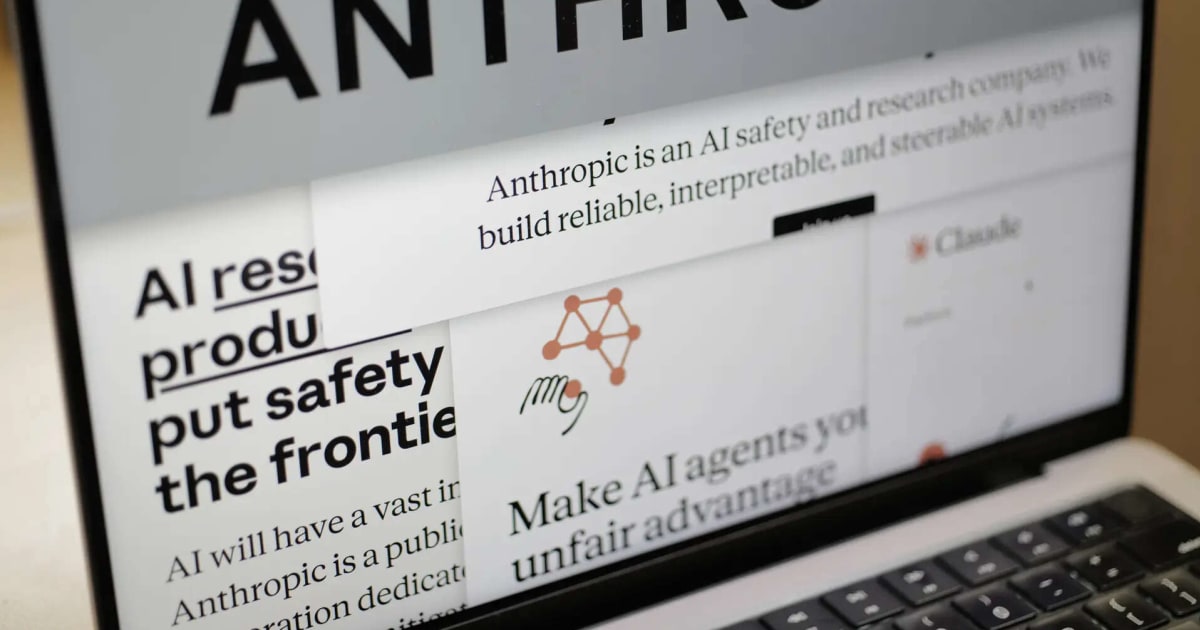
Anthropic’s new 'Mythos' model has uncovered 10,000+ critical flaws in global open-source infrastructure, triggering a massive remediation race. For the Indian IT sector, this marks a transition from labor-intensive maintenance to high-value AI-led cybersecurity. We analyze the winners, losers, and specific risks for Nifty IT constituents.
The Mythos Catalyst: Why Open-Source Security Just Changed Forever
In a watershed moment for software security, Anthropic’s 'Mythos' AI model has systematically identified over 10,000 critical vulnerabilities across the open-source ecosystem. This is not merely a technical milestone; it is a macroeconomic disruptor. Because the vast majority of global enterprise software—from banking backends to cloud infrastructure—relies on these open-source libraries, the 'Mythos' discovery has effectively created an overnight mandate for global corporations to overhaul their security posture.
For the Indian IT services sector, which generates a significant portion of its revenue from Application Development and Maintenance (ADM), this development acts as a double-edged sword. The era of 'billable hours' for routine bug fixing is under existential threat, replaced by a demand for rapid, AI-automated remediation. The question for investors is no longer who has the most headcount, but who has the most mature AI-integrated security stack.
How will the 'Mythos' discovery impact Indian IT service margins?
Historically, the Indian IT sector has thrived on the high-margin, low-complexity maintenance of legacy codebases. When the Log4j vulnerability emerged in 2021, it provided a massive revenue tailwind for firms like TCS and Infosys, as clients rushed to pay for manual patching. However, 'Mythos' is different. By automating the discovery process, it also accelerates the remediation cycle. If IT firms cannot integrate AI-driven patching into their offerings, they will face a margin squeeze as clients demand fixed-price outcomes rather than time-and-material contracts.
We anticipate a short-term surge in project-based revenue as enterprises scramble to patch these 10,000+ flaws. However, by mid-2025, firms that fail to decouple revenue from human-labor hours will likely see their operating margins compress by 150-200 basis points as automation commoditizes routine security tasks.
Stock-by-Stock Breakdown: Who Wins and Who Loses?
- TCS (TCS.NS): With a market cap exceeding ₹15 lakh crore, TCS is best positioned to leverage its 'TCS Cognix' suite. Its scale allows for heavy R&D investment in proprietary AI security tools. We view TCS as a defensive buy, as its massive client base provides a captive market for high-end cybersecurity integration.
- Infosys (INFY.NS): Infosys is aggressive in AI integration through its 'Topaz' platform. The company’s ability to pivot toward AI-led managed services gives it an edge, but its high P/E ratio (currently ~28x) leaves little room for execution errors in this transition.
- HCL Technologies (HCLTECH.NS): HCL has a specialized focus on engineering and R&D services. As clients seek to 're-engineer' vulnerable code rather than just patch it, HCL stands to gain significant wallet share in the premium cybersecurity consultancy space.
- Wipro (WIPRO.NS): Wipro faces the highest risk. With a historical reliance on high-volume legacy maintenance, the shift toward AI-automated remediation may necessitate a painful, high-cost restructuring of its service delivery model.
- LTIMindtree (LTIM.NS): As a mid-to-large cap player with a focus on digital transformation, LTIM is agile. They are likely to capture market share from larger peers if they can deploy 'Mythos-ready' remediation tools faster than the Nifty IT heavyweights.
Expert Perspective: The Bull vs. Bear Debate
The Bull Case: Proponents argue that 'Mythos' expands the Total Addressable Market (TAM) for cybersecurity services. As open-source security becomes a board-level concern, IT firms will be able to charge a premium for 'AI-Certified Security Audits,' moving away from low-margin maintenance toward high-value security consulting.
The Bear Case: Skeptics, particularly those looking at the 2022 Nifty IT correction, argue that the 'AI-led' narrative is being overplayed to mask structural revenue deceleration. If automation makes security patching 'too easy,' the revenue pool for IT firms will shrink as the 'human-in-the-loop' component of these contracts vanishes.
Investor Playbook: Navigating the AI-Security Pivot
Investors should adopt a 'Barbell Strategy' for the next 12-18 months:
- Focus on AI-Integrated Leaders: Accumulate positions in firms with proven proprietary AI platforms (TCS, HCL) that can demonstrate a transition from manual labor to automated security delivery.
- Monitor Operating Margins: Watch for a dip in margins in the next two quarters. If a firm maintains margins despite the shift, it proves their AI automation is successfully reducing costs faster than the price per task is falling.
- Watch for M&A: Expect a wave of acquisitions where large IT firms buy niche AI-security startups to bolster their 'Mythos' remediation capabilities.
Risk Matrix
| Risk Factor | Probability | Impact |
|---|---|---|
| Client Budget Reallocation | High | Medium |
| Margin Compression | Medium | High |
| AI Tool Obsolescence | Low | High |
What to Watch Next
The next major catalyst will be the Q3 earnings calls for the top 5 Indian IT firms. Analysts should specifically look for commentary on 'AI-led remediation revenue' and the impact of 'autonomous security patching' on service delivery models. Furthermore, keep an eye on the Nifty IT index's reaction to global cloud spending reports, as these will indicate whether enterprises are prioritizing security spend amidst the ongoing 'Mythos' fallout.
Disclaimer: This content is generated by WelthWest Research Desk based on publicly available reports and is for informational purposes only. It does not constitute financial advice, investment recommendations, or an offer to buy or sell securities. Always consult a qualified financial advisor before making investment decisions.