Key Takeaway
While the B-52 tragedy is a localized US operational failure, it acts as a stress test for Boeing’s global supply chain credibility. For Indian investors, the event highlights a critical shift toward 'sovereign maintenance' premiums in defence stocks.
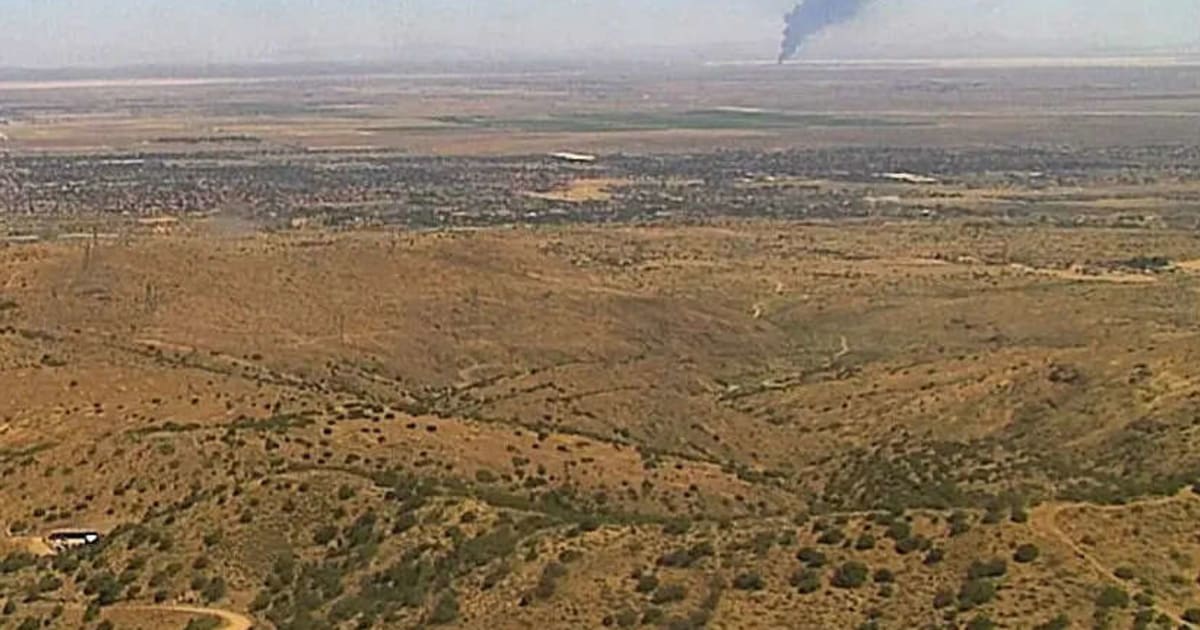
A fatal B-52 Stratofortress crash at Edwards Air Force Base has triggered a ripple of uncertainty across the global aerospace sector. We analyze the fallout for Boeing (BA) and what this means for the valuation of India's indigenous defence manufacturing giants.
The Strategic Fallout of the B-52 Stratofortress Crash
The recent fatal crash of a US Air Force B-52 Stratofortress at Edwards Air Force Base is more than a tragic loss of life; it is a structural shock to the global defence industrial base. As the B-52 remains a linchpin of the US nuclear triad, the incident forces a hard look at 'sustainment economics'—the cost and risk of keeping 1950s-era airframes operational in an era of rapid digital transformation.
For investors, the immediate question is not just about the safety record of a legacy airframe, but about the systemic strain on Boeing’s (BA) defense division. With Boeing already grappling with commercial aviation quality control issues, a potential grounding of the B-52 fleet creates a massive maintenance backlog that will inevitably squeeze margins and divert resources from modernization projects.
Why does an American crash matter for the Indian Defence Sector?
The Indian defence market operates on a 'Global Supply Chain Interdependency' model. While the Indian Air Force does not operate the B-52, the Indian defence ecosystem is deeply integrated with global aerospace supply chains. When Boeing faces a 'root cause' investigation, it often triggers a temporary freeze in procurement and subcontracting cycles. Historically, after the 2022 US military aviation safety stand-down, the Nifty Defence Index saw a brief 3.2% volatility spike as investors re-evaluated the risk premium of firms supplying components to US primes.
How will the B-52 investigation impact global defense sentiment?
The investigation will likely result in an 'Airworthiness Directive' that forces increased scrutiny on maintenance contractors. For Indian companies like HAL and Data Patterns, which provide avionics and structural sub-assemblies to global OEMs, the risk isn't a direct loss of contract, but a shift in procurement timelines. If Boeing pivots to internalizing more maintenance to regain safety control, the 'offshoring' of sub-components could face a temporary slowdown.
Stock-by-Stock Breakdown: The Indian Defence Exposure
- Hindustan Aeronautics Ltd (HAL): With a market cap of ~₹3.5 lakh crore and a P/E ratio hovering near 40x, HAL is the backbone of Indian aerospace. The B-52 incident reinforces the 'Indigenous Maintenance' narrative. If the US struggles to maintain its legacy fleet, India’s push for 'Atmanirbhar Bharat' (self-reliance) in maintenance, repair, and overhaul (MRO) becomes a stronger value proposition for long-term institutional investors.
- Bharat Electronics Ltd (BEL): BEL provides critical radar and electronic warfare systems. While their exposure to Boeing is indirect, any global slowdown in aerospace spending impacts their export pipeline. Watch for a potential compression in their 25x P/E if global defense budgets face re-allocation toward maintenance rather than new procurement.
- Data Patterns (India) Ltd: As a high-growth player in defence electronics, Data Patterns is sensitive to global component pricing. If the B-52 crash leads to stricter certification standards in the US, compliance costs for Indian component exporters could rise, temporarily impacting margins.
- Zen Technologies: Focused on simulation and training, Zen Technologies may actually benefit. Increased scrutiny on aircraft safety often leads to higher spending on 'virtual training' and 'safety simulation' to reduce the reliance on live, high-risk test flights.
Expert Perspective: Bulls vs. Bears
The Bear Case: Skeptics argue that the B-52 crash is the 'canary in the coal mine' for aging infrastructure. If Boeing’s defense division faces a multi-year audit, the entire global aerospace supply chain—including Indian exporters—could see a 5-10% revenue slowdown as contract renewals are delayed.
The Bull Case: Optimists argue that the incident will accelerate the transition to 'Modernization over Maintenance.' This is a net positive for Indian companies that specialize in newer, digital-first avionics and electronic systems, as global powers scramble to replace legacy systems with modern, sensor-rich platforms.
Actionable Investor Playbook
Investors should move from a 'growth-at-any-price' stance to a 'quality-of-order-book' focus.
- Monitor Contract Backlogs: Prioritize companies like HAL that have a multi-year, state-backed order book, insulating them from private-sector global volatility.
- Watch the Margin Profile: If export-oriented defense stocks report rising 'Compliance and Certification' costs in the next two quarters, it is a sign to trim positions.
- Entry Points: Look for a 5-7% correction in defence mid-caps as a buying opportunity, but wait for the official USAF preliminary report before aggressive accumulation.
Risk Matrix
| Risk Factor | Probability | Impact |
|---|---|---|
| Fleet Grounding | Medium | High |
| Supply Chain Contraction | Low | Medium |
| Increased Regulatory Compliance Cost | High | Medium |
What to Watch Next
The critical catalyst is the release of the US Air Force Safety Investigation Board (SIB) preliminary findings. Any mention of 'material fatigue' or 'maintenance negligence' will be the signal for a broader sell-off in aerospace legacy-service providers. Keep an eye on the upcoming quarterly earnings for Boeing (BA) to see if they revise their guidance on 'Global Services' revenue, as this will provide the clearest signal for Indian export-linked defense stocks.
Disclaimer: This content is generated by WelthWest Research Desk based on publicly available reports and is for informational purposes only. It does not constitute financial advice, investment recommendations, or an offer to buy or sell securities. Always consult a qualified financial advisor before making investment decisions.