Key Takeaway
Bharat Taxi marks a pivotal shift toward state-backed digital public infrastructure, threatening the high-commission models of private aggregators. Investors must brace for margin compression in the mobility and gig-economy sectors as the cooperative model gains state-backed momentum.
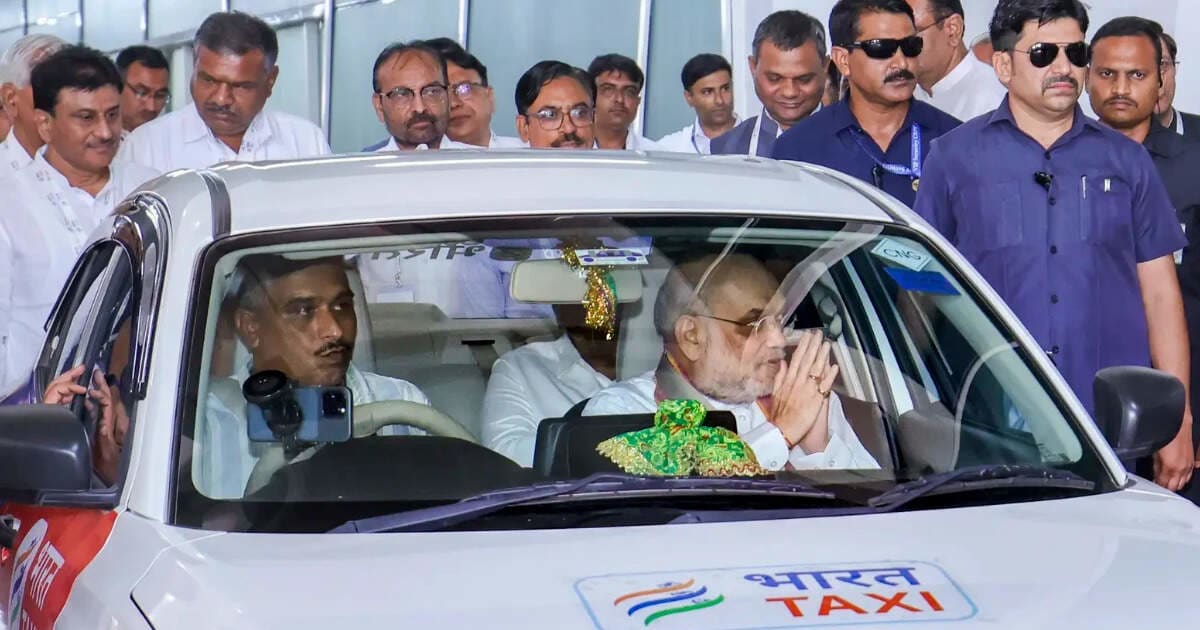
The launch of Bharat Taxi signals a structural shift in India's mobility sector, aiming to bypass private aggregator commissions. This deep dive examines the potential fallout for the Nifty’s gig-economy leaders and the broader implications for India’s digital public infrastructure (DPI) strategy.
The End of the Aggregator Monopoly?
For the past decade, India’s urban mobility landscape has been dominated by a private duopoly. By leveraging venture-backed capital to subsidize rides, these platforms effectively captured the market, establishing a commission-based model that often extracts 20% to 30% from every transaction. The launch of Bharat Taxi—a cooperative-model ride-hailing service—represents the first serious government-led attempt to dismantle this rent-seeking infrastructure.
By transitioning the power dynamic from venture capital shareholders to driver-owned cooperatives, the initiative is not merely a transport service; it is a fundamental reconfiguration of India’s digital economy. As the service aims for a 500-city footprint within two years, the implications for publicly traded platforms are profound, forcing a re-evaluation of long-term margin sustainability.
Why Is Bharat Taxi a Threat to Private Platforms?
The core philosophy of Bharat Taxi is the elimination of the 'middleman tax.' Private aggregators operate on high fixed-cost structures, requiring massive marketing spends and constant capital infusion to maintain user retention. In contrast, a cooperative model functions as a utility. By lowering the take-rate, the service can theoretically offer lower prices to consumers while simultaneously increasing the take-home pay for drivers—a 'double-win' that is structurally impossible for VC-backed firms currently struggling to achieve GAAP profitability.
Market Impact: The Ripple Effect on NSE/BSE
The Indian stock market has historically reacted sharply to government-led interventions in digital sectors. When the Unified Payments Interface (UPI) was introduced, it effectively capped the profit potential of private payment gateways. We anticipate a similar 'DPI effect' here. If Bharat Taxi succeeds, the valuation multiples of companies relying on high-frequency transaction commissions will face significant downward pressure.
How will Bharat Taxi impact the profitability of Zomato and Blinkit?
While Zomato (NSE: ZOMATO) is primarily a food-tech player, its aggressive expansion into quick commerce and mobility-linked logistics makes it a target for margin compression. If the government mandates interoperability or subsidizes cooperative logistics, Zomato’s 'take-rate' per delivery could face a ceiling. Historical data from 2022 suggests that when government-led alternatives enter a private space, the valuation premiums of incumbents often contract by 15-20% as the market prices in 'regulatory risk' and 'disruption risk.'
Stock-by-Stock Breakdown
- Zomato (NSE: ZOMATO): Currently trading at high P/E multiples, Zomato’s sensitivity to logistics costs is extreme. If Bharat Taxi sets a precedent for lower-cost cooperative logistics, Zomato may be forced to lower delivery fees, impacting their EBITDA margins.
- PB Fintech (NSE: POLICYBZR): As an insurance aggregator, PB Fintech relies on the premium ecosystem. Bharat Taxi’s integration with public sector insurers (like LIC) could divert a massive volume of gig-worker insurance premiums away from private platforms, threatening a key revenue stream.
- Life Insurance Corporation of India (NSE: LICI): LIC stands to gain significantly. By becoming the preferred insurer for the Bharat Taxi cooperative, the state-owned giant secures a massive, untapped segment of the gig economy, potentially improving its market share in the 'micro-insurance' category.
- Tech Mahindra (NSE: TECHM): As a key player in building India’s digital public infrastructure, Tech Mahindra stands to benefit from the backend technology contracts required to scale Bharat Taxi across 500 cities.
The Expert Perspective: Bull vs. Bear
The Bull Case: Proponents argue that Bharat Taxi will expand the total addressable market (TAM) by making mobility affordable in Tier-2 and Tier-3 cities that private aggregators currently ignore due to low unit economics. This creates a larger pie for everyone.
The Bear Case: Skeptics, including many analysts at the WelthWest Desk, point to the 'Execution Trap.' Scaling a cooperative model requires localized management and complex technology stacks. Private platforms spend billions on UX and algorithmic efficiency; a state-backed service may struggle to match the seamless user experience, potentially leading to a lackluster adoption rate.
Actionable Investor Playbook
Investors should adopt a 'wait-and-see' approach for the next two quarters. Monitor the initial pilot data from the nine Gujarat cities. If the conversion rate of drivers from private platforms to Bharat Taxi exceeds 15%, it is time to trim positions in private mobility-dependent stocks.
- Watch: Daily active user (DAU) growth in pilot cities.
- Sell/Reduce: Exposure to high-commission, asset-light platforms that lack a 'moat' against government-subsidized competition.
- Buy/Accumulate: Public sector entities (like LICI) that are positioned to capture the backend financial services of this new cooperative ecosystem.
Risk Matrix
| Risk Factor | Probability | Impact |
|---|---|---|
| Technological Failure | Medium | High |
| Regulatory Overreach | High | Medium |
| Driver Retention Issues | High | High |
What to Watch Next
The key catalyst to watch is the upcoming Ministry of Road Transport and Highways (MoRTH) policy update regarding 'Cooperative Digital Mobility.' Any mention of tax incentives for cooperative drivers will be the signal that the government is going all-in. Keep an eye on the next quarterly filings of private aggregators for any mention of 'competitive pricing pressures'—this will be the first admission of the Bharat Taxi impact.
See Zomato (Blinkit/Quick commerce exposure)'s AI Score
Our algorithmic screener scores Zomato (Blinkit/Quick commerce exposure) on fundamentals, momentum, and risk — free to try, no card needed.
Try the AI Screener →Have questions about this story?
Ask Welth, our finance-focused AI research assistant, for a deeper breakdown — free trial included.
Chat with Welth AI →Disclaimer: This content is generated by WelthWest Research Desk based on publicly available reports and is for informational purposes only. It does not constitute financial advice, investment recommendations, or an offer to buy or sell securities. Always consult a qualified financial advisor before making investment decisions.