Key Takeaway
While Indian equities hold no direct crypto exposure, the $6 billion Bitcoin expiry acts as a liquidity barometer. Watch for FII risk-off sentiment that could trigger short-term volatility in high-beta Indian tech stocks.
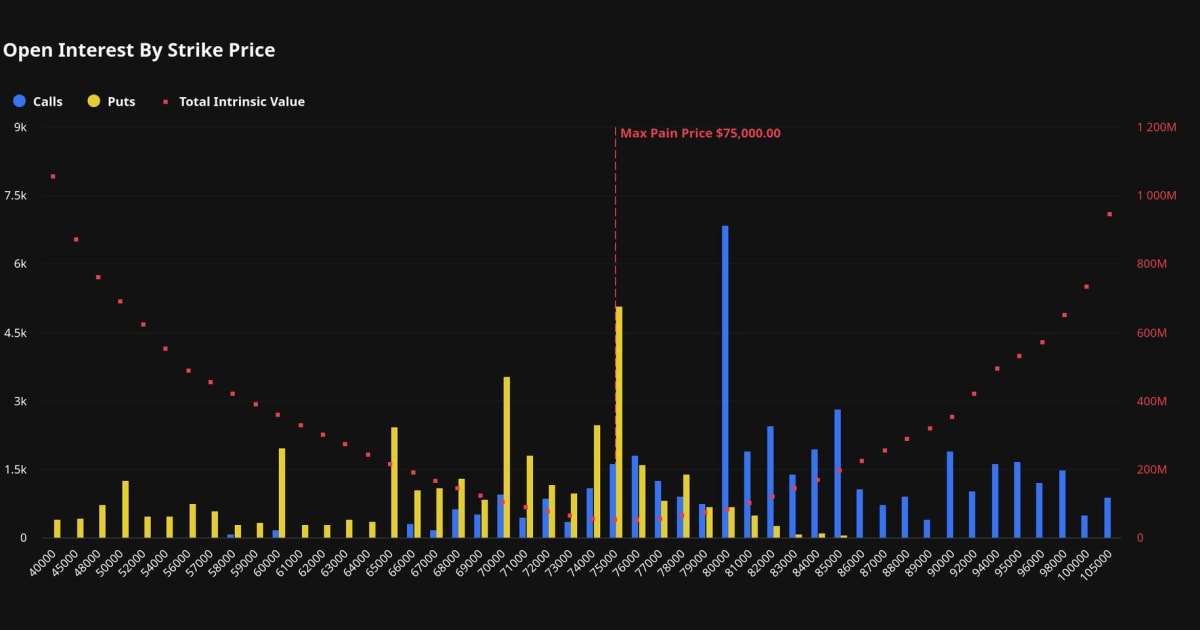
The massive $6 billion Bitcoin options expiry, anchored by heavy $82,000 strike-price bets, is creating ripples in global risk-on assets. We analyze the hidden transmission channels between crypto-market turbulence and the Indian Nifty 50, identifying the stocks most exposed to shifting global liquidity.
The $6 Billion Catalyst: Decoding the Bitcoin Options Expiry
The financial markets are currently bracing for a significant liquidity event: a $6 billion Bitcoin options expiry. While the headlines focus on the speculative frenzy surrounding the $82,000 strike price, the real story lies in the broader implications for global risk appetite. For the savvy Indian investor, this isn't just about crypto—it’s about the potential for a 'risk-off' contagion that could impact Foreign Institutional Investor (FII) flows into the NSE and BSE.
How does global crypto volatility impact Indian equity markets?
Historically, when high-beta global assets face sudden deleveraging, the correlation between crypto-assets and emerging market equities tends to tighten. In 2022, during the collapse of major crypto-exchanges, we observed a 3-5% drawdown in Nifty IT indices as global liquidity tightened. While India’s regulatory stance on crypto remains cautious, our markets are not immune to the psychological shifts of global hedge funds.
When Bitcoin volatility spikes, global desks often trigger automatic risk-reduction protocols. This leads to a liquidation of positions in emerging markets to shore up capital, directly affecting the liquidity of high-beta Indian stocks. Investors should view this expiry as a stress test for global risk tolerance.
Stock-by-Stock Exposure: Identifying the Risks
While the Indian market lacks direct crypto-asset exposure, specific IT services companies with heavy investments in blockchain infrastructure face indirect sensitivity to the sector's volatility.
- Zensar Technologies (ZENSARTECH): As a key player in blockchain-as-a-service, any slowdown in crypto-sector R&D budgets could affect their quarterly margins. With a P/E ratio currently hovering near 30x, any contraction in IT spending remains a downside risk.
- Persistent Systems (PERSISTENT): Known for their deep-tech blockchain integration, they are highly sensitive to global fintech investment cycles. A volatile crypto market usually delays client decision-making on decentralized finance (DeFi) projects.
- Infosys (INFY): While diversified, their large-scale enterprise blockchain practice is a significant revenue driver. FIIs often trim positions in large-cap IT when global risk-assets tumble.
- Tata Consultancy Services (TCS): As the bellwether of the Indian IT sector, TCS is the first to see institutional outflows during a global 'risk-off' event, regardless of their intrinsic blockchain exposure.
Expert Perspective: The Bull vs. Bear Divide
The Bear Case: Analysts argue that the concentration of $82,000 call options suggests a 'gamma trap.' If Bitcoin fails to breach this level, the resulting unwinding of leveraged positions could trigger a cascade of liquidations, forcing global funds to pull capital from emerging markets to balance their books.
The Bull Case: Conversely, proponents suggest that the maturity of the crypto-derivatives market means that institutional players have already hedged their exposure. They argue that the expiry will be a non-event, with liquidity merely rotating into more stable assets, keeping Indian equities resilient.
Actionable Investor Playbook
For investors navigating this period of volatility, the strategy should be one of defensive positioning:
- Monitor FII Flows: Keep a close eye on daily FII net buying/selling data. A sudden shift to net selling in the IT sector is a signal to reduce exposure to high-beta stocks.
- Increase Cash Reserves: Given the potential for a temporary market dip, holding 10-15% in cash provides the flexibility to capitalize on oversold opportunities in the Nifty IT index.
- Focus on Fundamentals: Prioritize companies with strong balance sheets and low debt-to-equity ratios. Regardless of global liquidity, companies with high cash flow generation remain the safest havens.
Risk Matrix
| Risk Factor | Probability | Impact |
|---|---|---|
| Liquidity Crunch (FII Outflows) | Medium | Moderate |
| IT Sector Margin Compression | Low | High |
| Currency Volatility (INR vs USD) | Medium | Low |
What to watch next?
The immediate catalyst following this expiry will be the subsequent Federal Reserve commentary on interest rates. The interplay between crypto-volatility and US bond yields will define the trajectory of the Nifty 50 for the remainder of the quarter. Investors should mark their calendars for upcoming FOMC meeting minutes, which will provide the final word on global liquidity conditions.
Disclaimer: This content is generated by WelthWest Research Desk based on publicly available reports and is for informational purposes only. It does not constitute financial advice, investment recommendations, or an offer to buy or sell securities. Always consult a qualified financial advisor before making investment decisions.