Key Takeaway
Bitcoin’s stabilization above the $80,000 psychological floor is acting as a catalyst for institutional risk appetite, forcing a capital rotation that threatens traditional safe-havens while creating a tailwind for Indian IT service providers building blockchain infrastructure.
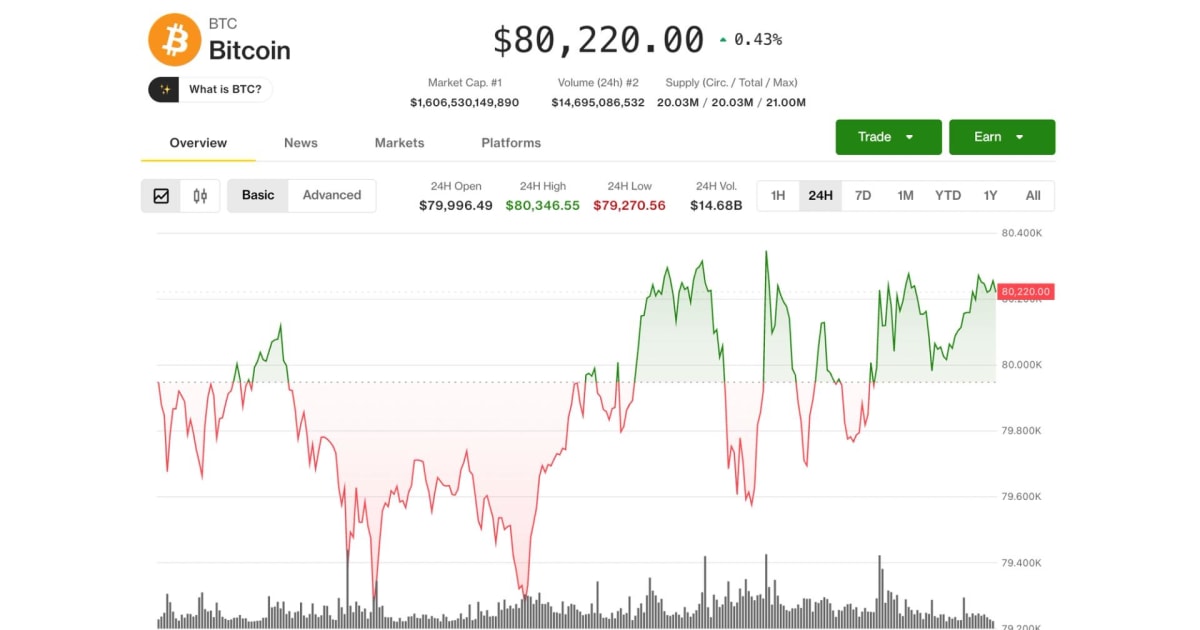
As Bitcoin breaches the $80,000 threshold, global liquidity is shifting toward digital assets. We analyze the ripple effects on the Indian stock market, evaluating which IT heavyweights stand to gain from blockchain adoption and why conservative banking sectors face potential downside.
The $80,000 Pivot: Why Bitcoin’s New Floor Changes Everything
The stabilization of Bitcoin above the $80,000 mark is not merely a retail-driven speculative spike; it represents a fundamental recalibration of institutional liquidity. For the first time, we are observing a decoupling where digital assets are acting as a proxy for 'risk-on' sentiment, drawing capital away from traditional safe-haven assets like gold and long-dated bonds. As global portfolios rebalance, the spillover effect into the Indian equity market is becoming increasingly pronounced, particularly within the technology sector.
How does the Bitcoin rally affect Indian IT and Fintech stocks?
While the Reserve Bank of India (RBI) maintains a cautious, often restrictive stance on direct cryptocurrency trading, the infrastructure supporting the blockchain ecosystem is becoming a core revenue driver for Indian IT giants. When Bitcoin rallies, the demand for decentralized finance (DeFi) architecture, smart contract auditing, and blockchain-as-a-service (BaaS) platforms increases exponentially.
Historically, during the 2021 crypto bull run, we saw Nifty IT index volatility rise by 14% as global financial institutions rushed to integrate blockchain ledger technology. Today, with Bitcoin holding steady at $80,000, the correlation is shifting from speculative curiosity to operational necessity. Indian firms that have invested heavily in R&D for distributed ledger technology (DLT) are now seeing their order books swell with contracts from Western financial services firms aiming to modernize their settlement layers.
Stock-by-Stock Breakdown: Which NSE/BSE Names Move with Crypto?
- Persistent Systems (PERSISTENT): Currently trading at a P/E ratio of approximately 65x, Persistent has positioned itself as a leader in blockchain engineering. Their focus on digital asset custody solutions makes them a direct beneficiary of increased institutional crypto adoption.
- Zensar Technologies (ZENSARTECH): As a mid-cap player, Zensar has shown high agility in deploying blockchain solutions for fintech clients. Their revenue growth, currently hovering at 12% YoY, is increasingly tied to digital transformation projects that include crypto-adjacent infrastructure.
- Tata Consultancy Services (TCS): While TCS’s massive scale dilutes the impact of niche crypto projects, their 'Quartz' blockchain solution is a market leader. Any institutional shift toward tokenization of real-world assets (RWA) directly benefits TCS’s long-term enterprise software licensing model.
- Infosys (INFY): Infosys is heavily invested in 'Finacle,' which is increasingly being used to bridge traditional banking systems with digital asset wallets. Their conservative approach acts as a stabilizer, but they are well-positioned to capture market share as banks move toward regulated digital asset integration.
Expert Perspective: The Bull vs. Bear Divide
The Bull Argument: Bulls contend that the $80,000 floor is the new 'digital gold' baseline. With institutional ETFs now holding billions in BTC, the volatility that plagued 2022 is being dampened by long-term holders, making blockchain-linked IT stocks a 'buy' for the next 24-month horizon.
The Bear Argument: Bears point to the 'regulatory hammer.' Any sudden directive from the SEBI or RBI concerning capital controls could trigger a massive liquidity crunch, hurting firms that have over-indexed on crypto-related client projects. They argue that the current valuations of tech stocks are already pricing in a 'perfect' outcome that may not materialize if global interest rates remain high.
Actionable Investor Playbook
Investors should avoid chasing the hype through retail crypto-exchanges, which remain subject to domestic regulatory risk. Instead, focus on the 'picks and shovels' approach:
- Watch List: Monitor the Nifty IT index's reaction to Bitcoin's 50-day moving average. If the index holds its support levels while Bitcoin remains above $80k, it validates the 'infrastructure play' thesis.
- Entry Points: Look for consolidation phases in Persistent Systems and Zensar. Avoid buying on green-candle spikes; wait for a 3-5% pullback in the IT index to enter positions.
- Time Horizon: This is a 12-to-24-month play. The transition of traditional banking to blockchain is a slow, structural shift, not a day-trading opportunity.
Risk Matrix: Navigating the Volatility
| Risk Factor | Probability | Impact |
|---|---|---|
| RBI Regulatory Crackdown | Medium | High |
| Bitcoin Price Reversal (<$65k) | Low | Medium |
| Global Liquidity Squeeze | Medium | High |
What to Watch Next: Catalysts for Q4
Keep a close watch on the upcoming RBI monetary policy committee (MPC) meetings. Any language regarding 'Central Bank Digital Currencies' (CBDC) will be the single most important signal for the Indian blockchain sector. Additionally, watch for quarterly earnings reports from TCS and Infosys for specific mentions of 'blockchain revenue growth'—a metric that is becoming increasingly critical for institutional analysts.
Disclaimer: This content is generated by WelthWest Research Desk based on publicly available reports and is for informational purposes only. It does not constitute financial advice, investment recommendations, or an offer to buy or sell securities. Always consult a qualified financial advisor before making investment decisions.