Key Takeaway
The unprecedented 9-day $2.8 billion exodus from Bitcoin ETFs marks a definitive pivot from 'speculative mania' to 'capital preservation,' signaling an imminent liquidity squeeze for Indian high-beta tech stocks and mid-cap indices.
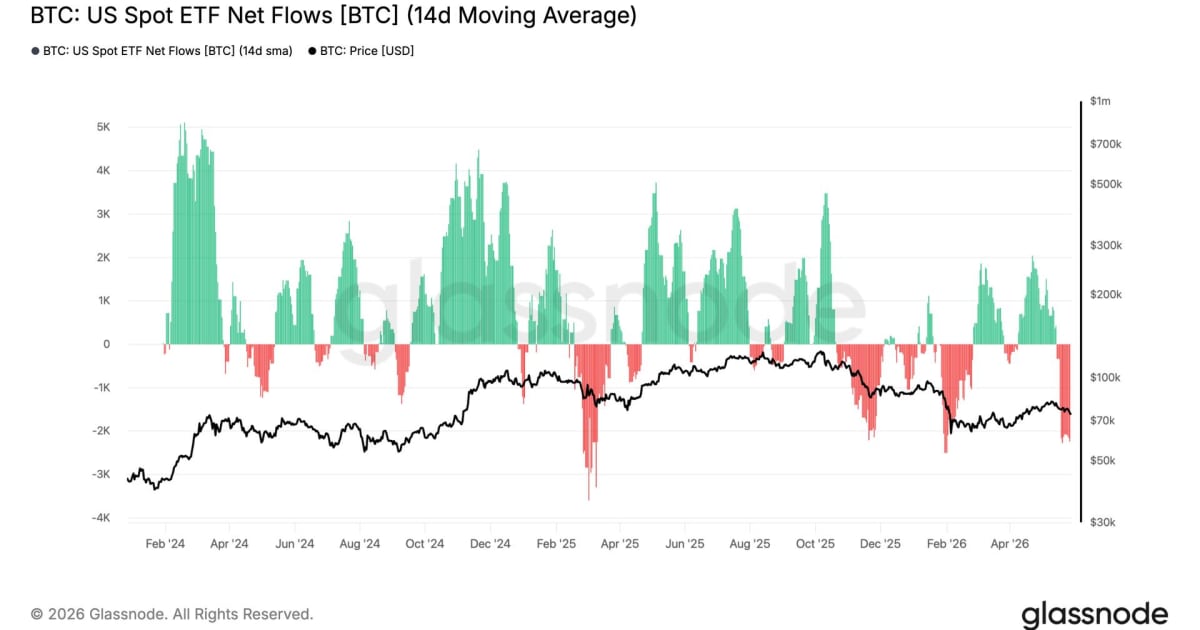
As institutional investors pull billions from digital assets, the global 'risk-on' sentiment is evaporating, creating a ripple effect that threatens the valuation of Indian IT giants and growth-oriented sectors. This deep dive explores the correlation between crypto liquidity and FII flows into the NSE, providing a strategic roadmap for navigating the ensuing volatility.
The Great Institutional Deleveraging: Understanding the $2.8 Billion Bitcoin Exit
The global financial landscape is witnessing a silent but violent recalibration. For nine consecutive trading sessions, Bitcoin Spot ETFs have seen a relentless streak of outflows, totaling a staggering $2.8 billion. While the crypto-native audience views this as a localized correction, senior analysts at WelthWest Research Desk recognize it as the 'canary in the coal mine' for global liquidity. This is not merely a crypto story; it is a fundamental shift in how institutional 'smart money' views risk in an era of fluctuating treasury yields and geopolitical instability.
When Bitcoin—the ultimate barometer for speculative excess—undergoes a record-breaking liquidation streak, it signals that the era of 'easy money' is hitting a structural wall. For the Indian investor, the correlation is clear: as institutional liquidity dries up in the most aggressive asset classes, it almost inevitably leads to a tightening of Foreign Institutional Investor (FII) flows into emerging markets (EMs). Historically, when the US Dollar Index (DXY) strengthens alongside a crypto sell-off, the NSE Nifty 50 experiences a period of prolonged 'valuation digestion.'
Why Does a Crypto Outflow Matter for the Indian Stock Market?
The connection lies in the Global Liquidity Cycle. Institutional desks often treat Bitcoin ETFs and high-growth Indian IT stocks as part of the same 'Risk-On' bucket. When volatility spikes in digital assets, risk managers trigger automated sell orders across the board to maintain a balanced Value-at-Risk (VaR) profile. This means the same hedge funds exiting BlackRock’s IBIT or Fidelity’s FBTC are likely the same entities re-evaluating their positions in Infosys or Tech Mahindra.
During the 2022 crypto winter, when Bitcoin plummeted from $60,000 to $20,000, the Nifty IT Index mirrored this sentiment with a 25% drawdown over six months. The current $2.8 billion exit suggests that the market is bracing for a 'higher-for-longer' interest rate environment in the US, which strengthens the Dollar and makes Indian equities, currently trading at a premium P/E compared to historical averages, look increasingly vulnerable to FII profit-taking.
Deep Market Impact: Connecting the Dots to NSE/BSE
The impact of this $2.8 billion withdrawal will likely manifest in three distinct phases for the Indian market:
- Phase 1: Valuation Compression in High-Beta Sectors. High-growth tech and digital platform stocks (Zomato, PB Fintech) often trade on future cash flow expectations. As risk appetite wanes, investors demand a higher discount rate, leading to immediate P/E contraction.
- Phase 2: FII Outflow Acceleration. India has seen robust domestic inflows, but FIIs remain the primary drivers of large-cap price action. A sustained exit from 'risk' assets globally will likely see FIIs turning net sellers in India to cover redemptions in their home markets.
- Phase 3: Pivot to Defensives. We anticipate a rotation into 'Old Economy' stocks. Sectors like FMCG (Hindustan Unilever) and Pharma (Sun Pharma) typically outperform during periods of crypto-led deleveraging as they offer earnings visibility and dividend safety.
How will the US Dollar Index (DXY) strength affect Indian IT margins?
A primary catalyst for the Bitcoin ETF outflow is the resurgent US Dollar. A stronger DXY (currently hovering near the 104-105 range) typically creates a dual-edged sword for Indian IT. While a weaker Rupee theoretically helps export earnings, the broader macro-economic impact of a strong dollar usually leads to reduced discretionary spending by Fortune 500 clients—the very clients that drive the revenue for firms like Wipro and LTIMindtree.
Stock-by-Stock Breakdown: The Casualties of the Risk-Off Pivot
As liquidity retreats, specific stocks on the National Stock Exchange (NSE) face unique headwinds. Here is how the top players are positioned:
1. Tech Mahindra (TECHM)
Current Context: Tech Mahindra has a high beta and significant exposure to the communications and discretionary verticals.
The Impact: As global institutions de-risk, TECHM often sees faster institutional selling than its more diversified peers. With a P/E ratio currently hovering around 28x, any slowdown in global liquidity could lead to a 10-15% valuation correction.
Peer Comparison: Compared to TCS, Tech Mahindra’s earnings are more sensitive to global macro shifts, making it a primary target for 'sell-on-news' strategies.
2. Infosys (INFY)
Current Context: The bellwether of Indian IT. Infosys is heavily owned by foreign institutional investors (FIIs).
The Impact: Infosys serves as a liquidity proxy. When global funds need to raise cash due to losses in other asset classes (like the $2.8 billion crypto hit), INFYS is often the first 'liquid' stock they sell. We are watching the ₹1,750-₹1,800 support levels closely. A breach here could signal a deeper institutional exit.
3. Wipro (WIPRO)
Current Context: Wipro is in the midst of a leadership transition and structural turnaround.
The Impact: In a 'risk-off' market, investors lose patience with turnaround stories. Wipro’s relatively lower operating margins (16-17%) make it less attractive when capital is scarce. Expect the stock to underperform the Nifty IT index if the Bitcoin outflow trend persists for another week.
4. LTIMindtree (LTIM)
Current Context: The 'growth' play in the large-cap IT space.
The Impact: LTIMindtree trades at a growth premium. When speculative assets like Bitcoin are dumped, the market's tolerance for high-P/E stocks diminishes. LTIM’s exposure to the BFSI (Banking, Financial Services, and Insurance) sector in the US makes it highly sensitive to the same macro forces driving the ETF outflows.
Expert Perspective: The Bull vs. Bear Debate
"The Bitcoin ETF outflows are a localized phenomenon of profit-taking after a massive run-up. Indian markets are decoupled due to strong domestic SIP flows which now exceed ₹20,000 crore monthly. This is a buying opportunity in IT." — Growth-oriented Fund Manager
Conversely, the bearish view suggests that the 'decoupling' theory is a myth. Bear Argument: The $2.8 billion exit is the start of a broader 'margin call' on global liquidity. As the cost of capital remains high, the 'wealth effect' from crypto and US tech stocks will diminish, leading to a slowdown in global consumption that will eventually hit Indian exports and IT services.
Actionable Investor Playbook: Navigating the Volatility
Investors should not panic, but a strategic rebalancing is required. Here is the WelthWest recommended playbook:
- The 'Sell' List: Reduce exposure to high-beta, mid-cap IT stocks that have P/E ratios 20% above their 5-year averages. Avoid 'story' stocks with no current earnings.
- The 'Watch' List: Monitor the USD/INR pair. If the Rupee crosses 84.50, it will trigger a fresh wave of FII selling regardless of domestic fundamentals.
- The 'Buy' List (Defensive Pivot): Accumulate FMCG (ITC, HUL) and Consumer Staples. These sectors have historically shown a negative correlation with crypto volatility. Additionally, Gold remains the ultimate hedge; consider Sovereign Gold Bonds (SGBs) or Gold ETFs.
- Entry Points: For long-term investors, wait for a 5-7% correction in Nifty IT before initiating fresh 'SIP' style entries into leaders like TCS or Infosys.
Risk Matrix: Assessing the Fallout
| Risk Factor | Probability | Impact on Indian Market |
|---|---|---|
| Persistent ETF Outflows (>15 days) | High | Severe: Could trigger a 5-8% correction in Nifty IT. |
| DXY Spikes above 106 | Medium | Moderate: Will lead to sustained FII selling in large-caps. |
| US Recession Fears Resurface | Low | Extreme: Would lead to a broad-based market sell-off. |
What to Watch Next: The Catalysts
To understand if this $2.8 billion exit is a temporary blip or a trend reversal, investors must watch three specific data points in the coming fortnight:
- US CPI Data: If inflation remains sticky, the 'risk-off' sentiment will accelerate, leading to more outflows from both crypto and EMs.
- FII/DII Net Flow Data: Watch the daily NSE data. If FII selling exceeds ₹3,000 crore for three consecutive days, the 'contagion' from global de-risking has arrived.
- Nifty IT Index Support: The 38,000 level is a critical psychological and technical floor. A close below this level on a weekly basis would confirm a bearish trend.
In conclusion, while Bitcoin and the NSE might seem worlds apart, they are connected by the invisible threads of global institutional liquidity. The current $2.8 billion exit is a loud warning that the market's tolerance for risk is fading. For the Indian investor, the message is clear: protect your capital, pivot to defensives, and wait for the liquidity dust to settle before chasing the next leg of the bull run.
Disclaimer: This content is generated by WelthWest Research Desk based on publicly available reports and is for informational purposes only. It does not constitute financial advice, investment recommendations, or an offer to buy or sell securities. Always consult a qualified financial advisor before making investment decisions.


