Key Takeaway
The convergence of Bitcoin’s $77,000 floor and a potential hawkish pivot at the Fed under Kevin Warsh signals a 'higher-for-longer' liquidity regime. For Indian investors, this necessitates a shift from high-beta midcaps to USD-earning IT giants and defensive heavyweights.
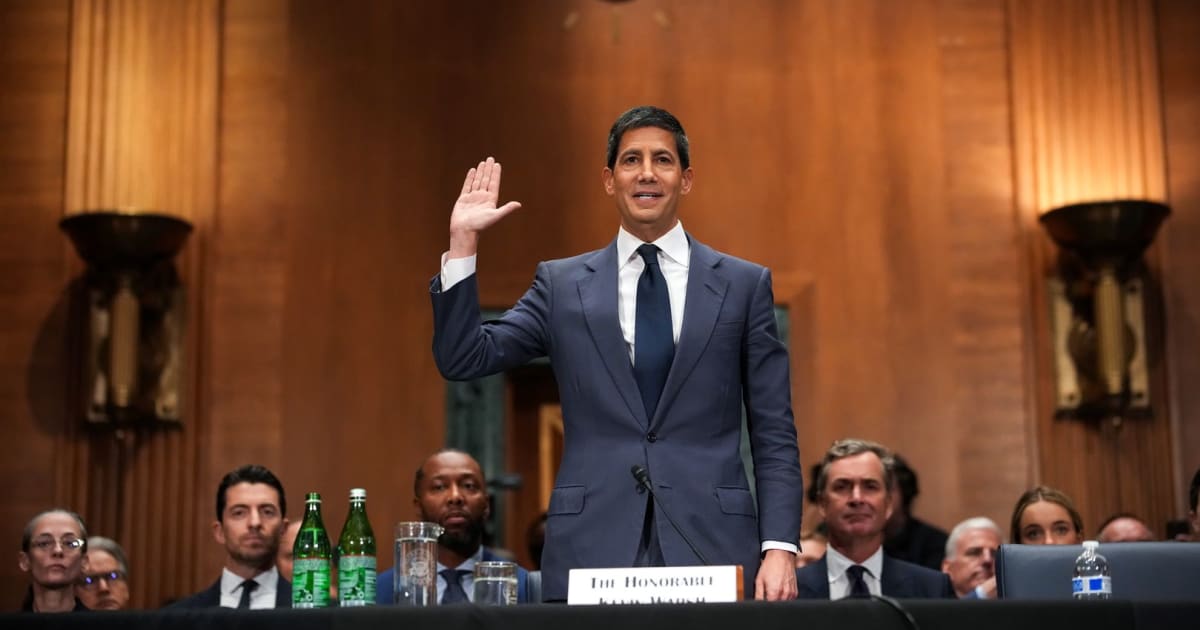
As Bitcoin stabilizes near all-time highs amid speculation of Kevin Warsh joining the US Federal Reserve, global liquidity patterns are set for a radical shift. This comprehensive report explores the ripple effects on the USD-INR exchange rate, FII outflows from Dalal Street, and why specific Indian blue-chip stocks are now in the crosshairs of global macro volatility.
The $77,000 Anchor: Why Bitcoin is Waiting for the Fed’s Next Move
Bitcoin has entered a period of strategic consolidation, hovering around the $77,000 mark. While retail momentum remains high, institutional players are pausing, eyes fixed firmly on Washington. The catalyst? Growing speculation that Kevin Warsh, a former Federal Reserve Governor known for his pragmatic yet occasionally hawkish stance, is a frontrunner for a top leadership role at the US Federal Reserve. This isn't just a story for crypto enthusiasts; it is a fundamental shift in the global macro environment that will dictate the flow of billions of dollars in and out of emerging markets like India.
Historically, Bitcoin has acted as a 'liquidity sponge.' When the Fed is accommodative, Bitcoin rises. However, its current stability at $77,000—despite a strengthening US Dollar Index (DXY)—suggests the market is pricing in a 'new normal' of US economic exceptionalism. If Warsh joins the Fed, his historical preference for price stability and skepticism of prolonged Quantitative Easing (QE) could signal an end to the era of 'easy money,' forcing a repricing of risk assets globally, from the Nasdaq to the NSE.
How will Kevin Warsh at the Fed affect the Indian Stock Market?
The appointment of Kevin Warsh would likely embolden the 'hawkish' faction of the FOMC. For the Indian stock market (Nifty 50), this presents a dual-edged sword. On one hand, a stable and predictable US monetary policy reduces 'tail risk.' On the other hand, if Warsh pushes for a more restrictive policy to combat structural inflation, the yield differential between US Treasuries and Indian Sovereign Bonds narrows.
When the 10-year US Treasury yield spikes, Foreign Portfolio Investors (FPIs) typically engage in 'carry trade' reversals. We saw this in 2013 during the 'Taper Tantrum' and more recently in 2022, when aggressive Fed hikes led to the Nifty 50 correcting by nearly 15% from its peaks as FIIs pulled out over ₹1.2 lakh crore in a single calendar year. Currently, with the Nifty trading at a premium P/E ratio of approximately 23x, any hawkish signal from a Warsh-led Fed could trigger a valuation de-rating in the Indian equity space.
"The 'Warsh Factor' introduces a level of monetary discipline that the markets haven't seen in a decade. For India, this means the honeymoon period of relentless FII inflows is transitioning into a phase of 'quality over quantity.'"
The USD-INR Equation and the IT Sector's Silver Lining
A Warsh appointment is widely expected to support a stronger US Dollar. As the DXY pushes toward the 106-107 range, the USD-INR exchange rate faces upward pressure, potentially testing the 84.50-85.00 levels. While this increases the import bill for crude oil—a perennial headache for India's Current Account Deficit (CAD)—it provides a significant tailwind for export-oriented sectors, specifically IT Services and Pharmaceuticals.
Stock-by-Stock Breakdown: The Winners and Losers
The shift in Fed leadership isn't a tide that lifts all boats. Here is how specific NSE/BSE listed entities are positioned:
1. Tech Mahindra (TECHM)
Tech Mahindra, with its heavy exposure to the communications vertical and a significant portion of revenue derived from US contracts, stands to benefit from a stronger Dollar. Every 1% depreciation in the Rupee typically adds 30-50 basis points to the EBIT margins of Tier-1 IT firms. However, the risk remains: if Warsh's policies lead to a US slowdown, discretionary spending on 5G and digital transformation could take a hit. Current Stance: Accumulate on dips.
2. Infosys (INFY)
As a bellwether for the Indian IT sector, Infosys (P/E ~28) is highly sensitive to US enterprise sentiment. A more disciplined Fed might stabilize the US macro outlook, allowing CIOs to commit to long-term digital core projects. We expect Infosys to outperform its peers if the Fed provides a clear, rule-based roadmap under Warsh’s influence. Sector peers like TCS and HCLTech will likely follow this trajectory.
3. HDFC Bank (HDFCBANK)
The banking giant is in a precarious spot. While HDFC Bank has a robust domestic deposit base, it is a favorite among FIIs. If a hawkish Fed triggers a broad-based exit from Emerging Markets, HDFCBANK often becomes the 'liquidity tap' for exiting investors. Furthermore, higher global rates limit the RBI's room to cut domestic repo rates, keeping the cost of funds elevated for longer. Watch for: FII holding percentages in quarterly filings.
4. Reliance Industries (RELIANCE)
Reliance is a global play. Its O2C (Oil-to-Chemicals) business is dollar-denominated, providing a natural hedge against rupee depreciation. However, its massive capital expenditure plans for New Energy are often funded through external commercial borrowings (ECBs). A more hawkish Fed increases the cost of servicing foreign debt. Investors should monitor the Gross Refining Margins (GRMs) versus the increasing cost of dollar-denominated debt.
5. Wipro (WIPRO)
Wipro has been undergoing a structural turnaround. A volatile US interest rate environment is the last thing it needs. Unlike its larger peers, Wipro’s margins have less cushion to absorb a sudden slowdown in US consulting demand (via Capco). It remains the most 'at-risk' among the large-cap IT pack in a high-rate scenario.
Expert Perspective: The Bull vs. Bear Case
The Bull Case: Optimists argue that Kevin Warsh brings 'adults back into the room.' By moving away from discretionary, reactionary policy to a more predictable, data-dependent framework, he could reduce the 'uncertainty premium' in global markets. This would allow Bitcoin to break past $80,000 and provide a stable backdrop for Indian equities to grow based on domestic earnings rather than global liquidity whims.
The Bear Case: Contrarians warn that the 'Warsh Hawk' could be the pin that pricks the global asset bubble. With US debt at record levels, any aggressive move to tighten liquidity could trigger a 'hard landing.' In this scenario, the flight to safety would see capital rushing back to US Treasuries, leaving the Nifty 50 vulnerable to a 10-15% correction as valuations revert to historical means (18-19x P/E).
Actionable Investor Playbook: Navigating the 'Warsh' Era
- For Long-term Investors: Focus on 'Dollar Earners.' Increase allocation to Tier-1 IT and Pharma (e.g., Sun Pharma, Dr. Reddy's) which act as a natural hedge against a strengthening DXY.
- For Traders: Monitor the 10-year US Treasury yield. If it crosses the 4.5% threshold, reduce exposure to high-leverage NBFCs and interest-rate-sensitive realty stocks like DLF or Godrej Properties.
- Crypto Allocation: Bitcoin at $77,000 is a psychological pivot. A weekly close above this level, supported by a 'dovish-leaning' Warsh comment, could open the doors to $100,000. Use a trailing stop-loss at $72,500.
- Entry Points: For Nifty 50, the 23,800-24,000 zone remains a strong support. If global volatility spikes due to Fed announcements, look for value in private banks.
Risk Matrix: What Could Go Wrong?
1. Policy Error (High Probability, High Impact): The Fed over-tightens under new leadership, causing a US recession. This would hurt Indian IT exports significantly.
2. Inflation Spike (Medium Probability, High Impact): If geopolitical tensions in the Middle East drive oil to $100+, the Fed’s hands will be tied, forcing aggressive hikes regardless of growth concerns.
3. FII Capitulation (Medium Probability, Medium Impact): Continued selling by FIIs (who sold over $10 billion in Oct 2024) could overwhelm domestic institutional investor (DII) support.
What to Watch Next: The Catalyst Calendar
Investors should mark their calendars for the following key data points that will validate or invalidate this thesis:
- Official Fed Appointment Announcements: Confirmation of Kevin Warsh’s role will be the primary driver for DXY movement.
- US CPI Data (Monthly): Any surprise upside will force a more hawkish stance from the new Fed leadership.
- RBI Monetary Policy Committee (MPC) Minutes: To see how Governor Shaktikanta Das plans to counter the potential 'Warsh' hawkishness.
- Nifty 50 Earnings Season: Specifically the commentary from IT majors regarding US tech spend for the next fiscal year.
Disclaimer: This content is generated by WelthWest Research Desk based on publicly available reports and is for informational purposes only. It does not constitute financial advice, investment recommendations, or an offer to buy or sell securities. Always consult a qualified financial advisor before making investment decisions.