Key Takeaway
The breakdown in Bitcoin-tech correlation signals a major liquidity rotation. Investors should prepare for a volatility breakout that favors safe-haven assets over high-beta software stocks.
As Bitcoin severs its tether to NASDAQ-correlated tech equities, the ripple effects are reaching the Indian markets. This report analyzes the shift in retail liquidity, the risks to IT services stocks, and the strategic pivot required for portfolios facing a potential macro-volatility regime change.
The Great Decoupling: Why Bitcoin is Parting Ways with Tech Stocks
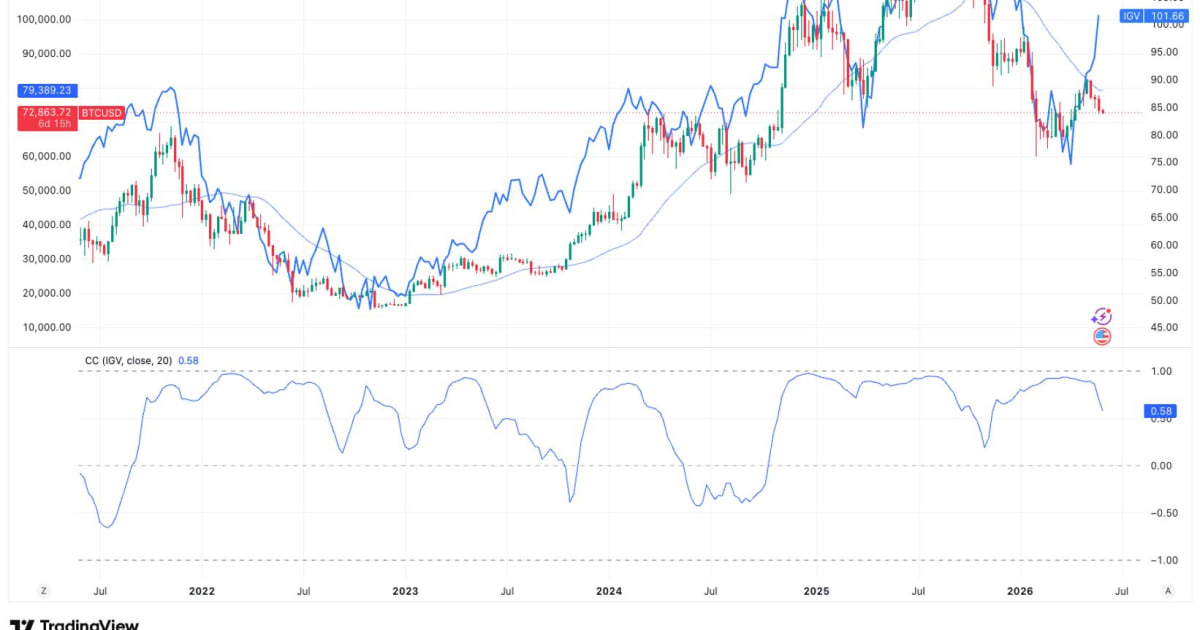
For the better part of three years, Bitcoin and high-growth technology stocks moved in lockstep, driven by a singular macro force: the availability of cheap global liquidity. When the Federal Reserve signaled tightening, both asset classes bled; when liquidity flooded back, both soared. However, recent data confirms a significant statistical breakdown in this correlation. Bitcoin is increasingly acting as an independent volatility engine, leaving software and tech equities to grapple with idiosyncratic challenges like AI-driven margin compression and cooling demand.
This decoupling is not merely a technical anomaly; it is a structural shift. Historically, when crypto liquidity detaches from tech equities, it often precedes a major breakout in market volatility. For the Indian investor, this is a critical juncture. The Indian IT sector, which has long relied on global tech spending cycles, now faces a double-jeopardy scenario: a potential liquidity drain as retail capital chases crypto-native assets, and a fundamental reassessment of valuation multiples in a high-interest-rate environment.
How will the Bitcoin-Tech decoupling impact Indian IT stocks?
The Indian IT sector, represented by heavyweights like TCS and mid-cap innovators like Persistent Systems, has historically been sensitive to the 'Risk-On' sentiment that also fueled the crypto bull runs of 2020-2021. When Bitcoin rallied, retail traders felt wealthier, increasing their appetite for high-beta equity plays. As these assets decouple, we are seeing a 'liquidity migration.' If Bitcoin continues its independent path, capital may flow out of speculative software equity—where P/E ratios remain stretched—and into crypto-adjacent assets or defensive safe havens.
The Sector-Level Breakdown: Winners vs. Losers
The divergence creates a clear bifurcation in the market. High-beta software stocks, particularly those with heavy exposure to US discretionary IT spending, are the primary losers. Conversely, companies providing the infrastructure for decentralized finance or blockchain-enabled enterprise services may find a new, albeit volatile, source of capital. We are observing a shift from 'growth-at-any-price' models to 'liquidity-resilient' defensive positions.
Stock-by-Stock Analysis: Who is in the Crosshairs?
- Tata Consultancy Services (TCS): As a bellwether for the Indian IT sector, TCS remains sensitive to global tech budget allocations. With a P/E ratio hovering near 28x-30x, the company is vulnerable if the broader tech sentiment turns sour. If retail liquidity shifts away from tech, TCS may see a contraction in its valuation multiple despite solid fundamentals.
- Persistent Systems: Known for its aggressive growth in digital engineering, Persistent is a high-beta play. Historically, when tech-crypto correlation breaks, mid-cap stocks like Persistent suffer from 'valuation decompression' as investors rotate into more stable, non-tech assets.
- Coforge: With significant exposure to the insurance and financial services sector, Coforge is sensitive to the same macro liquidity shocks that drive crypto volatility. If the decoupling leads to a broader risk-off environment, expect higher-than-average drawdown risks for this counter.
- Zensar Technologies: Zensar’s reliance on the retail and manufacturing tech spend makes it a target for volatility. A shift in liquidity usually means retail investors trim their most speculative holdings first, and Zensar often falls into that bucket during market corrections.
Expert Perspective: The Bull vs. Bear Case
The current decoupling is a precursor to a 'liquidity vacuum,' where the correlation breakdown forces institutional rebalancing away from software into commodities like Gold or crypto-derivatives. - WelthWest Research Desk
The Bull Case: Proponents argue that Bitcoin’s decoupling proves its maturity as an 'alternative' asset class, which could eventually provide a hedge for Indian portfolios against equity market shocks. If the decoupling is driven by institutional adoption, it could stabilize the broader market by creating a non-correlated asset class that doesn't drag down the Nifty when IT stocks falter.
The Bear Case: Skeptics, particularly those looking at the 2022 market cycle, warn that a sharp breakdown in crypto prices often triggers a margin call effect. When retail traders lose money in crypto, they don't just exit crypto; they liquidate their equity positions to cover losses. This could lead to a 'contagion effect' where the Nifty IT index experiences a sudden, sharp correction despite strong local fundamentals.
Actionable Investor Playbook: Navigating the Volatility
Investors should adopt a 'barbell strategy' to navigate this transition:
- Trim Overvalued IT Exposure: Scale back on high-beta software stocks that are trading at historical P/E premiums. Protect gains in stocks that have rallied significantly in the last two quarters.
- Increase Defensive Allocations: Rotate a portion of the portfolio into gold ETFs or defensive sectors like FMCG and Pharma, which historically show lower correlation to the tech-crypto liquidity cycle.
- Monitor Liquidity Flows: Keep a close watch on the US 10-year Treasury yield. If yields rise alongside Bitcoin, it confirms that the 'liquidity drain' is real, and it is time to move to cash.
Risk Matrix
| Risk Factor | Probability | Impact |
|---|---|---|
| Crypto Flash Crash | Medium | High |
| Broad Market Liquidity Drain | High | Medium |
| Tech Sector Valuation Reset | High | High |
What to Watch Next
The next major catalyst will be the upcoming FOMC meeting minutes and the subsequent release of the US CPI data. These two data points will dictate whether the liquidity environment remains supportive of tech growth or if we are entering a sustained period of 'de-risking.' Monitor the correlation coefficient between the Nifty IT Index and the BTC/USD pair over the next 30 days; a sustained deviation below 0.4 will confirm that the decoupling is structural rather than temporary.
Disclaimer: This content is generated by WelthWest Research Desk based on publicly available reports and is for informational purposes only. It does not constitute financial advice, investment recommendations, or an offer to buy or sell securities. Always consult a qualified financial advisor before making investment decisions.