Key Takeaway
The 'institutionalization' of private markets and the ubiquity of risk-tech like BlackRock’s Aladdin are the twin engines of the next financial era. For India, this translates into a massive valuation re-rating for tech-enabled financial intermediaries and asset managers who can bridge the gap between retail capital and private credit.

BlackRock has signaled a global pivot toward private markets and advanced risk management technology as the defining megatrends of the decade. This shift marks the end of 'simple' investing and the beginning of a data-driven era where Indian wealth-tech firms like KFINTECH and CAMS are positioned as the primary infrastructure beneficiaries. Our deep dive analyzes why the Indian financial landscape is uniquely prepared to capture this FII-led transition into alternative assets and sophisticated risk-tech.
The Paradigm Shift: From Public Liquidity to Private Alpha
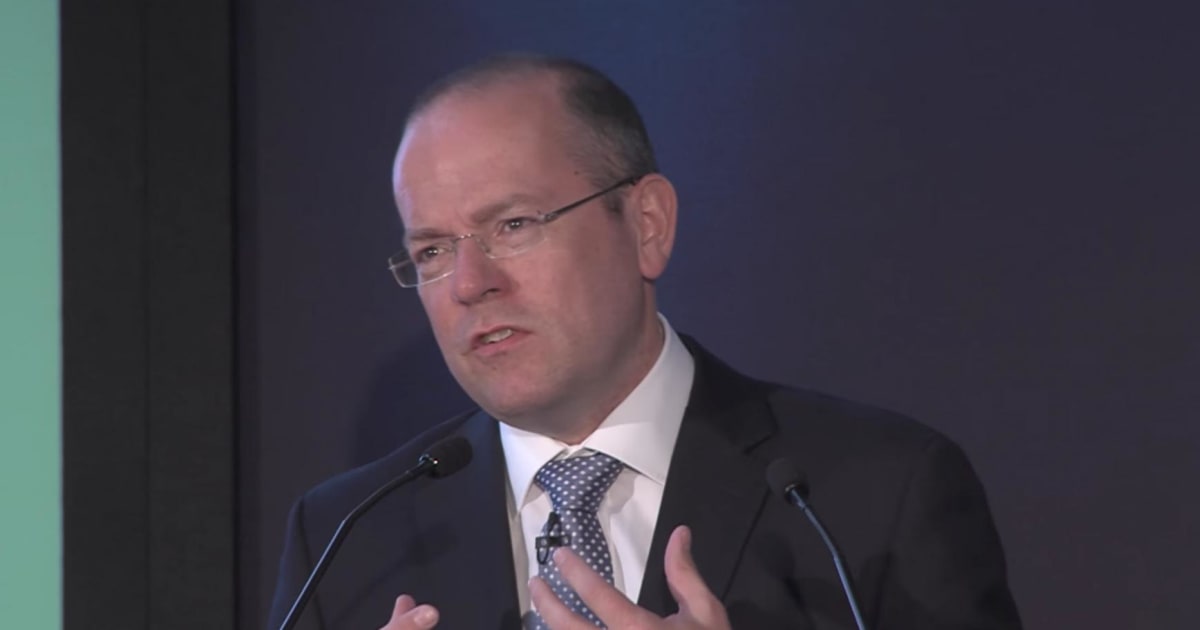
In a recent strategic revelation, Rob Goldstein, Chief Operating Officer at BlackRock, identified two tectonic shifts that will define the next decade of global finance: the institutionalization of private markets and the ascendancy of tech-driven risk management. While these may sound like high-level Wall Street buzzwords, they represent a fundamental rewiring of how capital flows globally. For the Indian equity markets, this isn't just a trend to watch—it is the blueprint for the next leg of the bull run in the Banking and Financial Services (BFSI) sector.
Historically, private markets—comprising private equity, private credit, and infrastructure—were the exclusive playground of sovereign wealth funds and ultra-high-net-worth individuals. However, the 'democratization' of these assets is now underway. As public markets become increasingly efficient and crowded, the search for 'alpha' (excess returns) is moving toward less liquid, more complex private assets. BlackRock, managing over $10 trillion in assets, is betting that the integration of these private assets into traditional portfolios will require a level of technological sophistication previously unseen. This is where Aladdin, BlackRock’s end-to-end investment platform, becomes the industry standard, and where Indian wealth-tech firms find their massive growth runway.
Why This Matters for India Right Now
India is currently witnessing a 'financialization of savings' at an unprecedented scale. Domestic household savings are migrating from physical assets (gold and real estate) to financial assets at a CAGR of over 15%. However, the next phase is the 'sophistication of savings.' Retail investors are no longer content with simple mutual funds; they are moving toward Portfolio Management Services (PMS) and Alternative Investment Funds (AIFs). According to SEBI data, the AUM of the AIF industry in India has grown from approximately ₹1.8 lakh crore in 2018 to over ₹11 lakh crore in 2024. This 6x growth is the direct result of the very megatrend BlackRock has identified.
Deep Market Impact Analysis: The 'Aladdin-ization' of Dalal Street
The integration of advanced risk-tech is no longer optional for Indian Asset Management Companies (AMCs). As the complexity of portfolios increases—incorporating international equities, private credit, and derivatives—the old-school spreadsheet-based risk management is failing. The market is now rewarding firms that own the 'plumbing' of the financial system. In 2022, when global markets faced a liquidity crunch due to rising Fed rates, the Nifty 100 Quality 30 index outperformed the broader market by nearly 8%, largely because the constituent firms had superior risk-mitigation frameworks and tech-enabled cost structures.
The impact on the Indian market is three-pronged:
- FII Appetite for Private Credit: Foreign Institutional Investors (FIIs) are increasingly looking at Indian private credit as a high-yield alternative to US Treasuries. This requires local partners with sophisticated reporting and risk-tracking capabilities.
- Wealth-Tech Dominance: Platforms that provide the backend for AIFs and PMS are seeing their margins expand as they transition from transaction-based pricing to platform-based SaaS (Software as a Service) models.
- The Regulatory Push: SEBI’s increasing focus on transparency and real-time reporting is forcing smaller, tech-laggard fund managers to either consolidate or exit, leaving the field open for tech-heavy giants.
"The future of finance isn't just about who has the most capital, but who has the best data to manage the risk of that capital. Private markets are the new frontier, but tech is the only way to cross it safely." — Senior Analyst, WelthWest Research
How will the growth of Private Credit impact Indian Bank Stocks?
A common question among investors is whether the rise of private credit—a key component of BlackRock's megatrend—will cannibalize the corporate lending business of traditional banks like HDFC Bank or ICICI Bank. The answer is nuanced. While private credit does compete for high-yield mid-market lending, it actually de-risks the banking system. Banks are increasingly moving toward an 'originate-to-distribute' model, where they originate loans and sell them to AIFs or private credit funds. This improves the bank’s Capital Adequacy Ratio (CAR) and Return on Equity (RoE). Therefore, the growth of private markets is structurally bullish for large-cap banks with strong origination engines, even as it creates a new asset class for investors.
Stock-by-Stock Breakdown: The Megatrend Winners
1. KFIN Technologies (KFINTECH)
KFINTECH is the quintessential play on the 'institutionalization' of Indian finance. As a leading provider of SaaS-based end-to-end solutions for the asset management industry, it serves as the backbone for mutual funds, AIFs, and wealth managers. With a market cap of approximately ₹12,000 - ₹15,000 crore and a P/E ratio hovering around 40x, it is not 'cheap,' but its growth is anchored in the tech-risk megatrend. KFINTECH’s expansion into international markets (SE Asia and the Middle East) mirrors BlackRock’s global strategy. Their 'X-Gen' platform is essentially the Indian answer to sophisticated risk-tech, making them a primary beneficiary as fund managers upgrade their infrastructure.
2. Computer Age Management Services (CAMS)
CAMS dominates the mutual fund registrar and transfer agent (RTA) space with over 60% market share. However, the real story for CAMS is its pivot to non-MF businesses. Its foray into Alternative Investment Fund (AIF) servicing and its role as a Central Recordkeeping Agency (CRA) for the National Pension System (NPS) align perfectly with the shift toward private and long-term retirement assets. With an RoE consistently above 40%, CAMS is a cash-generating machine that benefits from the increasing complexity of the Indian financial ecosystem.
3. HDFC Asset Management Company (HDFCAMC)
As one of India’s largest AMCs, HDFC AMC is the primary vehicle for the 'sophistication of savings.' While traditional equity funds remain their bread and butter, their aggressive push into thematic funds and passive strategies requires the exact type of risk-tech infrastructure BlackRock highlighted. With a massive distribution network and a brand that commands trust, HDFC AMC is best positioned to capture the retail shift into more complex, higher-margin private market products as regulations evolve.
4. BSE Limited (BSE)
Often overlooked in the wealth-tech conversation, the BSE has transformed itself through its Star MF platform and its SME exchange. The SME platform is the public market's bridge to private-style investing, offering high-growth, high-risk opportunities that were previously unavailable to retail investors. As the exchange forges ahead with its derivatives segment and tech upgrades, it stands as the 'venue' for the megatrend, benefiting from every uptick in market complexity and volume.
Expert Perspective: The Bull vs. Bear Case
The Bull Argument: Bulls argue that India is at the start of a multi-decade cycle where financial services will contribute a larger share of the GDP. They point to the 'Goldilocks' scenario: a tech-savvy young population, a proactive regulator (SEBI), and a massive inflow of domestic capital. They believe valuations for KFINTECH and CAMS are justified because these are 'toll-bridge' businesses—they collect a fee on every rupee that enters the financial system, regardless of market volatility.
The Bear Argument: Contrarians warn about 'tech-overreach.' The high capital expenditure required to stay relevant in the risk-tech space could squeeze the margins of smaller players. Furthermore, there is a concern that private markets are inherently less transparent. If a major private credit fund defaults, it could trigger a contagion effect that risk-tech—no matter how advanced—might fail to predict. Bears also point to the high P/E multiples of Indian wealth-tech stocks compared to their global peers, suggesting that much of the growth is already priced in.
Actionable Investor Playbook
- The 'Core' Buy: Accumulate KFINTECH and CAMS on 5-10% corrections. These are structural plays with a 3-5 year time horizon.
- The 'Alpha' Play: Watch for the listing of large private equity-backed firms or specialized AIF managers. These will be the direct beneficiaries of the private market boom.
- Sector Rotation: Shift weight from traditional 'low-tech' brokerages to 'high-tech' asset aggregators and platform businesses.
- Entry Strategy: Use a Systematic Equity Plan (SEP) for HDFCAMC to average out the volatility inherent in the AMC sector while capturing the long-term growth in AUM.
Risk Matrix: Assessing the Downside
| Risk Factor | Probability | Impact | Mitigation |
|---|---|---|---|
| Regulatory Tightening (SEBI) | High | Medium | Focus on market leaders with high compliance standards. |
| High Tech Capex | Medium | Low | Prefer firms with high operating leverage (KFINTECH/CAMS). |
| Liquidity Mismatch in Private Credit | Low | High | Diversify across asset classes; avoid over-exposure to AIFs. |
| Global Tech Sell-off | Medium | Medium | Maintain a 20% cash buffer for buy-on-dip opportunities. |
What to Watch Next: The Catalysts
Keep a close eye on the SEBI board meetings in the coming quarters for any announcements regarding the 'MF Lite' regulations or new norms for AIFs. Additionally, the quarterly earnings of BlackRock will provide a global temperature check on the adoption rate of Aladdin and private market inflows. Locally, the monthly AMFI data on AIF and PMS inflows will be the lead indicator for the stocks mentioned above. If AIF AUM continues to grow at >25%, the re-rating of Indian wealth-tech is only just beginning.
Disclaimer: This content is generated by WelthWest Research Desk based on publicly available reports and is for informational purposes only. It does not constitute financial advice, investment recommendations, or an offer to buy or sell securities. Always consult a qualified financial advisor before making investment decisions.