Key Takeaway
Persistent oil prices above $100/bbl act as a 'stealth tax' on the Indian economy, forcing RBI hawkishness and triggering a structural rotation from consumption-heavy sectors to energy-resilient balance sheets.
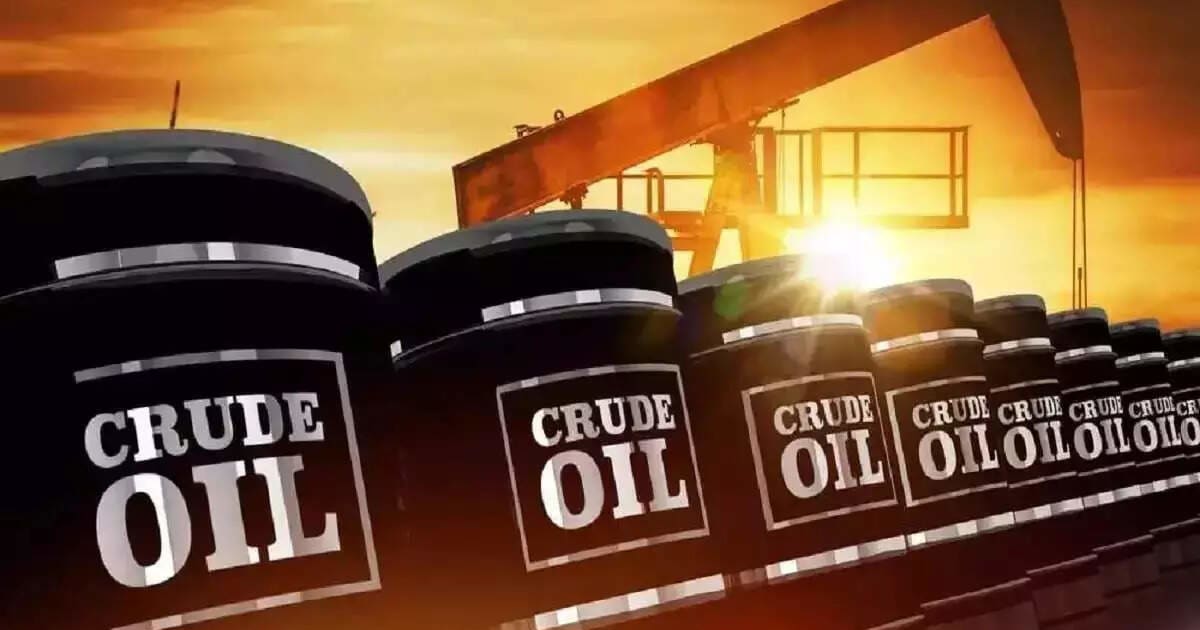
Geopolitical friction in US-Iran nuclear negotiations has created a supply-side shock that threatens to derail India's disinflationary path. We break down the winners and losers in the Nifty 50, providing a data-driven outlook on how this energy volatility will reshape portfolio allocations in the coming quarters.
The $100 Brent Threshold: A Macroeconomic Fault Line
The global energy landscape is undergoing a seismic shift as the fragility of US-Iran nuclear talks evaporates, leaving the market to price in a permanent risk premium. For the Indian economy, which imports over 85% of its crude requirements, Brent crude sustaining levels above $100/bbl is not merely a headline number—it is a structural threat to the Current Account Deficit (CAD) and the Reserve Bank of India’s (RBI) monetary trajectory.
Historically, every $10 rise in oil prices widens India's CAD by approximately 0.4% to 0.5% of GDP. In the current fiscal environment, where the rupee is already under pressure from global yield differentials, this energy-induced import bill expansion risks reviving inflationary expectations, forcing the RBI to keep the repo rate elevated for longer than the market currently discounts.
How does the energy crisis impact Nifty valuations?
The correlation between crude oil prices and Nifty 50 performance is inverse and non-linear. When energy costs spike, the transmission mechanism works in two stages: first, it compresses the operating margins of downstream sectors; second, it forces a contraction in P/E multiples as the 'cost of equity' rises alongside inflation.
In 2022, when Brent hovered near $110/bbl, we witnessed a significant de-rating of consumption-oriented sectors. The current scenario mirrors that period, with the added complexity of lower global growth. Indian corporates in the logistics and manufacturing space are currently seeing input cost inflation that cannot be fully passed on to the end consumer without destroying demand.
Sector-Level Breakdown: Who Wins and Who Loses?
The Downstream Deficit: OMCs and Transport
Oil Marketing Companies (OMCs) like IOCL (NSE: IOCL), BPCL (NSE: BPCL), and HPCL (NSE: HPCL) are caught in a pincer movement. While their Gross Refining Margins (GRMs) may show temporary resilience depending on product cracks, their marketing margins—the profit made on selling fuel at the pump—are heavily suppressed by political compulsions to keep retail prices stable. When oil stays above $100, these companies effectively subsidize the economy, leading to significant earnings volatility.
The Input Cost Victims
Industries with high dependency on crude derivatives, such as Asian Paints (NSE: ASIANPAINT), face dual headwinds: raw material inflation and a softening of demand as household budgets are redirected to fuel and energy. Similarly, the aviation sector, represented by InterGlobe Aviation (NSE: INDIGO), is highly sensitive to ATF (Aviation Turbine Fuel) prices, which constitute nearly 40% of their total operating expenses.
Stock-by-Stock Analysis: Navigating the Volatility
- ONGC (NSE: ONGC) & OIL (NSE: OIL): These are the primary beneficiaries of high crude prices. With their net realization increasing as Brent rises, these upstream producers see direct bottom-line expansion. They remain the only 'hedge' in the energy space.
- IOCL/BPCL/HPCL: These stocks remain 'sells' or 'underweights' in a $100+ environment. Their P/E ratios often look deceptively cheap, but they are 'value traps' during periods of high oil volatility.
- InterGlobe Aviation (IndiGo): The stock is a high-beta play on oil. While they possess strong pricing power, an extended period above $100/bbl will eventually lead to yield compression as discretionary travel slows.
- Asian Paints: With crude derivatives being a major input, the stock typically faces margin pressure. Look for entry points only when crude stabilizes; the current trend remains bearish for their short-term margins.
The Contrarian Perspective: Bulls vs. Bears
The Bear Case: The 'Energy-Inflation-Interest Rate' feedback loop is inevitable. If Brent stays elevated, the RBI will be unable to cut rates, leading to a valuation contraction across the Nifty, particularly in high-growth, high-multiple mid-cap stocks.
The Bull Case: Proponents of the Indian growth story argue that the economy's 'energy intensity' has declined since 2014. Increased domestic production, strategic petroleum reserves, and the aggressive expansion of renewable energy (e.g., Tata Power, Adani Green) provide a buffer that was absent in previous cycles.
Actionable Investor Playbook
- Reduce Beta: Trim exposure to logistics, paint, and airline stocks until the 'Geopolitical Risk Premium' in oil prices subsides.
- Energy Alpha: Maintain a tactical overweight position in upstream producers (ONGC, OIL) as they provide a natural hedge against oil-induced inflation.
- Monitor the RBI: Watch the next MPC meeting minutes. If the tone shifts from 'neutral' to 'hawkish,' reduce equity exposure in favor of liquid debt funds.
- Time Horizon: This is a medium-term structural play. Do not attempt to scalp daily price swings; wait for the 50-day moving average to confirm a trend reversal before adding back high-beta sectors.
Risk Matrix
| Risk Factor | Probability | Impact |
|---|---|---|
| Sustained $110+ Brent | Medium | High (Market Correction) |
| RBI Rate Hike | Low | Very High (Valuation Compression) |
| Geopolitical De-escalation | Medium | High (Sector Rotation) |
What to Watch Next
Investors must keep a close eye on the US EIA Crude Inventory reports and the OPEC+ production quota meetings. Additionally, the upcoming CPI inflation data for India will be the primary catalyst. If inflation prints above 5.5%, expect an immediate sell-off in interest-rate-sensitive stocks, confirming that the oil-inflation transmission is in full effect.
Disclaimer: This content is generated by WelthWest Research Desk based on publicly available reports and is for informational purposes only. It does not constitute financial advice, investment recommendations, or an offer to buy or sell securities. Always consult a qualified financial advisor before making investment decisions.


