Key Takeaway
The era of cheap Chinese industrial exports is ending, threatening a structural shift toward cost-push inflation. Investors must pivot from import-dependent assemblers to commodity-hedged producers as margin compression looms.
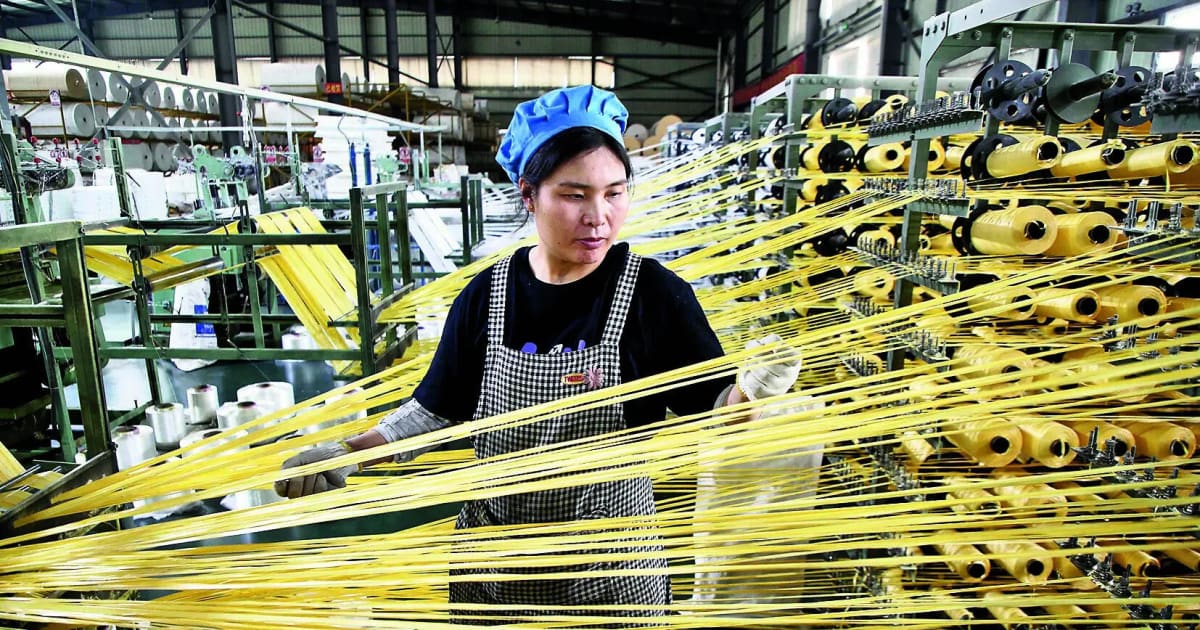
For years, China acted as the world’s deflationary engine. A sharp reversal in their export pricing for energy and semiconductors is now triggering a global cost-push crisis. This shift directly threatens Indian manufacturing margins and complicates the RBI's interest rate trajectory.
The End of the Deflationary Export Era
For the better part of a decade, the global economy relied on China as a reliable source of disinflation. By exporting surplus capacity at rock-bottom prices, Beijing acted as a global shock absorber. That paradigm has officially fractured. Recent data indicates the fastest surge in Chinese export pricing in over three years, signaling a pivotal shift from a 'China-led deflation' environment to a 'China-led cost-push' inflationary cycle.
For the Indian investor, this is not merely a macroeconomic footnote; it is a fundamental threat to the margin-expansion narratives that have driven the Nifty 50 to record highs. When China raises prices on semiconductors, rare earth elements, and energy-intensive intermediate goods, the shock is transmitted directly into the P&L statements of India’s manufacturing and electronics sectors.
Why Is China Raising Prices Now?
The transition is driven by a combination of domestic policy shifts and geopolitical necessity. Beijing is moving away from a volume-at-all-costs manufacturing model toward 'high-quality development,' which prioritizes domestic profitability over market-share dumping. Furthermore, the rising cost of energy inputs and the increasing geopolitical premium on semiconductor components have forced Chinese manufacturers to pass costs onto international buyers. This is a structural change, not a transient blip.
How will the RBI manage inflation if import costs soar?
The Reserve Bank of India (RBI) has been carefully managing a delicate balance between growth and price stability. A surge in input costs via imported inflation forces the central bank into a corner. If manufacturing costs rise, domestic producers will be forced to hike prices, fueling headline CPI. This effectively removes the 'room' for rate cuts that the market has been pricing in for late 2024. If the RBI is forced to keep rates 'higher for longer,' the valuation multiples of growth-oriented stocks will face significant downward pressure.
Market Impact Analysis: The Great Margin Squeeze
Historical parallels are instructive. During the global supply chain crunch of 2022, the Nifty experienced a 10-15% correction as markets realized that input cost inflation was not transitory. We are now entering a similar phase of 'margin compression.'
Sectors that rely heavily on imported components—specifically consumer electronics and automobile OEMs—will feel the heat first. These companies operate on razor-thin margins. A 5-7% increase in the cost of imported chips or steel components can wipe out 20-30% of net profitability. Conversely, domestic metal producers and energy explorers stand to gain as the 'import substitution' theme becomes a necessity rather than a choice.
Stock-by-Stock Breakdown: Winners and Losers
Investors must differentiate between those who possess pricing power and those who are captive to input costs.
- TATASTEEL (NSE: TATASTEEL): Winner. As China reduces its aggressive export dumping, domestic steel prices in India gain stability. With a market cap of over ₹1.8 lakh crore, Tata Steel is well-positioned to benefit from improved domestic pricing power.
- HINDALCO (NSE: HINDALCO): Winner. Aluminium and copper demand remains robust. If China’s export prices rise, the global floor for these commodities follows suit, benefiting Hindalco’s upstream margins.
- ONGC (NSE: ONGC) & RELIANCE (NSE: RELIANCE): Winners. As global energy prices are pushed upward by the cost-push cycle, these upstream giants see direct improvement in realizations per barrel of oil equivalent.
- DIXON (NSE: DIXON): Loser. As a major electronics contract manufacturer, Dixon is highly sensitive to semiconductor and PCB pricing. While their volume growth is strong, margin expansion will be challenged if they cannot pass on the increased input costs to their brand partners.
- BHARATFORGE (NSE: BHARATFORGE): Mixed/Loser. While their defense segment provides a hedge, their core automotive forging business is highly susceptible to the dual pressure of slowing global demand and rising steel input costs.
Expert Perspective: Bull vs. Bear
The Bull Argument: Bulls argue that this price hike will force India to accelerate its 'Make in India' and PLI (Production Linked Incentive) schemes. They believe that companies that successfully localize their supply chains will gain massive market share, effectively turning this crisis into a long-term competitive advantage.
The Bear Argument: Bears contend that the transition to local sourcing is a multi-year process. In the interim, the combination of high interest rates and compressed margins will lead to earnings downgrades, particularly in the mid-cap manufacturing space, causing a valuation reset.
Actionable Investor Playbook
1. Defensive Rotation: Reduce exposure to high-beta electronics assemblers that lack strong pricing power. Reallocate into large-cap commodity producers that act as a natural hedge against inflation.
2. Monitor the WPI-CPI Spread: Keep a close watch on the Wholesale Price Index (WPI). If WPI accelerates faster than CPI, it confirms that manufacturers are absorbing the costs, which is a sell signal for margins.
3. Time Horizon: This is a medium-term play (6-18 months). Do not look for immediate catalysts; wait for the quarterly earnings reports to see which companies are reporting margin erosion.
Risk Matrix
| Risk Factor | Impact | Probability |
|---|---|---|
| RBI Rate Hike | High | Medium |
| Tech Supply Chain Disruption | Medium | High |
| Global Growth Slowdown | High | Medium |
What to Watch Next
The next major catalyst will be the upcoming RBI Monetary Policy Committee (MPC) meeting. Pay close attention to the Governor's commentary on 'imported inflation.' Additionally, monitor Chinese Producer Price Index (PPI) releases—if they continue to rise, the global cost-push cycle is confirmed. Finally, watch for the Q3 earnings guidance from major Indian auto OEMs; any mention of 'input cost headwinds' will be the canary in the coal mine for the broader manufacturing sector.
Disclaimer: This content is generated by WelthWest Research Desk based on publicly available reports and is for informational purposes only. It does not constitute financial advice, investment recommendations, or an offer to buy or sell securities. Always consult a qualified financial advisor before making investment decisions.