Key Takeaway
Colombia’s unexpected rate pause signals a rising 'political risk premium' in Emerging Markets. For Indian investors, this translates to heightened FII volatility and downward pressure on the Rupee as global funds pivot toward safe-haven assets.
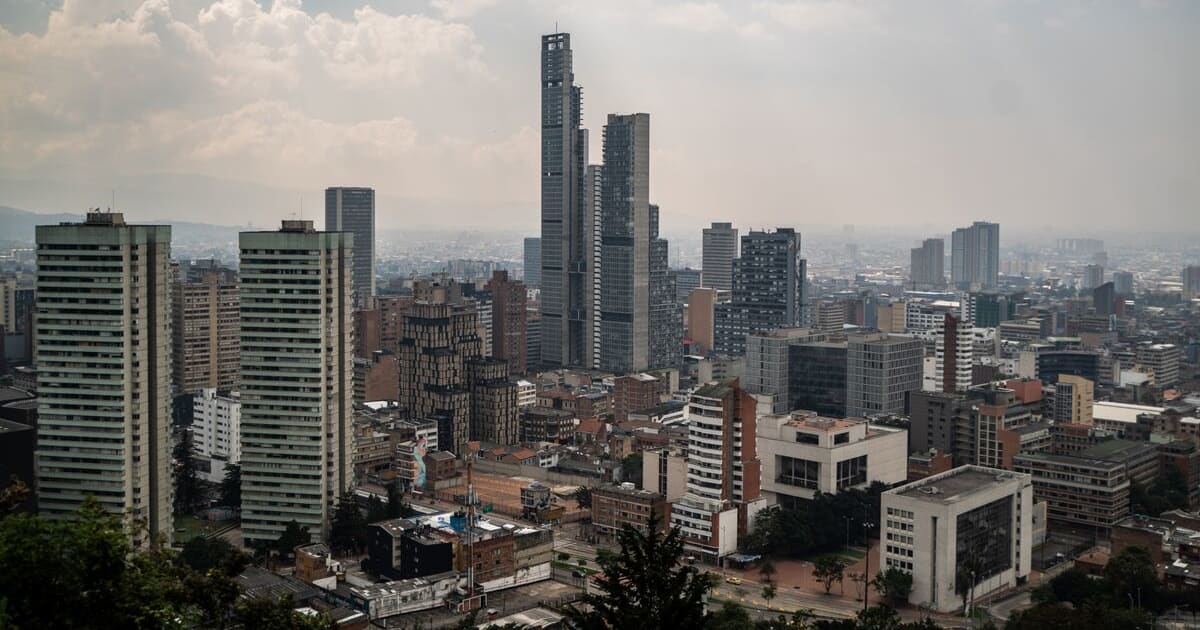
The Colombian central bank's decision to hold rates steady amid election uncertainty has sent shockwaves through the EM currency landscape. While geographically distant, the move reinforces a bearish narrative for developing economies, potentially triggering defensive profit-taking in high-valuation Indian equities. This deep dive explores the mechanics of EM contagion and which NSE stocks are most at risk.
The Bogota Butterfly Effect: Why a Rate Hold in Colombia Rattles Dalal Street
In the interconnected web of global finance, a policy shift in Bogota can echo through the trading floors of Mumbai. Colombia’s central bank, Banco de la República, recently stunned markets by opting for a surprise rate hold, defying widespread expectations of a dovish cut. While the immediate casualty was the Colombian Peso (COP), which experienced a sharp plunge, the secondary casualty is the collective confidence in Emerging Market (EM) central bank independence.
For the Indian investor, this isn't just a headline about a distant Latin American economy. It is a fundamental shift in the 'Risk-Off' narrative. When a major EM player exhibits signs of political interference or monetary unpredictability—especially weeks before a pivotal election—global institutional investors don't just sell that country; they reassess their entire EM allocation. With India trading at a premium (Nifty 50 P/E ratio hovering around 23x compared to the historical average of 20x), any spike in the EM Risk Premium makes Indian equities a prime target for liquidity-driven sell-offs.
The Mechanics of Contagion: From the Peso to the Rupee
Why does Colombia matter? It serves as a canary in the coal mine for political contagion. The surprise hold suggests that the central bank may be reacting to fiscal pressures or populist political rhetoric rather than pure economic data. This triggers a flight to safety, strengthening the US Dollar Index (DXY) and Gold. As the DXY climbs, the Indian Rupee (INR) faces structural pressure, currently testing the 83.50-84.00 range against the dollar.
Historical data suggests that during the 'Taper Tantrum' of 2013 and the EM rout of 2018, idiosyncratic shocks in one EM (like Turkey or Argentina) led to a generalized withdrawal from all developing markets. India, despite its robust domestic growth, often suffers 'collateral damage' because it is the most liquid market for Foreign Institutional Investors (FIIs) to exit when they need to raise cash quickly.
How will EM volatility affect Indian bank stocks?
The banking sector, particularly private heavyweights, is the front line of any FII-led exodus. Because FIIs hold nearly 45-50% of the free float in top-tier Indian banks, these stocks act as the market's 'ATM.' When global risk sentiment sours, these are the first positions to be trimmed.
HDFC Bank (NSE: HDFCBANK), with its massive market capitalization and high institutional ownership, often bears the brunt. If the Colombia situation leads to a broader EM rebalancing, we could see HDFC Bank retrace toward its support levels near ₹1,420, representing a potential 5-7% volatility window. Similarly, ICICI Bank (NSE: ICICIBANK), despite its stellar Q3/Q4 performance and a comfortable P/B ratio of ~3.1x, remains sensitive to the 'India Premium' being questioned by global macro hedge funds.
Stock-by-Stock Breakdown: The FII Exposure Heatmap
- HDFC Bank (HDFCBANK): As the bellwether of the Indian banking system, its FII holding stands at approximately 47%. Any shift in the MSCI EM Index weighting or a general EM risk-off sentiment leads to immediate selling pressure. Peer comparison: Kotak Mahindra Bank (KOTAKBANK).
- Reliance Industries (RELIANCE): As a proxy for India’s GDP, Reliance is a staple in global EM portfolios. With a P/E of 28x, it is not 'cheap' by global standards. A rise in the EM risk premium could see the stock test its 200-day moving average as funds rotate into US Treasuries.
- Infosys (INFY): Tech stocks are double-edged swords in this scenario. While they benefit from a weaker Rupee (as exporters), they are also the first to be sold by global funds during a macro-driven panic. Infosys, with high FII participation (~34%), is highly sensitive to US Fed commentary and global risk appetite.
- ICICI Bank (ICICIBANK): Often preferred over HDFC Bank by FIIs in recent quarters, its valuation is vulnerable if the 'flight to safety' accelerates. Watch for a break below the ₹1,050 level if EM outflows intensify.
- Axis Bank (AXISBANK): With significant institutional backing, Axis Bank typically mirrors the movement of the Nifty Bank index during global shocks. Its current valuation of ~2.2x P/B offers some cushion, but it is not immune to a sector-wide derating.
Expert Perspective: The Bull vs. Bear Case
"The Colombia rate hold is a classic example of 'Policy Fog.' Investors hate being surprised by central banks. While India's macros are worlds apart from Colombia's, the 'EM' tag is a shared burden. We expect a 2-3% tactical correction in FII-heavy stocks as funds re-calculate their risk-adjusted returns." — Senior Macro Strategist, WelthWest Research
The Bear Argument: Bears argue that India is currently 'priced for perfection.' With the Colombia incident highlighting political risks in EMs, any uncertainty regarding India's own upcoming electoral or fiscal cycle could lead to a significant P/E contraction. They point to the fact that FIIs have been net sellers in several sessions over the past month, indicating a lack of conviction at current levels.
The Bull Argument: Bulls maintain that India's decoupling is real. With domestic institutional investors (DIIs) pumping in billions every month via SIPs (Systematic Investment Plans), the market is no longer a slave to FII whims. They argue that any dip caused by EM contagion is a 'generational buying opportunity' in high-quality stocks like HDFC Bank and Reliance.
Actionable Investor Playbook: Navigating the EM Storm
In a period of heightened EM risk, the strategy must shift from 'Aggressive Growth' to 'Defensive Quality.' Here is how to position your portfolio:
- The 'Buy the Dip' Zone: For long-term investors, look for entries in HDFC Bank at ₹1,380-₹1,420 and Reliance at ₹2,750-₹2,800. These levels historically represent strong institutional support.
- Sector Rotation: Move a portion of the portfolio into FMCG (Hindustan Unilever, ITC) and Pharma (Sun Pharma, Cipla). These sectors are less sensitive to FII outflows and provide a hedge against a depreciating Rupee.
- Currency Hedge: If you have significant exposure to high-beta midcaps, consider hedging with Gold ETFs or Sovereign Gold Bonds (SGBs). Gold typically thrives when EM currencies like the Peso and Rupee are under pressure.
- Time Horizon: This is a 3-6 month volatility play. Do not use excessive leverage in the F&O segment, as 'stop-loss hunting' is common during EM risk-off events.
Risk Matrix: Assessing the Contagion
| Risk Factor | Probability | Impact on Nifty |
|---|---|---|
| Political Contagion (Other EMs follow Colombia) | Medium (40%) | High (-5% to -8%) |
| DXY Surges above 106 | High (65%) | Moderate (-3% to -5%) |
| Massive FII Exit from India | Low (20%) | Severe (-10%+) |
What to Watch Next: The Catalyst Calendar
To stay ahead of the curve, investors should monitor these key data points over the next 30 days:
- US Fed Minutes: Any hint of 'higher for longer' interest rates will exacerbate the EM pain started by Colombia.
- RBI Policy Stance: If the RBI maintains a hawkish tone while other EMs falter, it could actually attract 'carry trade' inflows to India, offsetting the Colombia-induced gloom.
- FII Flow Data: Daily monitoring of NSDL data is crucial. A consecutive 5-day selling streak of >₹2,000 crore would confirm the 'Risk-Off' trend.
- Colombia Election Polls: Any further shift toward populist fiscal policies will keep the EM Risk Premium elevated.
In conclusion, while Colombia's rate decision may seem like a localized event, it is a symptom of a broader malaise in Emerging Markets. Indian investors must look past the domestic growth story and acknowledge the global liquidity pipes that connect Bogota to Mumbai. Staying cautious on high-FII-concentration stocks while accumulating on dips remains the most prudent path forward.
Disclaimer: This content is generated by WelthWest Research Desk based on publicly available reports and is for informational purposes only. It does not constitute financial advice, investment recommendations, or an offer to buy or sell securities. Always consult a qualified financial advisor before making investment decisions.