Key Takeaway
As Brent crude pivots above the $80/bbl threshold, India’s import bill expands, threatening corporate margins and RBI policy flexibility. Investors should rotate from high-beta consumption stocks into defensive energy plays to navigate the volatility.
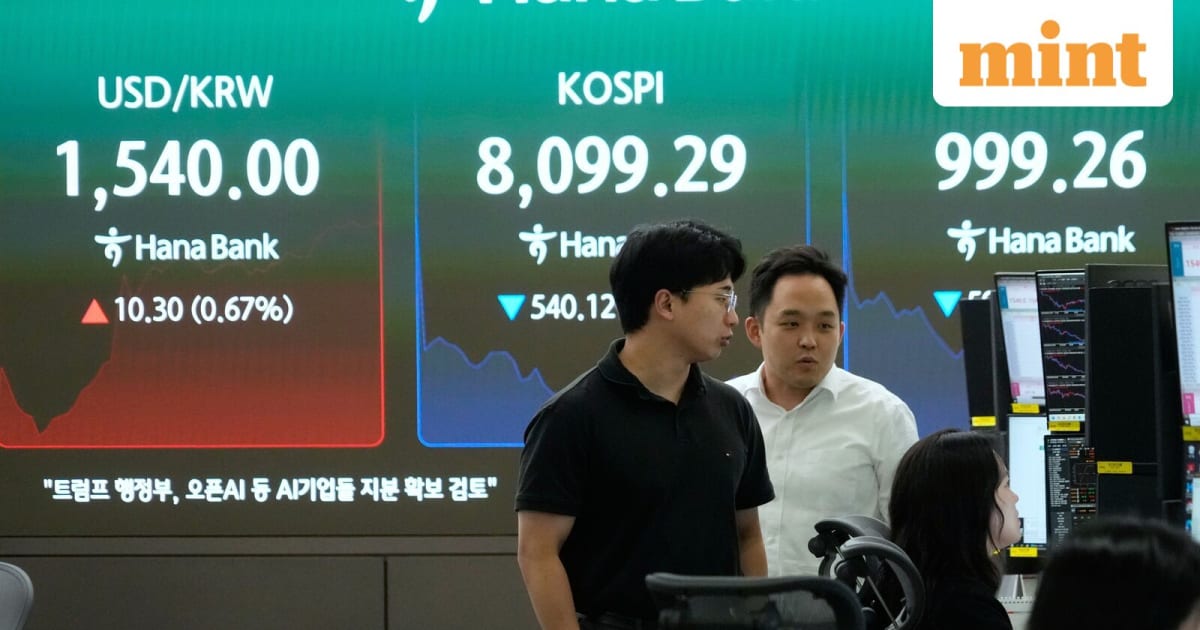
The recent spike in global oil prices is triggering a sell-off across Asian equities, with the Nifty 50 facing mounting pressure. We analyze the sector-specific fallout for Indian markets, identifying the winners and losers in this energy-constrained environment.
The Energy Headwind: Why Crude Oil is Dictating Market Sentiment
Global equity markets are currently locked in a tug-of-war with energy prices. As Brent crude oil makes a decisive push toward the $80/bbl handle, the ripple effects are being felt acutely across Asian bourses, most notably in India. For a nation that imports over 85% of its crude requirements, the energy narrative is not merely a commodity trade—it is a macroeconomic imperative that dictates fiscal health, inflation targets, and foreign institutional investor (FII) flows.
Historically, the correlation between oil prices and the Nifty 50 is inverse. When energy costs climb, the Current Account Deficit (CAD) widens, placing downward pressure on the Indian Rupee (INR). This currency depreciation, combined with imported inflation, forces the Reserve Bank of India (RBI) into a hawkish corner, effectively putting a ceiling on equity market valuations.
How Does the Crude Oil Price Spike Impact Indian Stock Market Returns?
The mechanics of an oil shock are structural. When crude prices rise, two things happen simultaneously: corporate margins contract due to higher input costs, and consumer discretionary spending declines as household budgets are squeezed by elevated fuel prices. During the 2022 energy crisis, the Nifty 50 witnessed a drawdown of nearly 12% over three months as Brent crude consistently traded above the $95/bbl mark. Current data suggests we are seeing a similar, albeit more contained, volatility profile.
The market impact is binary. Upstream companies benefit from higher realization prices, while downstream firms—specifically Oil Marketing Companies (OMCs) and consumer-facing manufacturers—face margin compression. We are currently observing a sector rotation where capital is fleeing high-multiple consumer stocks in favor of energy-resilient assets.
The Sector-Level Fallout: Winners and Losers
- Upstream Energy (Winners): Companies like ONGC (BSE: 500312) and OIL (BSE: 533106) see direct bottom-line expansion as their realization per barrel increases without a commensurate rise in extraction costs.
- OMCs (Losers): IOCL (BSE: 530965), BPCL (BSE: 500547), and HPCL (BSE: 500104) are trapped. While they can pass on costs, political sensitivity often prevents full price hikes, leading to under-recoveries and suppressed EBITDA margins.
- Aviation & Manufacturing: InterGlobe Aviation (IndiGo) (NSE: INDIGO) faces immediate pressure as Aviation Turbine Fuel (ATF) accounts for roughly 40% of their operational expenditure. Similarly, Asian Paints (NSE: ASIANPAINT) faces margin erosion due to the petroleum-based nature of their raw material inputs.
Stock-by-Stock Breakdown: Navigating the Volatility
ONGC (BSE: 500312): With a market cap exceeding ₹4 lakh crore, ONGC serves as the primary hedge against oil inflation. Their P/E ratio remains attractive relative to global peers, and higher realization prices directly boost their free cash flow, which supports consistent dividend payouts.
BPCL (BSE: 500547): As an OMC, BPCL is highly sensitive to the 'marketing margin'—the difference between the retail price and the cost of crude. When crude spikes, this margin narrows. Watch for government intervention in pricing policies; any move toward full deregulation is a bullish signal, but in the current climate, expect volatility.
InterGlobe Aviation (NSE: INDIGO): IndiGo is the dominant player in Indian aviation, but their cost structure is essentially a proxy for oil prices. With ATF costs surging, expect quarterly earnings to reflect margin pressure, regardless of high passenger load factors.
Asian Paints (NSE: ASIANPAINT): Paint companies are 'crude-derivative' intensive. As crude prices rise, the cost of raw materials like titanium dioxide and monomers increases. While they hold strong pricing power, the lag in passing these costs to the consumer will reflect in lower Q3 and Q4 margins.
Expert Perspective: The Bull vs. Bear Debate
The Bear Case: Analysts at WelthWest Research note that if Brent stays above $80/bbl, the RBI will be forced to maintain higher interest rates for longer to combat imported inflation. This 'higher-for-longer' environment raises the cost of capital for India Inc., compressing P/E multiples across the board.
The Bull Case: Contrarians argue that India’s economic growth is decoupling from oil. With a massive push toward Renewable Energy (RE) and Electric Vehicles (EVs), the long-term intensity of oil consumption is falling. Bulls suggest that current pullbacks in high-quality stocks like Asian Paints offer an entry point for long-term investors who can look past a 1-2 quarter earnings dip.
Actionable Investor Playbook
Investors should adopt a barbell strategy:
- Defensive Allocation: Increase exposure to upstream energy stocks that act as a natural hedge.
- Cash Management: Maintain a 15-20% cash position to deploy during sharp corrections in high-quality FMCG or paint stocks that are currently over-punished.
- Avoid High-Beta: Trim positions in aviation and logistics firms until crude oil stabilizes below the $75/bbl mark.
Risk Matrix
| Risk Factor | Impact | Probability |
|---|---|---|
| Sustained Brent >$85/bbl | High | Moderate |
| RBI Rate Hike | Medium | Low |
| Significant Rupee Depreciation | High | Moderate |
What to Watch Next
The immediate catalyst will be the upcoming OPEC+ production meeting and the monthly US CPI inflation data. Furthermore, watch for the RBI Monetary Policy Committee (MPC) minutes, which will provide insight into how the central bank views the recent energy-induced inflationary pressures. If the RBI shifts to a more 'cautious' stance, expect the Nifty 50 to retest its 200-day moving average.
Disclaimer: This content is generated by WelthWest Research Desk based on publicly available reports and is for informational purposes only. It does not constitute financial advice, investment recommendations, or an offer to buy or sell securities. Always consult a qualified financial advisor before making investment decisions.


