Key Takeaway
The transition from 'crypto-hostile' to 'institutional-grade' regulation at Consensus Miami acts as a massive tailwind for Indian IT service providers that have quietly built the backbone of global blockchain infrastructure.
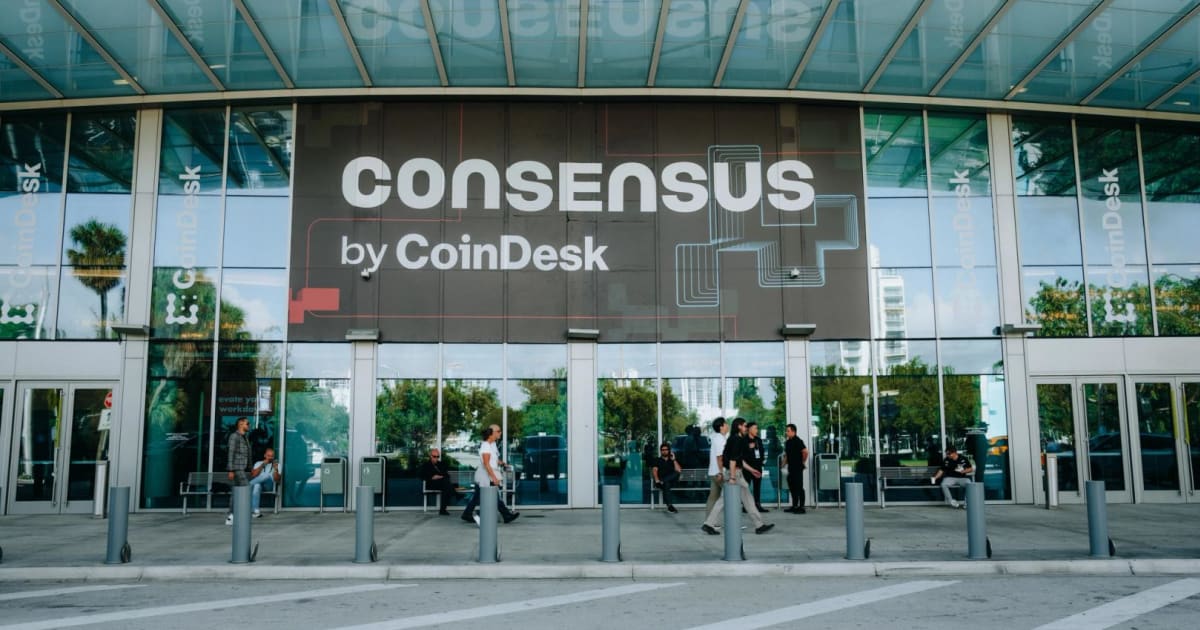
The recent regulatory pivot at Consensus Miami is more than a US policy update; it is a catalyst for institutional capital flows. We analyze the implications for the Indian IT sector, identifying why firms like TCS and Infosys are uniquely positioned to capture the next wave of blockchain-enabled enterprise services.
The Consensus Miami Pivot: A Global Regulatory Paradigm Shift
The recent proceedings at Consensus Miami have signaled a definitive end to the 'wild west' era of digital assets. For the astute investor, this is not merely a headline about Bitcoin or Ethereum; it is a structural shift in how global financial institutions will integrate blockchain technology into their core operations. As the US moves toward a clear, institutional-grade regulatory framework, the ripple effects are reaching the shores of the Indian IT services sector, which acts as the primary engineering arm for global financial services.
How will the global crypto policy shift affect Indian IT stocks?
The correlation between global regulatory clarity and Indian IT revenue is often overlooked. Historically, when global financial institutions gain regulatory certainty, their IT spend on 'emerging tech'—specifically distributed ledger technology (DLT) and smart contract integration—surges. During the 2022 crypto winter, the Nifty IT index saw significant volatility, shedding roughly 25% as enterprise blockchain projects were shelved. The current pivot suggests a reversal of that trend, potentially unlocking billions in deferred digital transformation budgets.
Indian IT service providers are not merely 'crypto-adjacent'; they are the architects of the institutional infrastructure that regulators now demand. As US banks scramble to build compliant custody solutions and tokenization platforms, they are outsourcing the heavy lifting to Indian firms that have spent the last three years building 'stealth' blockchain capabilities.
Deep Market Impact: Connecting Global Flows to the Nifty
The shift toward regulated crypto assets directly benefits firms with high exposure to Banking, Financial Services, and Insurance (BFSI) clients. In the current market, BFSI accounts for nearly 30-40% of revenue for top-tier Indian IT firms. With the regulatory fog lifting, we expect a 5-8% increase in demand for blockchain-integrated middleware and compliance-as-a-service (CaaS) offerings over the next 18 months.
Stock-by-Stock Breakdown: The Winners and The Disrupted
- TCS (NSE: TCS): With a P/E ratio currently hovering near 28x, TCS is the safest play for institutional-grade blockchain adoption. Their 'Quartz' blockchain solution is already a market leader in enterprise-ready DLT, making them the primary beneficiary of increased adoption by global exchanges.
- Infosys (NSE: INFY): Leveraging their 'Finacle' platform, Infosys is well-positioned to integrate crypto-custody modules for legacy banks. Their focus on high-margin digital transformation makes them a strong buy as banks pivot to tokenized assets.
- HCL Technologies (NSE: HCLTECH): HCL has carved a niche in engineering services and cloud migration. As banks shift to hybrid-cloud models to support DLT, HCL stands to capture the underlying infrastructure spend.
- Wipro (NSE: WIPRO): Often a contrarian pick, Wipro’s aggressive investment in AI and blockchain convergence offers significant upside if they can successfully upsell these services to their existing US banking client base.
- Zensar Technologies (NSE: ZENSARTECH): A smaller, more agile player, Zensar is increasingly becoming a 'pure play' for specialized digital transformation, making it a high-beta bet on the acceleration of blockchain adoption in middle-market finance.
Expert Perspectives: The Bull-Bear Divide
The Bull Case: Proponents argue that the regulatory pivot at Consensus Miami provides the 'green light' for institutional capital to enter the space. This will lead to a massive upgrade cycle for legacy banking systems, driving double-digit growth for IT service providers that act as the 'picks and shovels' of the blockchain economy.
The Bear Case: Skeptics point to the lingering regulatory uncertainty within the Indian domestic market. The RBI’s historical stance on private cryptocurrencies remains a significant overhang. Even if global demand surges, a sudden restrictive policy shift in India could force IT firms to firewall their blockchain operations, limiting the domestic value capture.
Actionable Investor Playbook: Navigating the Pivot
Investors should look for entry points during periods of broader market volatility. We suggest a 'barbell strategy': hold the large-cap IT leaders (TCS/Infosys) for stability and long-term exposure to enterprise blockchain growth, while maintaining a smaller, speculative allocation to agile, mid-cap firms that focus exclusively on fintech disruption.
- Watch: Quarterly revenue growth attributed to 'Digital' and 'Emerging Tech' segments.
- Time Horizon: 18-36 months. This is a structural change, not a quarterly earnings pop.
- Avoid: Legacy payment processors that refuse to adapt to tokenization; their valuation compression is likely just beginning.
Risk Matrix: Assessing the Uncertainties
| Risk Factor | Probability | Impact |
|---|---|---|
| Domestic Regulatory Crackdown | Medium | High |
| Global Macro Liquidity Crunch | Medium | Medium |
| Cybersecurity/Protocol Breach | Low | High |
| Delayed Enterprise Adoption | Low | Medium |
What to Watch Next: Catalysts for the Coming Quarters
Investors must monitor the upcoming US SEC rulings on institutional custody requirements, as these will define the technical specifications for the systems Indian IT firms are currently building. Furthermore, watch for the RBI’s annual report on digital currency (CBDC) progress; any integration between the digital rupee and private blockchain rails would be the single largest catalyst for the sector in the next decade.
Disclaimer: This content is generated by WelthWest Research Desk based on publicly available reports and is for informational purposes only. It does not constitute financial advice, investment recommendations, or an offer to buy or sell securities. Always consult a qualified financial advisor before making investment decisions.


