Key Takeaway
The modest DeFi rally signals a return of retail risk appetite, yet Indian institutional capital remains sidelined by regulatory friction. Investors should watch fintech infrastructure providers over direct crypto proxies.
As Uniswap and DeFi tokens show signs of life, the Indian market remains at a regulatory crossroads. We break down the impact on local fintech players, banking intermediaries, and the long-term outlook for digital asset integration in India.
The DeFi Pulse: Is the Crypto Winter Finally Thawing?
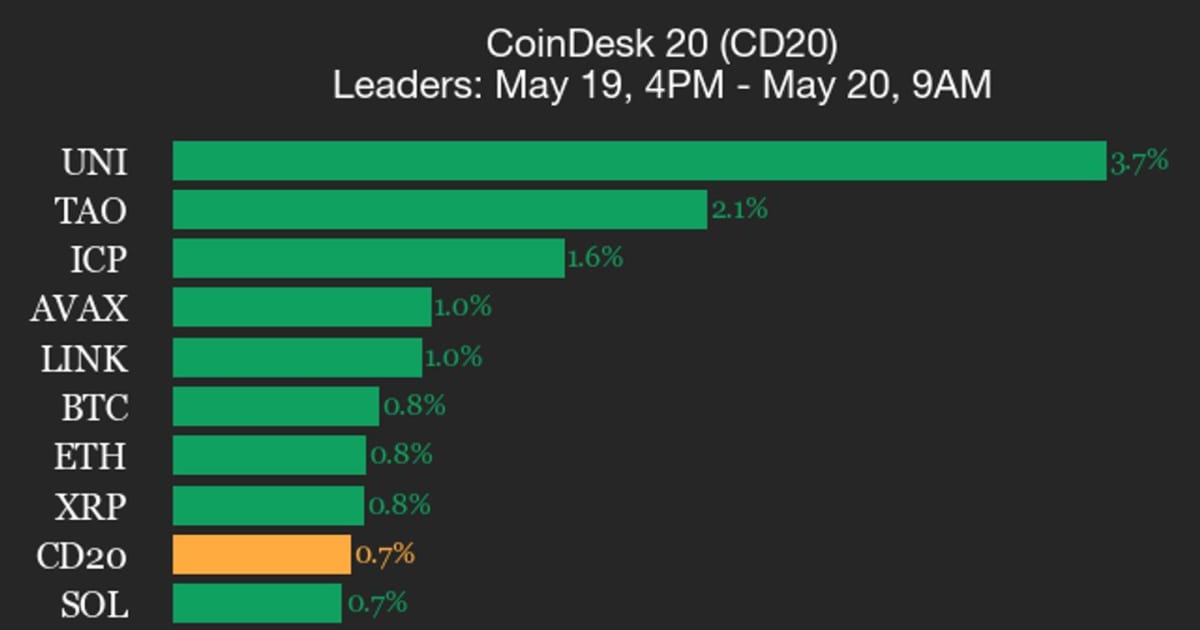
The recent 3.7% uptick in Uniswap (UNI) has sent a ripple through global decentralized finance (DeFi) markets, acting as a bellwether for a broader shift in risk-on sentiment. While the move is marginal in the context of the trillion-dollar crypto market, it highlights a critical pivot: investors are slowly rotating back into utility-based tokens. For the Indian investor, this isn't just about crypto price action—it is a barometer for retail sentiment that often precedes shifts in local fintech adoption.
How will the DeFi resurgence affect Indian equity markets?
The correlation between global crypto assets and the Nifty 50 has historically been tenuous, yet the indirect impact on Indian fintech stocks is significant. When DeFi assets rally, retail participation in Indian crypto-adjacent platforms typically spikes, driving transaction volumes and service fee revenue for domestic fintech startups. However, unlike in the US, where institutional integration is accelerating, the Indian market remains governed by the 'triad of caution': the RBI’s skepticism, SEBI’s evolving regulatory framework, and the tax burden on virtual digital assets (VDAs).
Historical Parallels: Lessons from 2022
During the 2022 crypto liquidity crunch, we observed a distinct decoupling between Indian retail banking stocks and global crypto assets. When Bitcoin shed 60% of its value, Indian banking stocks like HDFC Bank (HDFCBANK) actually outperformed, as domestic capital fled speculative assets for the safety of high-yield savings and traditional equities. If the current DeFi recovery sustains, we expect to see a 'flight to quality' among Indian investors, where crypto exposure remains a satellite play rather than a core portfolio component.
Stock-by-Stock Breakdown: Who Wins and Who Loses?
While direct crypto exposure is nonexistent among Nifty 50 constituents, the secondary effects are measurable through the lens of digital infrastructure and banking.
- Paytm (PAYTM): As a major player in digital payments, Paytm stands to gain if retail interest in digital assets transitions into broader wallet-based transactions. However, regulatory scrutiny on their lending business continues to suppress valuations.
- BSE Ltd (BSE): As the exchange looks to expand its digital asset infrastructure, any sustained DeFi rally could pressure BSE to accelerate its blockchain-based settlement frameworks, potentially boosting their fintech-as-a-service revenue.
- HDFC Bank (HDFCBANK): Positioned as a long-term loser in the DeFi paradigm. If decentralized lending protocols gain traction, traditional retail banking margins on personal loans and credit cards will face long-term downward pressure.
- Tata Consultancy Services (TCS): A massive winner in the infrastructure layer. As banks scramble to integrate blockchain for cross-border settlements to compete with DeFi, TCS’s enterprise blockchain division is a primary beneficiary of corporate IT spending.
- Info Edge (NAUKRI): Through their venture arm, they hold significant stakes in various fintech unicorns. A DeFi recovery creates a favorable climate for their portfolio companies to go public, potentially unlocking latent value.
Expert Perspective: The Bull vs. Bear Divide
The Bull Case: Proponents argue that the Uniswap-led recovery is the start of a 'DeFi Summer 2.0.' They believe that as global interest rates stabilize, capital will flow back into high-yield DeFi protocols, forcing Indian regulators to adopt a more pragmatic approach to remain competitive in the global digital economy.
The Bear Case: Skeptics point to the 30% tax on crypto gains in India as an insurmountable barrier to adoption. They argue that DeFi is currently a 'peripheral novelty' and that Indian retail investors will continue to favor the stability of domestic mutual funds and equity ETFs, rendering the DeFi recovery irrelevant to the average NSE investor.
Actionable Investor Playbook
Investors should not chase the DeFi rally through direct crypto-assets. Instead, focus on the 'picks and shovels' of the Indian digital economy:
- Watch List: Monitor transaction volumes on Indian crypto-adjacent exchanges. A 10-15% sustained increase in volume is the signal for a shift in retail sentiment.
- Strategic Allocation: Increase exposure to IT services firms (e.g., TCS, Infosys) that are building the backend for institutional blockchain adoption.
- Conservative Hedge: Maintain a core position in banking leaders like ICICI Bank (ICICIBANK). While DeFi is a threat, it remains at least 5-7 years away from disrupting the core Indian retail banking moat.
Risk Matrix
| Risk Factor | Probability | Impact |
|---|---|---|
| Regulatory Crackdown (RBI/SEBI) | High | High |
| Global Crypto Liquidity Crunch | Medium | Medium |
| Tax Policy Revision | Low | High |
What to watch next?
The next major catalyst is the upcoming RBI policy committee meeting. Any commentary regarding the 'Digital Rupee' (CBDC) adoption rates will serve as a proxy for the government's stance on private decentralized assets. Additionally, monitor the Q3 earnings reports for Indian fintech firms; look for specific disclosures regarding 'blockchain-based product development' as a key performance indicator.
Disclaimer: This content is generated by WelthWest Research Desk based on publicly available reports and is for informational purposes only. It does not constitute financial advice, investment recommendations, or an offer to buy or sell securities. Always consult a qualified financial advisor before making investment decisions.