Key Takeaway
The ₹29 LPG hike signals a strategic shift toward restoring OMC marketing margins, potentially adding ₹1,200-1,500 crore to collective quarterly EBITDA, though it poses a near-term inflation risk for the FMCG sector.
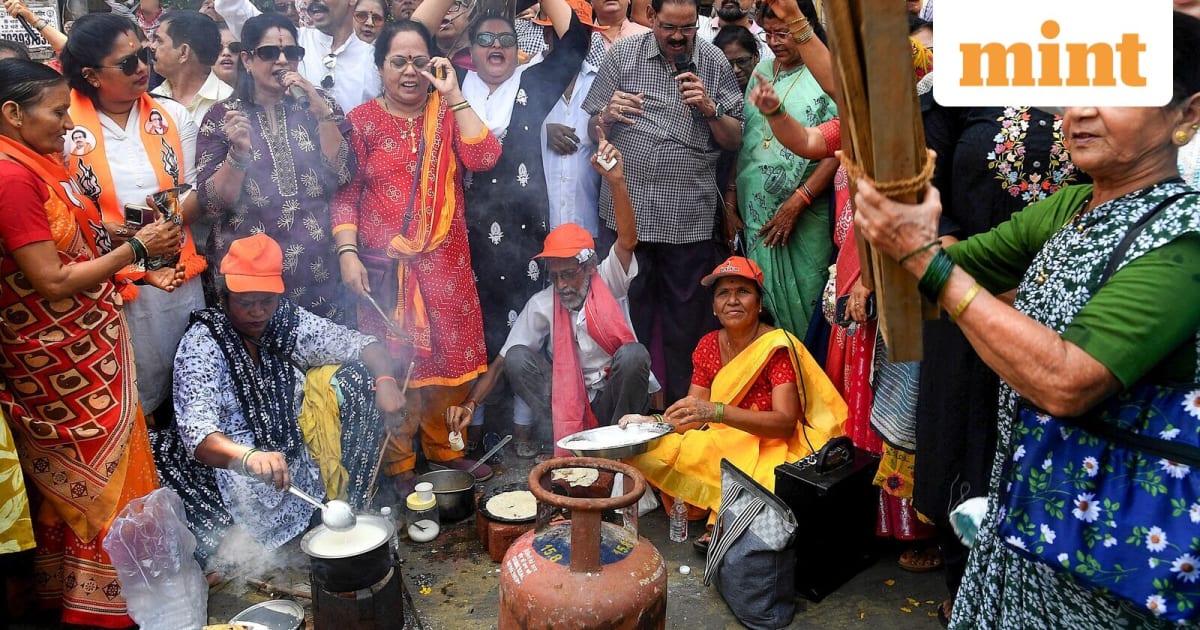
State-owned OMCs have raised domestic LPG prices for the second time in three months, aiming to bridge the gap between international costs and retail prices. This move strengthens the bull case for IOC, BPCL, and HPCL while signaling a 'higher-for-longer' interest rate environment as RBI watches headline inflation closely.
The Strategic Pivot: Decoding the ₹29 LPG Price Hike
In a move that caught the retail market by surprise but was long anticipated by institutional analysts, state-owned Oil Marketing Companies (OMCs) have implemented a ₹29 increase per 14.2-kg cylinder of domestic Liquefied Petroleum Gas (LPG). This marks the second upward revision in just three months, signaling a departure from the prolonged price freezes that characterized the pre-election period. At the WelthWest Research Desk, we view this not merely as a price adjustment, but as a fundamental shift in the fiscal relationship between the Government of India and the energy PSU (Public Sector Undertaking) ecosystem.
Why does this matter now? For the past 18 months, OMCs like Indian Oil Corporation (NSE: IOC) and Hindustan Petroleum (NSE: HINDPETRO) have navigated a volatile landscape where international crude prices fluctuated between $75 and $95 per barrel, while domestic retail prices remained largely stagnant. This ₹29 hike is a calculated attempt to reduce 'under-recoveries'—the difference between the cost of importing and bottling LPG and the regulated price at which it is sold to households. For investors, this is the first clear signal that the 'marketing margin' expansion theme is back on the table.
Will the LPG price hike affect the Indian stock market performance?
The immediate impact of an LPG price hike is twofold: it is a net positive for the Energy sector but a potential drag on the Nifty FMCG and Consumer Discretionary indices. Historically, when fuel prices rise, the 'disposable income' of the Indian middle class takes a direct hit. A ₹29 hike might seem marginal in isolation, but when compounded with rising food inflation, it narrows the wallet share available for discretionary spending.
Historical Parallel: The 2022 Under-Recovery Crisis
To understand the current trajectory, we must look back at 2022. During the global energy crunch following the Russia-Ukraine conflict, OMCs absorbed massive losses to shield consumers. At that time, the Nifty Energy Index underperformed the broader Nifty 50 by nearly 8%. However, once the government authorized price corrections and provided one-time subsidies, stocks like BPCL (NSE: BPCL) saw a 40% rally within six months. We are currently seeing the early stages of a similar margin-recovery cycle. The current hike suggests that the government is willing to prioritize the balance sheets of OMCs over short-term headline inflation, provided the CPI remains within the 4-6% tolerance band.
The Inflationary Ripple Effect
LPG has a direct weightage in the Consumer Price Index (CPI). A sustained increase in fuel costs typically leads to a 10-15 basis point uptick in headline inflation. For the Reserve Bank of India (RBI), this complicates the path toward interest rate cuts. Investors should expect the 'higher-for-longer' narrative to persist, which could keep banking stocks (NSE: BANKNIFTY) in a sideways consolidation pattern while energy stocks take the lead.
Stock-by-Stock Breakdown: The Winners and Losers
The impact of this price hike is not uniform across the energy value chain. Here is how we analyze the key players at the WelthWest Research Desk:
1. Indian Oil Corporation (NSE: IOC)
As the nation's largest fuel retailer, IOC bears the largest burden of under-recoveries but also stands to gain the most from price normalization. With a market cap exceeding ₹2.4 lakh crore and a P/E ratio currently hovering around 10.5x, IOC is priced attractively. The ₹29 hike is expected to improve IOC’s annual EBITDA by approximately ₹800-900 crore if sustained across the fiscal year. We maintain a bullish outlook, specifically targeting its industry-leading dividend yield of over 5%.
2. Bharat Petroleum Corporation Ltd (NSE: BPCL)
BPCL has consistently been the most efficient of the three major OMCs in terms of refining margins (GRMs). The LPG hike allows BPCL to protect its marketing margins even if global crude prices experience a temporary spike due to West Asia tensions. With a P/E of 11.2x, it remains a 'Quality at Reasonable Price' (QARP) play. Its peer, Reliance Industries (NSE: RELIANCE), also benefits indirectly as the floor for domestic fuel pricing rises, though its primary drivers remain its O2C (Oil-to-Chemicals) and Jio segments.
3. Hindustan Petroleum Corporation Ltd (NSE: HINDPETRO)
HPCL is the most sensitive to marketing margin fluctuations because it has a higher ratio of marketing volume to refining capacity compared to IOC or BPCL. This makes HPCL a high-beta play on the LPG hike. Last quarter, HPCL reported a significant jump in marketing gains; this ₹29 hike provides the necessary buffer to sustain those gains into Q3 and Q4. Watch for the ₹420-440 resistance levels on the NSE.
4. ONGC (NSE: ONGC) and Oil India (NSE: OIL)
While these are upstream producers, they are beneficiaries of a 'bullish energy sentiment.' When the government allows downstream OMCs to raise prices, it reduces the likelihood of the government asking upstream companies to share the under-recovery burden—a practice common in previous decades. Oil India (NSE: OIL), in particular, has shown a 60% YTD return, and this policy shift reinforces the 'no-subsidy-burden' thesis for upstream players.
Expert Perspective: The Bull vs. Bear Debate
"The ₹29 hike is a clear signal of fiscal maturity. The government is allowing OMCs to function as commercial entities rather than social welfare arms. This is the green light long-term institutional investors have been waiting for to re-rate the PSU energy space." — Senior Analyst, WelthWest Research
The Bull Case: Bulls argue that the OMCs are entering a 'Goldilocks' period. Crude prices are stabilized in the $75-$80 range, refining margins are healthy, and the marketing side is finally seeing price hikes. This combination could lead to record-breaking annual profits for the FY25 cycle.
The Bear Case: Contrarians warn of 'political intervention risk.' With several state elections on the horizon, any further spike in global crude could force the government to reverse these hikes or freeze prices again. Furthermore, the Nifty FMCG Index (including stocks like HUL and Britannia) could face margin pressure as rural demand, already fragile, faces the brunt of higher cooking gas costs.
Actionable Investor Playbook: How to Position Your Portfolio
Based on our data-driven analysis, here is the recommended strategy for the next 3-6 months:
- The 'Margin Capture' Trade: Accumulate IOC and BPCL on any dips toward their 50-day Moving Averages. The LPG hike provides a fundamental floor to their valuations.
- The Dividend Play: For income-focused investors, the improved cash flows from these price hikes virtually guarantee a robust final dividend payout. IOC remains the top pick here.
- Sector Rotation: Trim exposure to high-valuation Consumer Discretionary stocks that are sensitive to energy costs. Reallocate that capital into the Energy PSU space where P/E ratios are still 30-40% below their 10-year historical averages.
- Entry Points: For HPCL, look for entry around the ₹380-₹395 zone. For ONGC, the ₹280 level remains a strong support.
Risk Matrix: What Could Go Wrong?
No investment thesis is without risk. We have identified four primary threats to the energy sector rally:
- Geopolitical Volatility (Probability: High, Impact: Medium): Escalation in the Middle East could push Brent Crude above $90, which would evaporate the marketing gains from the ₹29 LPG hike.
- Government Intervention (Probability: Medium, Impact: High): If CPI inflation crosses 6%, the Ministry of Petroleum and Natural Gas may mandate a price cut, hurting OMC sentiment.
- Global Slowdown (Probability: Low, Impact: High): A recession in the US or China would lower refining margins (GRMs), offsetting the gains from domestic LPG sales.
- EV Transition (Probability: Low in short-term, Impact: Long-term): While not an immediate threat, the rapid adoption of electric cooking and EVs remains a structural headwind for oil demand.
What to Watch Next: The Catalysts
Investors should keep a close eye on the following dates and data releases:
- Monthly CPI Data: To see if the LPG hike significantly moves the needle on inflation.
- Quarterly Earnings (Q3 FY25): Look for specific commentary from the management of IOC and HPCL regarding 'marketing margin' expansion.
- OPEC+ Meetings: Any decision to extend production cuts will keep crude prices firm, testing the OMCs' ability to pass on costs.
- Inventory Data: Domestic LPG consumption trends will reveal if the price hike is leading to demand destruction in rural markets.
At WelthWest Research, we believe the ₹29 hike is just the tip of the iceberg. It represents a broader normalization of the Indian energy market—one that favors the disciplined investor who understands the interplay between policy, pricing, and the bottom line.
See IOC's AI Score
Our algorithmic screener scores IOC on fundamentals, momentum, and risk — free to try, no card needed.
Try the AI Screener →Have questions about this story?
Ask Welth, our finance-focused AI research assistant, for a deeper breakdown — free trial included.
Chat with Welth AI →Disclaimer: This content is generated by WelthWest Research Desk based on publicly available reports and is for informational purposes only. It does not constitute financial advice, investment recommendations, or an offer to buy or sell securities. Always consult a qualified financial advisor before making investment decisions.