Key Takeaway
The ECB’s 'wait-and-see' stance amidst Iranian geopolitical friction signals a 'higher-for-longer' environment. For Indian investors, this necessitates a rotation from import-heavy cyclicals toward defensive energy and defense-centric assets.
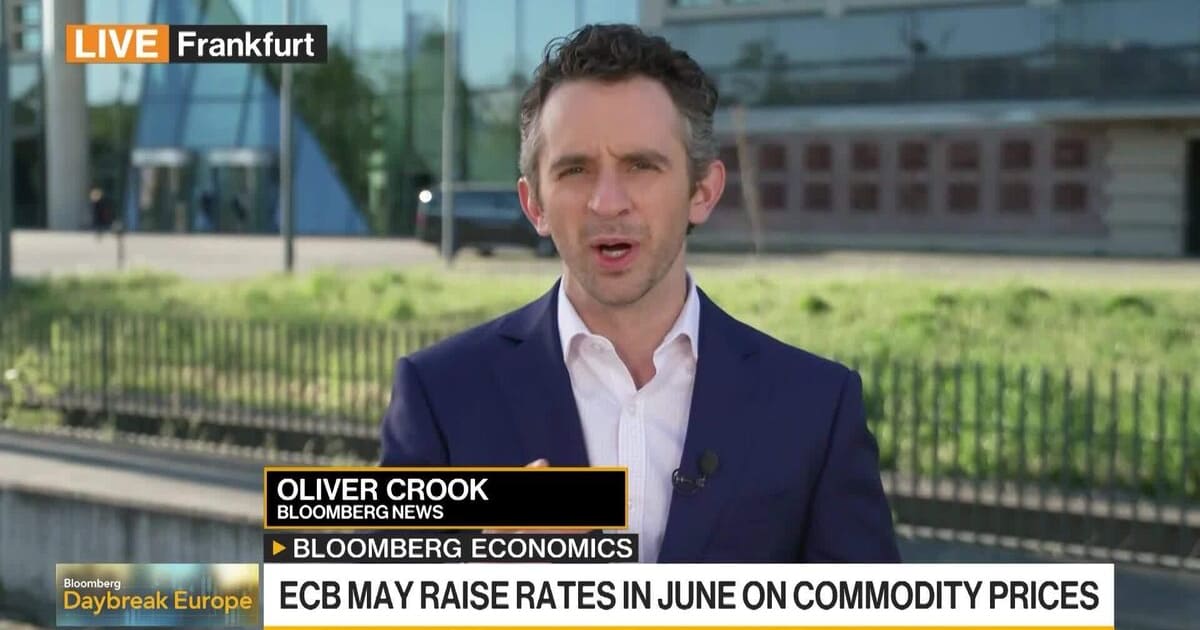
The European Central Bank’s decision to maintain status quo interest rates highlights a global pivot toward risk aversion. As Middle East tensions threaten supply chains, we analyze the structural impact on Indian equities, currency stability, and FII flows.
The ECB Status Quo: A Global Pivot Toward Risk Aversion
The European Central Bank (ECB) has opted to maintain its current interest rate trajectory, effectively signaling a 'pause' in monetary easing as policymakers grapple with the dual pressures of persistent core inflation and heightened geopolitical friction in the Middle East. For global markets, this is more than just a policy decision; it is a defensive posture. By choosing stability over aggressive rate adjustments, the ECB is essentially insulating the Eurozone from the potential inflationary shock of a crude oil supply disruption.
For the Indian equity markets, the implications are profound. When the ECB holds, it creates a ripple effect in the currency markets, specifically impacting the EUR-INR exchange rate and, by extension, the cost of capital for Indian firms with significant European exposure. As global liquidity tightens, Foreign Institutional Investor (FII) flows—the lifeblood of the Nifty 50—are likely to remain cautious, favoring stability over speculative growth.
How Will the Iran-Linked Energy Shock Affect Indian Inflation?
The core risk embedded in this ECB decision is the potential for an energy price spike. Historically, whenever geopolitical instability in the Middle East has threatened the Strait of Hormuz, India’s trade balance has suffered. In 2022, when crude oil prices surged beyond $120 per barrel, the Nifty 50 witnessed a sharp correction of approximately 8-10% over three months as imported inflation surged and the rupee depreciated.
The current scenario mirrors that period. With India importing over 85% of its crude oil requirements, a sustained supply chain disruption triggered by an escalation in the Iran conflict would lead to 'imported inflation.' This leaves the Reserve Bank of India (RBI) in a difficult position: if the ECB and the US Federal Reserve delay rate cuts, the RBI’s room to maneuver becomes severely constrained, potentially forcing an extended period of high domestic interest rates.
Sector-Level Analysis: Winners and Losers
Market dynamics are shifting toward sectors that offer either geopolitical insulation or direct hedges against energy price volatility.
The Winners: Energy and Defense
Oil & Gas: Upstream players are the primary beneficiaries of higher crude prices. As global benchmarks trend upward, the realization prices for domestic producers improve, leading to immediate margin expansion.
Defense: In times of global instability, defense budgets are rarely touched and frequently increased. India’s push for 'Atmanirbhar Bharat' in defense creates a domestic moat for manufacturers, effectively decoupling them from global macroeconomic volatility.
The Losers: Aviation and Import-Heavy Manufacturing
Aviation: Fuel accounts for nearly 40-50% of an airline's operating expenses. Rising crude prices directly compress margins, and with pricing power often limited by competitive pressures, this sector is highly vulnerable.
Automotive: The auto industry faces a double whammy: higher input costs for raw materials (steel, rubber, plastics) and a potential slowdown in consumer demand if high interest rates persist.
Stock-by-Stock Breakdown: Where to Allocate Capital
- ONGC (NSE: ONGC): With a market cap exceeding ₹4 lakh crore, ONGC stands as the primary hedge against oil price volatility. Its upstream operations see direct revenue growth as crude prices rise. Current P/E ratios remain attractive relative to global peers.
- OIL (NSE: OIL): Similar to ONGC, Oil India Limited benefits from domestic pricing formulas tied to global benchmarks. It remains a high-dividend yield play for conservative portfolios.
- Hindustan Aeronautics (NSE: HAL): As the flagship of India’s defense sector, HAL’s massive order book provides long-term revenue visibility that is largely immune to short-term ECB policy shifts.
- Bharat Electronics (NSE: BEL): BEL provides essential electronic components for defense, maintaining robust operating margins (typically 20-22%). It is a core 'defensive' growth stock.
- InterGlobe Aviation (NSE: INDIGO): While a market leader, the stock faces significant headwinds from oil price fluctuations and currency depreciation. Investors should watch for margin compression in the upcoming quarterly results.
Expert Perspective: The Bull vs. Bear Debate
The Bull Argument: Bulls argue that India’s domestic consumption story is robust enough to decouple from European monetary policy. They contend that the RBI’s prudent foreign exchange management will prevent a currency crisis, and that the 'China Plus One' strategy will continue to drive FDI into India, offsetting any FII outflow.
The Bear Argument: Bears point to the 'cost of debt.' They argue that if global rates remain high, Indian companies—particularly those in the manufacturing and infrastructure sectors—will see their interest coverage ratios decline, leading to a de-rating of P/E multiples across the broader market.
Actionable Investor Playbook
Investors should prioritize a 'barbell' strategy: maintain exposure to high-growth defense assets while hedging with energy-linked stocks. Monitor the Brent Crude spot price; a breach of $90/barrel should trigger a re-evaluation of aviation and automotive holdings. Maintain a 6-12 month time horizon for these positions, as geopolitical resolutions are rarely immediate.
Risk Matrix
- Escalation in Iran Conflict: High Probability. Potential for a 15-20% spike in oil prices.
- FII Outflow: Medium Probability. Could cause short-term liquidity crunch in mid-cap stocks.
- RBI Policy Delay: Medium-High Probability. Likely if inflation prints remain sticky due to energy costs.
What to Watch Next
Keep a close eye on the upcoming RBI Monetary Policy Committee (MPC) meeting minutes for hints on how they view the imported inflation risk. Additionally, monitor the monthly trade deficit data; any significant widening will be a leading indicator of pressure on the Indian Rupee.
Disclaimer: This content is generated by WelthWest Research Desk based on publicly available reports and is for informational purposes only. It does not constitute financial advice, investment recommendations, or an offer to buy or sell securities. Always consult a qualified financial advisor before making investment decisions.