Key Takeaway
The ECB’s aggressive pivot signals a transition from 'transitory' to 'structural' inflation management. For Indian investors, this creates a rotation out of export-dependent tech and into domestic-focused financial services.
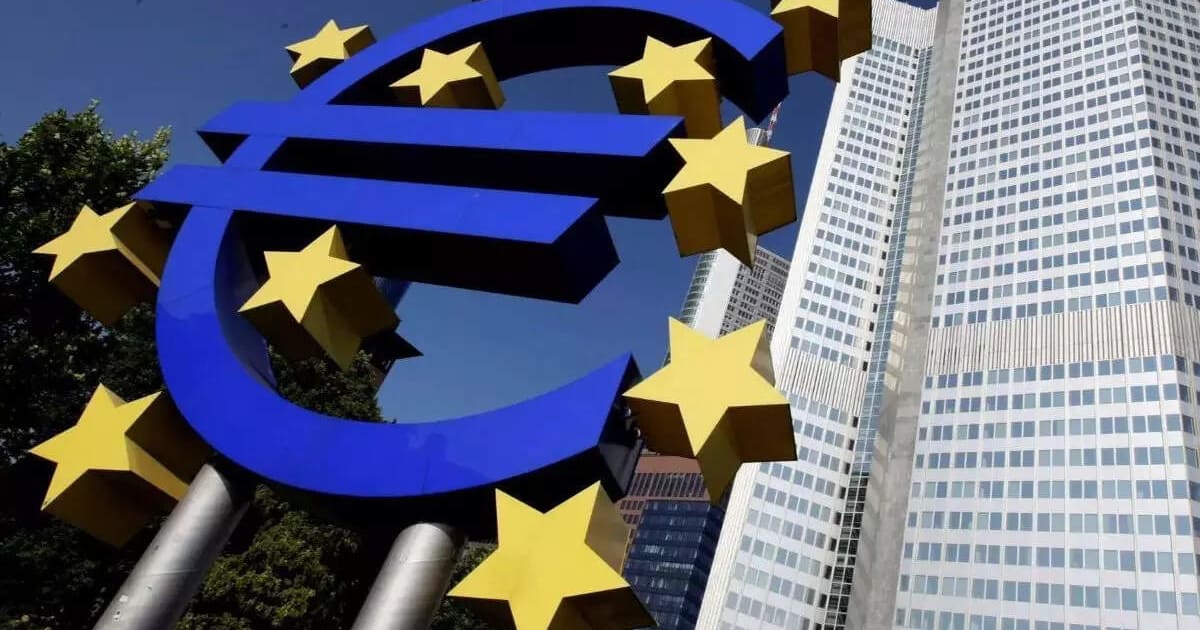
The European Central Bank’s unexpected decision to raise interest rates to counter energy-driven inflation has sent shockwaves through global markets. We analyze why this shift poses a specific threat to India’s IT sector while providing a potential tailwind for domestic lenders, offering a roadmap for navigating the ensuing volatility.
The ECB Pivot: Why European Monetary Policy Now Dictates Indian Market Volatility
In a move that caught global markets off guard, the European Central Bank (ECB) has officially pivoted to a contractionary monetary stance. By initiating a 25-basis point rate hike to neutralize the inflationary pressures stemming from geopolitical instability in the Middle East, the ECB has effectively signaled the end of the 'easy money' era in the Eurozone. This isn't merely a regional European adjustment; it is a tectonic shift in global liquidity that directly impacts the risk appetite for emerging markets, particularly India.
Historically, when the ECB tightens, the Euro weakens relative to the US Dollar, creating a domino effect on the Indian Rupee (INR). The last time we saw a synchronized tightening cycle—during the 2022 inflationary spike—the Nifty 50 corrected by approximately 8% over a three-month period as foreign institutional investors (FIIs) retreated to the safety of Western debt instruments. Today, the stakes are higher as we face a supply-side inflation shock that is fundamentally different from the demand-pull inflation of the post-pandemic era.
How will the ECB rate hike affect Indian bank stocks and IT companies?
The impact is bifurcated. On one hand, we see a clear compression in demand for Indian IT services, which derive a significant portion of their revenue from Eurozone enterprises. On the other, the domestic financial sector is uniquely positioned to benefit from a potential ripple effect on local interest rate expectations.
The Export-Oriented Slowdown
European clients, already grappling with high energy costs, are tightening their IT budgets. For companies like TCS (NSE: TCS) and Infosys (NSE: INFY), the Eurozone represents roughly 15-20% of total revenue. As European corporations focus on cost-cutting rather than digital transformation, we expect contract renewals to face intense price scrutiny, likely suppressing operating margins by 50-100 basis points in the coming quarters.
The Banking Tailwind
Conversely, Indian banks are entering this cycle with robust balance sheets. A potential alignment of the RBI with global tightening trends would allow banks to expand their Net Interest Margins (NIMs). We are monitoring HDFC Bank (NSE: HDFCBANK) and ICICI Bank (NSE: ICICIBANK), as both have the pricing power to pass on rate hikes to borrowers faster than they increase deposit rates, effectively widening their spread.
Stock-by-Stock Analysis: Who Wins and Who Loses?
- TCS (NSE: TCS): With a P/E of ~28x, the stock is priced for growth. A slowdown in Europe will likely force a valuation multiple compression. Watch for the $40-$42 range as a potential support level.
- Infosys (NSE: INFY): Highly sensitive to discretionary spending. With 18% of their revenue tied to the EU, any further ECB hikes will act as a direct headwind to earnings-per-share (EPS) growth.
- Bharat Forge (NSE: BHARATFORG): As a key player in auto components, their exposure to European OEMs is a liability in a high-rate environment. European vehicle demand is historically elastic to energy prices and interest rates.
- Motherson Sumi (NSE: MOTHERSON): Deeply integrated into the European automotive supply chain. The stock is currently trading at a premium, making it vulnerable to any negative guidance regarding European production volumes.
- Wipro (NSE: WIPRO): Their focus on consulting and digital transformation is at risk as European firms prioritize survival over innovation.
Expert Perspective: The Bull vs. Bear Debate
The Bear Case: Analysts argue that this is the beginning of a 'synchronized slowdown.' If the ECB over-tightens, they risk pushing the Eurozone into a technical recession, which would dry up demand for Indian exports in textiles, chemicals, and software services simultaneously.
The Bull Case: Contrarians suggest that Indian markets have already 'priced in' the global liquidity crunch. With India’s domestic GDP growth remaining resilient (projected at 6.5%+), the flow of domestic institutional investment (DII) might act as a floor, preventing a catastrophic sell-off even if FIIs exit.
Actionable Investor Playbook
Investors should adopt a 'Barbell Strategy' to navigate this volatility:
- Defensive Rotation: Trim exposure to IT and auto-component stocks with high Eurozone exposure. Reallocate capital into defensive sectors like FMCG and domestic-focused banking.
- Watch the Currency: Monitor the EUR/INR pair. A sharp decline in the Euro makes Indian exports less competitive, serving as a leading indicator for margin pressure.
- Time Horizon: This is not a trade for the next 30 days. We are looking at a 6-12 month cycle of margin adjustment. Use pullbacks to accumulate high-quality financial stocks that trade at a P/B ratio of less than 3x.
Risk Matrix
| Risk Factor | Probability | Impact |
|---|---|---|
| Persistent Energy Inflation | High | High |
| Global Recession Triggered by ECB | Medium | High |
| FII Outflow Acceleration | Medium | Medium |
What to Watch Next
The upcoming RBI Monetary Policy Committee (MPC) meeting is the next major catalyst. Investors should specifically look for language regarding 'decoupling' from Western monetary policy. Additionally, keep a close eye on the Eurozone Flash PMI data; if it falls below 45, it confirms the demand-side destruction thesis, necessitating a more aggressive defensive posture in your portfolio.
Disclaimer: This content is generated by WelthWest Research Desk based on publicly available reports and is for informational purposes only. It does not constitute financial advice, investment recommendations, or an offer to buy or sell securities. Always consult a qualified financial advisor before making investment decisions.