Key Takeaway
Ecolab’s $5B pivot into liquid cooling validates the 'AI-thermal' thesis. For Indian investors, this signals a massive supply-chain migration toward high-performance computing infrastructure, favoring firms with localized thermal management capabilities.
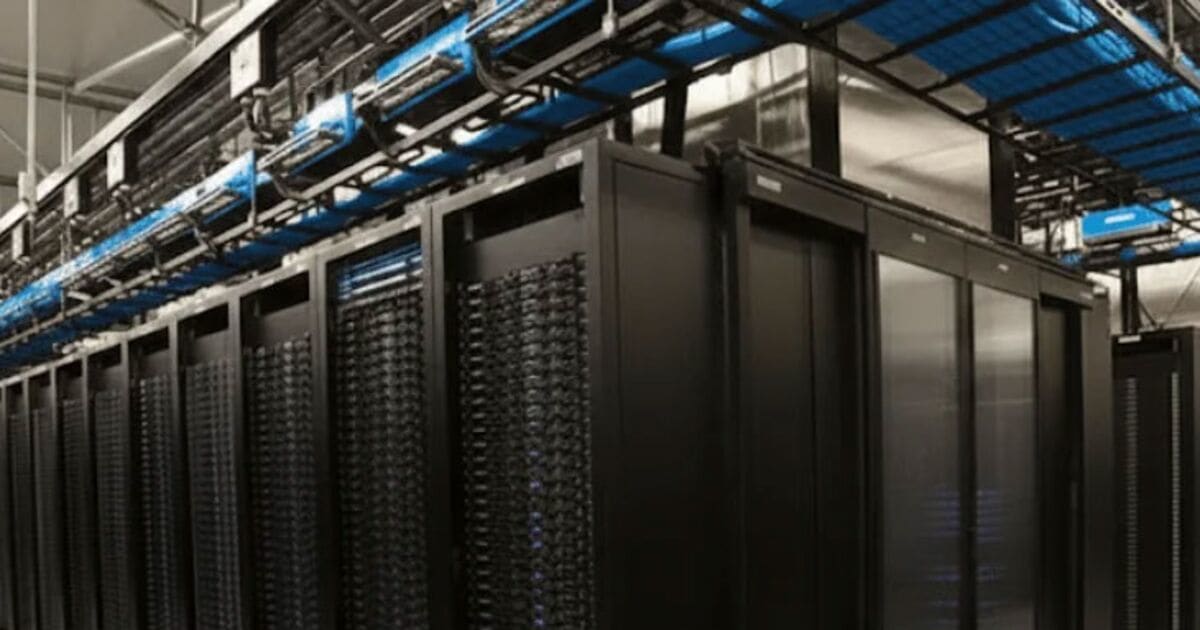
The $5 billion acquisition of CoolIT Systems by Ecolab marks a turning point in AI infrastructure. As global data centers transition from air to liquid cooling to support high-density GPU clusters, Indian engineering and tech firms are positioned to capture the localized rollout of this critical technology.
The $5 Billion Signal: Why Liquid Cooling is the New AI Frontier
In a move that has sent ripples through industrial and tech sectors, Ecolab’s $5 billion debt-funded acquisition of CoolIT Systems is more than a balance-sheet expansion; it is a definitive market validation of the liquid cooling revolution. As AI-driven high-performance computing (HPC) pushes thermal thresholds beyond the capacity of traditional HVAC-based air cooling, infrastructure providers are pivoting rapidly. This transition is not merely a technical upgrade—it is a fundamental shift in the global data center supply chain.
For the Indian market, this is a clarion call. With domestic data center capacity expected to grow at a CAGR of 25% through 2027, the localized adoption of liquid cooling technology is no longer optional. It is the prerequisite for hosting the next generation of AI workloads, including training clusters for Large Language Models (LLMs).
How will the shift to liquid cooling redefine Indian data center investments?
The historical parallel here is the 2022 semiconductor supply chain scramble. When global demand shifted toward specialized silicon, Indian firms that pivoted toward localized assembly and testing saw their valuations surge. We are seeing a similar trajectory in the thermal management space. Traditional air-cooling manufacturers, once the stalwarts of data center design, are now facing an existential threat from modular, liquid-based heat exchange systems.
Data from the Indian Data Center Council suggests that thermal management costs account for nearly 35% of operational expenditure in high-density rack environments. By adopting liquid cooling, operators can reduce these costs by up to 40% while significantly increasing hardware lifespan. This efficiency gap creates a massive opportunity for Indian firms that can bridge the gap between global technology providers like CoolIT and domestic data center operators.
The Market Impact: Winners and Losers in the Thermal Arms Race
The market sentiment is bullish for firms that have already begun integrating advanced cooling solutions. Conversely, firms heavily leveraged in legacy air-cooling manufacturing face significant margin pressure. The integration of high-density cooling is capital-intensive, requiring not just hardware, but sophisticated software layers to monitor thermal loads in real-time.
Stock-by-Stock Breakdown: Who Wins in India?
- Netweb Technologies (NETWEB): As a leader in high-end computing solutions, Netweb is uniquely positioned to integrate liquid cooling into their 'Tyrone' server range. With a P/E ratio that reflects high growth expectations, their ability to customize thermal solutions for AI startups and research institutions makes them a primary beneficiary.
- Schneider Electric Infrastructure (SCHNEIDER): A global giant with a massive Indian footprint. Their expertise in grid management and cooling integration makes them the 'plumbing' layer for AI data centers. They are the safest play for investors looking for long-term infrastructure exposure.
- ABB India (ABB): ABB’s focus on energy efficiency and electrification is critical. As liquid cooling systems require more complex power distribution, ABB’s switchgear and control systems will see increased demand in Tier-1 data center builds.
- Adani Enterprises (ADANIENT): Through their data center arm, AdaniConneX, they are aggressively expanding capacity. Their scale allows them to be early adopters of liquid cooling at a portfolio level, effectively acting as the testing ground for this technology in India.
- Sterling and Wilson Renewable Energy (SWSOLAR): While primarily solar, their expertise in large-scale EPC (Engineering, Procurement, and Construction) is increasingly relevant as data centers pivot toward captive renewable energy sources to power the energy-hungry liquid cooling systems.
The Expert Perspective: Bulls vs. Bears
The Bull Case: Proponents argue that the 'AI-Cooling' trade is in its early innings. Much like the cloud transition of 2015, the infrastructure build-out will take years, providing a long runway for revenue growth. For companies like Netweb and Schneider, the moat is their localized service capability—something global players like Ecolab/CoolIT cannot replicate in the Indian hinterland without a partner.
The Bear Case: Skeptics point to the high cost of debt. With interest rates remaining elevated, the $5 billion debt-servicing burden on companies pursuing aggressive acquisitions could crimp margins. Furthermore, there is the risk of 'technology obsolescence'—what if immersion cooling (a different method) replaces direct-to-chip liquid cooling within 36 months?
Investor Playbook: Navigating the Thermal Transition
Investors should look for companies with a 'Thermal-as-a-Service' model—where they don't just sell the hardware, but provide ongoing monitoring and maintenance.
- Watch the Capex Cycles: Monitor quarterly commentary from AdaniConneX and CtrlS regarding their cooling procurement strategies.
- Entry Points: Accumulate on dips when the broader IT index corrects. Avoid chasing stocks that have rallied 20% in a month; look for consolidation patterns.
- Time Horizon: This is a 3-5 year structural play. Do not treat this as a momentum trade.
Risk Matrix: Assessing the Uncertainties
| Risk Factor | Probability | Impact |
|---|---|---|
| Rising Debt Servicing Costs | High | Medium |
| Technological Disruption (Immersion vs. Direct) | Medium | High |
| Integration Hurdles (Ecolab/CoolIT) | Medium | Low |
| Supply Chain Bottlenecks | High | Medium |
What to Watch Next
The next major catalyst will be the Q3 earnings reports for Indian IT infrastructure firms, specifically looking for mentions of 'Liquid Cooling' or 'High-Density Rack' revenue segments. Additionally, watch for policy updates from the Ministry of Electronics and IT (MeitY) regarding data center standards, as these will likely mandate higher energy efficiency ratings, effectively forcing the industry to adopt liquid cooling faster than market forces alone would dictate.
Disclaimer: This content is generated by WelthWest Research Desk based on publicly available reports and is for informational purposes only. It does not constitute financial advice, investment recommendations, or an offer to buy or sell securities. Always consult a qualified financial advisor before making investment decisions.


