Key Takeaway
The convergence of traditional brokerage and decentralized finance (DeFi) is no longer theoretical. As global giants like eToro move into on-chain derivatives, Indian legacy brokers face an existential pivot: innovate or risk losing the next generation of high-frequency traders to permissionless protocols.
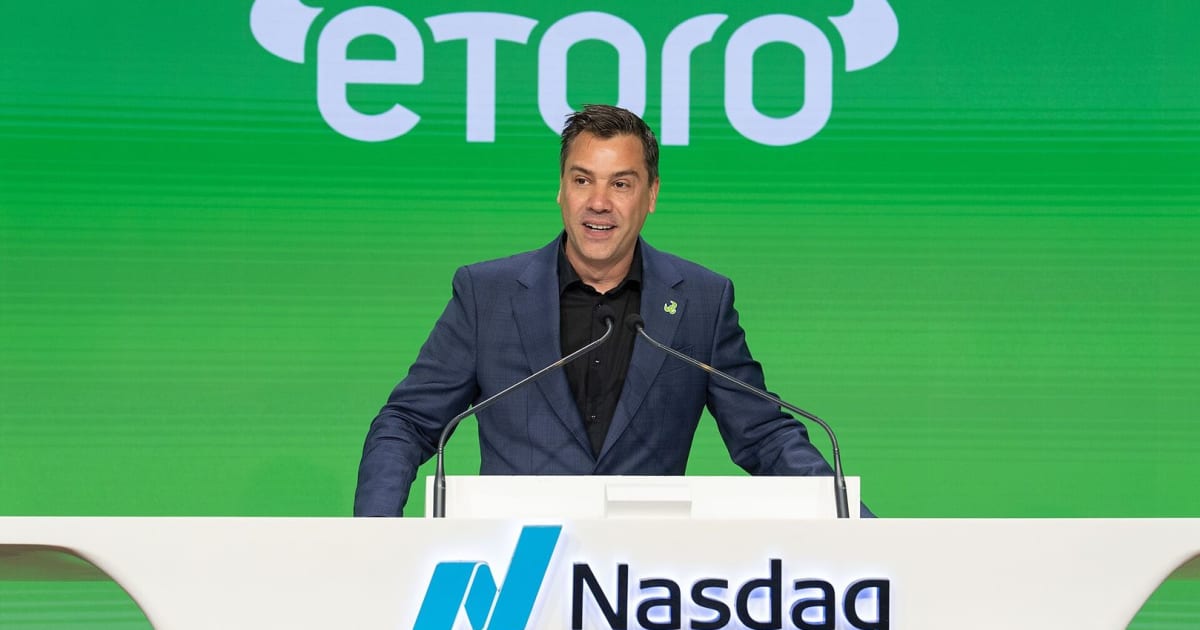
eToro’s strategic investment in the DeFi derivatives platform Extended marks a pivotal shift in global finance. This article dissects how this institutional pivot impacts the Indian stock market, specifically targeting the competitive landscape for NSE-listed brokers like Angel One and ICICI Bank.
The Institutional Pivot: Why eToro’s Move Matters Now
The financial world is undergoing a silent, tectonic shift. When eToro, a global retail brokerage titan with a multi-billion dollar valuation, announced its strategic investment in Extended—a decentralized finance (DeFi) protocol focused on on-chain derivatives—it wasn't just a venture capital play. It was an admission that the traditional clearing-house model is becoming increasingly inefficient compared to the instant settlement capabilities of blockchain infrastructure.
For years, the 'DeFi vs. TradFi' debate was framed as a zero-sum game. Today, the reality is a hybrid model. By embedding on-chain derivatives, eToro is effectively bypassing the latency of legacy settlement cycles, moving toward a T+0 environment that the traditional banking system has struggled to implement for decades. This shift is critical for investors because it signals the beginning of the end for the 'middleman' premium that has historically fueled the earnings growth of retail brokerage firms.
How will the rise of on-chain derivatives disrupt Indian brokerage revenues?
The Indian equity market, characterized by high retail participation and a sophisticated derivatives ecosystem, is uniquely vulnerable to this shift. In 2022, when global crypto-derivatives volumes surged, we saw a temporary cooling in domestic retail equity turnover as speculative capital flowed toward higher-yield, 24/7 crypto markets. The current infrastructure of the NSE and BSE relies on centralized clearing corporations (CCIL) which, while robust, cannot compete with the 24/7 liquidity and transparency of on-chain protocols.
If global platforms begin offering on-chain derivatives to Indian users—even in a grey regulatory environment—we expect to see a 'fee compression' effect. Currently, Indian brokers like Angel One (NSE: ANGELONE) and 5Paisa (NSE: 5PAISA) derive a significant portion of their revenue from intraday options trading. If a decentralized protocol allows for similar leverage at a fraction of the cost, the 'take rate' for these brokers will inevitably face downward pressure. Historical data from the 2017 crypto bull run suggests that when retail traders find cheaper, faster alternatives, the churn rate at traditional platforms spikes by as much as 15-20%.
Stock-by-Stock Breakdown: Winners and Losers
The institutional adoption of DeFi infrastructure creates a bifurcated outlook for the Indian financial sector:
- Angel One (NSE: ANGELONE): Neutral to Bearish. As a pure-play discount broker, Angel One is the most exposed to fee compression. Their high P/E (approx. 25-30x) assumes continued dominance in retail derivatives. If on-chain derivatives gain traction, their 'value' proposition as a low-cost provider is threatened by smart contracts that cost nearly zero to execute.
- ICICI Bank (NSE: ICICIBANK): Bullish. As a diversified financial powerhouse, ICICI can hedge against this disruption by integrating blockchain-based clearing services into their own tech stack. Their massive balance sheet allows them to pivot toward custodial services for digital assets, likely offsetting any losses in traditional brokerage fees.
- HDFC Bank (NSE: HDFCBANK): Neutral. HDFC’s strength lies in its moat of institutional clients. While retail traders might migrate to on-chain platforms, the high-net-worth and institutional segments will remain tethered to HDFC’s regulatory compliance and security for the foreseeable future.
- 5Paisa (NSE: 5PAISA): Bearish. With a smaller market cap and less capital to invest in proprietary blockchain tech, 5Paisa faces the highest risk of being disrupted by global DeFi platforms that offer superior liquidity and lower barrier-to-entry for retail users.
The Contrarian View: Bulls vs. Bears
The Bull Case: Proponents argue that the regulatory 'moat' in India—specifically the RBI’s stringent stance on crypto—will keep DeFi at bay for the next 5-10 years. They argue that Indian investors prefer the safety of SEBI-regulated exchanges and that the complexity of self-custody will prevent mass adoption of on-chain derivatives.
The Bear Case: The 'Crypto-Native' argument is that regulatory barriers are mere friction, not walls. Once the user experience (UX) of DeFi platforms reaches parity with apps like Zerodha or Angel One, the regulatory arbitrage will become irrelevant. The shift toward decentralized exchanges (DEXs) is inevitable because it eliminates counterparty risk—a feature that no traditional broker can technically offer.
Actionable Investor Playbook
Investors should adopt a 'barbell' strategy for the next 18-24 months:
- Reduce exposure to small-cap retail brokers that rely exclusively on derivatives volume for revenue.
- Increase exposure to large-cap banks that are actively building 'Digital Asset Custody' units. Look for banks filing patents related to DLT (Distributed Ledger Technology).
- Watch the regulatory tape: The next major catalyst is the potential release of an RBI consultation paper on 'Tokenized Assets.' Any softening of the stance on crypto-derivatives will trigger a massive re-rating of fintech stocks.
Risk Matrix
| Risk | Probability | Impact |
|---|---|---|
| RBI/SEBI Regulatory Ban | High | High |
| Technological Failure (Smart Contract Bug) | Medium | Extreme |
| Global Liquidity Crunch | Medium | Medium |
What to Watch Next
The immediate catalyst is the upcoming G20 Financial Stability Board (FSB) report on the integration of DeFi in traditional markets. If global regulators move toward a standard framework for on-chain derivatives, the 'regulatory moat' for Indian brokers will vanish overnight. Monitor the Q3 and Q4 earnings calls for Angel One; specifically, look for management commentary on 'decentralized infrastructure' or 'blockchain partnerships.' Any mention of R&D in these areas will be a bullish signal that they are preparing for the inevitable transition.
See NSE: ANGELONE's AI Score
Our algorithmic screener scores NSE: ANGELONE on fundamentals, momentum, and risk — free to try, no card needed.
Try the AI Screener →Have questions about this story?
Ask Welth, our finance-focused AI research assistant, for a deeper breakdown — free trial included.
Chat with Welth AI →Disclaimer: This content is generated by WelthWest Research Desk based on publicly available reports and is for informational purposes only. It does not constitute financial advice, investment recommendations, or an offer to buy or sell securities. Always consult a qualified financial advisor before making investment decisions.