Key Takeaway
The Federal Reserve's policy pivot and a shift in tech leadership are fueling global market volatility. Indian investors must brace for potential Foreign Institutional Investor (FII) outflows, particularly from high-growth tech and mid-cap segments, impacting the Rupee and domestic equity valuations.
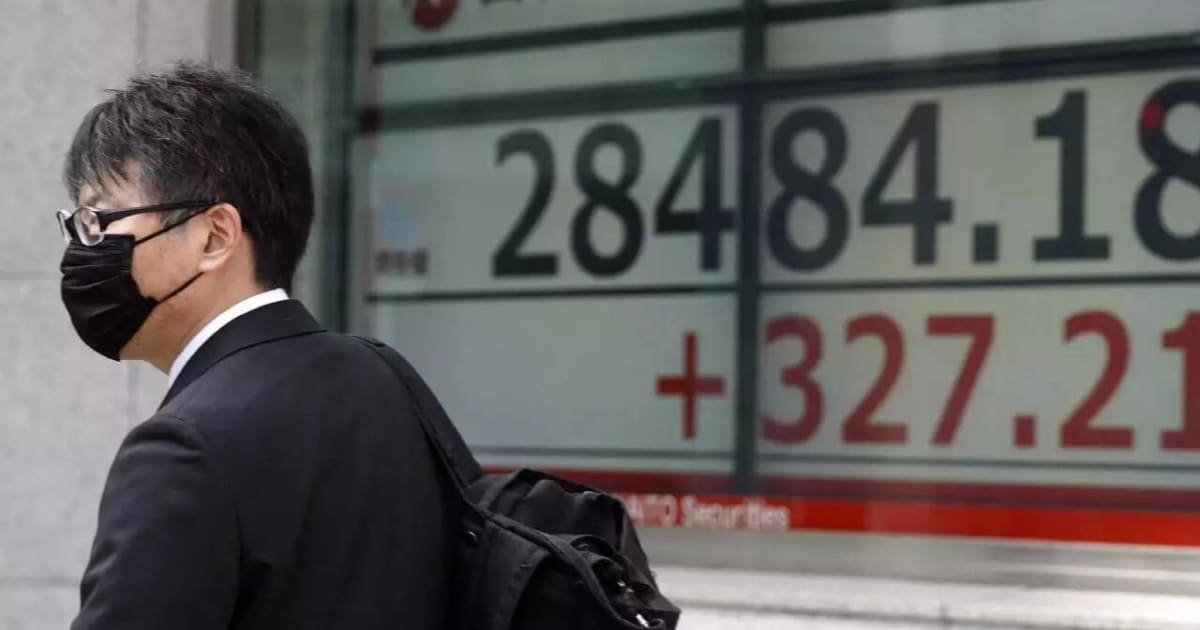
As the Federal Reserve navigates a new leadership era, uncertainty is rippling through global markets, triggering a risk-off sentiment that's particularly impactful for emerging economies like India. This analysis delves into the impending market shifts, spotlighting the vulnerable IT and Banking sectors and identifying specific stocks poised for significant price adjustments. Investors will find actionable strategies to protect and potentially capitalize on this evolving landscape.
Fed Policy Uncertainty Sparks Global Sell-Off: India's Market Braces for Impact
A palpable sense of apprehension has settled over global financial markets, driven by ambiguous signals from the U.S. Federal Reserve under its new leadership. This policy ambiguity is not merely a theoretical concern; it's actively reshaping investor sentiment, leading to a pronounced risk-off environment, especially evident across Asian bourses. For India, a nation heavily reliant on foreign capital inflows, this global recalibration presents a significant challenge, threatening to trigger substantial Foreign Institutional Investor (FII) outflows as portfolios are rebalanced away from perceived higher-risk growth assets towards safer havens.
Why This Fed Transition Matters for Indian Investors NOW
The Federal Reserve, as the world's most influential central bank, dictates much of the global monetary policy narrative. The transition to a new Chair, even if the underlying economic philosophy remains broadly consistent, introduces a period of policy uncertainty. Investors, particularly institutional ones with vast sums to deploy, seek clarity and predictability. When such clarity is absent, a natural inclination towards capital preservation takes hold. This often manifests as a withdrawal of funds from emerging markets, which are typically viewed as more volatile than developed economies. For India, this means not just a potential dip in equity markets but also a direct impact on the Indian Rupee's valuation, as demand for USD increases relative to INR.
Historically, periods of Fed tightening or even the mere anticipation of it have led to significant capital flight from emerging markets. We saw echoes of this in late 2022 when the Fed's aggressive rate hikes prompted a sharp correction in Indian equities, with the Nifty 50 experiencing a decline of over 15% in a matter of months. The current scenario, while driven by policy ambiguity rather than explicit hawkishness, carries a similar undertone of risk aversion, suggesting a potential for a medium-impact correction if the sentiment solidifies.
Deep Market Impact Analysis: Sectoral Shifts and FII Dynamics
The current market dynamic is characterized by a rotation away from growth-oriented and high-beta stocks towards defensive sectors. This is a classic risk-aversion playbook. Investors are prioritizing companies with stable earnings, strong balance sheets, and a track record of consistent dividend payouts. In the Indian context, this translates to a heightened appeal for sectors such as Fast-Moving Consumer Goods (FMCG), which are less sensitive to economic cycles, and Gold/Precious Metals, often seen as a hedge against inflation and geopolitical uncertainty. Additionally, Oil Marketing Companies (OMCs) may find a temporary respite if the global energy market cools due to reduced economic activity expectations, although this is contingent on broader commodity price movements.
Conversely, sectors that have thrived on easy liquidity and high growth expectations are now under immense pressure. The Information Technology (IT) sector, a darling of the Indian stock market for years, is particularly vulnerable. Companies heavily reliant on discretionary spending by global clients, or those with high valuations built on aggressive future growth projections, are prime candidates for sell-offs. High-beta mid-cap stocks, which tend to amplify market movements, are also in the crosshairs. Their elevated valuations, often fueled by speculative interest, make them susceptible to sharp declines when risk appetite wanes.
The Banking sector, while fundamentally robust, faces a unique challenge stemming from FII outflows. Banks, especially large-cap ones, are significant recipients of foreign investment. A sustained withdrawal of FII funds directly impacts their liquidity, can put pressure on their Net Interest Margins (NIMs) if they have to raise deposit rates to retain funds, and can depress their stock valuations. While the Reserve Bank of India (RBI) has maintained a relatively accommodative stance, any global tightening or risk-off sentiment can force domestic banks to recalibrate their strategies, potentially impacting profitability and investor sentiment. The correlation between FII inflows and the performance of Indian banking stocks is a well-established phenomenon; a reversal in this trend spells trouble.
Stock-by-Stock Breakdown: Who's In the Crosshairs?
The impending market recalibration will disproportionately affect certain leading Indian companies. Investors should closely monitor the following:
- Tata Consultancy Services (TCS) - NSE: TCS: As India's largest IT services exporter, TCS's fortunes are intrinsically linked to global IT spending. With potential cutbacks in discretionary tech budgets by Western corporations fearing an economic slowdown, TCS could see a slowdown in new deal wins and a pressure on its revenue growth. Its current P/E ratio, while often commanding a premium for its stability, might become a point of concern if growth falters. Historically, a broad tech sell-off has seen TCS decline by 10-15% even in moderate market downturns.
- Infosys Ltd. (NSE: INFY): Similar to TCS, Infosys faces headwinds from potential cuts in IT outsourcing and digital transformation projects. The company's significant exposure to North American markets, a key driver of its revenue, makes it susceptible to economic slowdowns in that region. Its revenue growth projections, often a key valuation metric, will be under scrutiny.
- HCL Technologies Ltd. (NSE: HCLTECH): HCLTech, with its increasing focus on product engineering and digital services, might show some resilience. However, the overall sentiment shift and potential slowdown in client spending could still impact its order book and near-term revenue visibility. Its ability to maintain its growth trajectory will be tested.
- Wipro Ltd. (NSE: WIPRO): Wipro, having undergone significant restructuring, could be more vulnerable to a broad market downturn due to its relatively smaller scale and market share compared to TCS and Infosys. Any perceived weakness in its digital transformation offerings or a slowdown in its consulting business could lead to a sharper price correction.
- HDFC Bank Ltd. (NSE: HDFCBANK): India's largest private sector bank is a bellwether for the financial sector. While its strong CASA (Current Account Savings Account) ratio and robust asset quality offer a degree of insulation, sustained FII outflows can exert downward pressure on its stock price. A significant decline in FII holdings could lead to a valuation reset, even if its fundamentals remain strong. Its market capitalization, over ₹5 lakh crore, makes it a significant drag if it corrects sharply.
- ICICI Bank Ltd. (NSE: ICICIBANK): Another banking giant, ICICI Bank, faces similar risks to HDFC Bank regarding FII outflows. Its profitability and growth outlook are closely tied to the overall economic health and credit demand. Any perceived increase in non-performing assets (NPAs) due to a slowdown, or a significant drop in foreign investment, could lead to a sell-off.
Expert Perspective: Bulls vs. Bears on the Fed's Next Move
The market's reaction to Fed policy uncertainty is rarely monolithic. Bulls argue that the Fed's new leadership will prioritize stability and growth, and any policy adjustments will be gradual and well-communicated, minimizing disruptive shocks. They might point to underlying economic strengths in the U.S., such as a resilient labor market, which could cushion any potential slowdown. Furthermore, they might emphasize that India's domestic economic fundamentals, including robust GST collections and a growing manufacturing sector, provide a strong buffer against external headwinds. They would likely advocate for buying into the dips in quality IT and banking stocks, viewing them as long-term growth stories temporarily oversold.
Conversely, Bears highlight the inherent unpredictability of a new leadership at the Fed. They fear that missteps in communication or a faster-than-expected tightening cycle to combat persistent inflation could trigger a more severe risk-off event. They would point to the increasing correlation between global liquidity conditions and emerging market asset prices. For bears, the current situation is a clear signal to de-risk portfolios, reduce exposure to growth stocks, and increase allocation to gold, defensive equities, and perhaps even cash. They would forecast a significant downside for Indian IT and banking stocks, potentially leading to a correction of 20% or more from recent highs.
Actionable Investor Playbook: Navigating the Volatility
For the discerning investor, this period of uncertainty demands a strategic and measured approach. The goal is to preserve capital while identifying opportunities that emerge from market dislocations.
- What to Buy: Focus on defensive sectors and quality names with strong balance sheets and pricing power. Companies in the FMCG sector like Hindustan Unilever Ltd. (NSE: HUL) and Nestle India Ltd. (NSE: NESTLEIND) should be considered. Gold ETFs or physical gold can serve as a hedge. Select Oil Marketing Companies such as Indian Oil Corporation Ltd. (NSE: IOC) or Bharat Petroleum Corporation Ltd. (NSE: BPCL) may benefit from easing crude prices, though this is highly volatile.
- What to Sell/Reduce Exposure: Consider trimming positions in highly valued, high-beta mid-cap stocks and IT services companies that are heavily reliant on discretionary spending. If you hold significant positions in the affected IT and banking stocks mentioned above, consider reducing your allocation to rebalance your portfolio risk.
- What to Watch: Keep a close eye on FII flows into India. A sustained outflow will confirm the bearish sentiment. Monitor the U.S. inflation data and the Fed's commentary for any shifts in policy tone. Geopolitical developments in the Middle East remain a significant wildcard.
- Entry Points: For defensive assets, accumulation can be done gradually over the next few weeks. For quality IT and banking stocks, if they experience a sharp correction (e.g., 15-20% from recent highs), they could present attractive long-term buying opportunities, but only after the immediate storm passes and clarity emerges.
- Time Horizons: This period is best navigated with a medium to long-term investment horizon. Short-term trading amidst such uncertainty can be fraught with risk. For long-term investors, this volatility might present opportunities to acquire quality assets at discounted valuations.
Risk Matrix: Potential Pitfalls on the Horizon
While the current outlook suggests a medium impact, several factors could amplify the volatility:
- Unexpected Hawkishness from New Fed Chair (Probability: Medium-High): A surprise shift towards aggressive rate hikes or quantitative tightening by the Fed to combat inflation could accelerate capital flight from emerging markets, leading to a sharper correction in Indian equities and a steeper depreciation of the Rupee.
- Geopolitical Instability in the Middle East (Probability: Medium): Despite rumors of peace deals, any escalation of conflicts in the Middle East could shock global energy markets, leading to higher crude prices and increased inflation, forcing central banks to adopt more hawkish stances. This would further dampen global risk appetite.
- Domestic Policy Missteps (Probability: Low): Unforeseen domestic policy changes that negatively impact investor sentiment or corporate earnings could exacerbate the impact of global headwinds.
- Persistent Inflationary Pressures Globally (Probability: Medium-High): If global inflation proves more stubborn than anticipated, central banks worldwide, including the Fed, may be forced into more aggressive tightening, leading to a prolonged period of risk aversion.
What to Watch Next: Upcoming Catalysts and Data Points
The coming weeks and months will be critical in shaping the market's trajectory. Investors should keenly observe the following:
- Federal Reserve Meeting Minutes and Speeches: Any commentary from Fed officials will be scrutinized for clues on the future path of interest rates and quantitative tightening.
- U.S. Inflation Data (CPI, PPI): These reports are paramount in determining the Fed's next move. Higher-than-expected inflation will likely signal a more hawkish stance.
- Indian FII Flows Data: Daily and weekly FII investment data will be a key indicator of foreign investor sentiment towards India.
- Corporate Earnings Season (Upcoming): The performance of Indian companies, particularly in the IT and Banking sectors, during the next earnings season will provide crucial insights into their resilience and future prospects.
- Geopolitical Developments: Any significant shifts in the Middle East conflict or other major geopolitical flashpoints will undoubtedly influence global markets.
Navigating this period requires vigilance, a data-driven approach, and a commitment to long-term investment principles. By understanding the drivers of global volatility and their specific implications for the Indian market, investors can position themselves to weather the storm and potentially emerge stronger.
Disclaimer: This content is generated by WelthWest Research Desk based on publicly available reports and is for informational purposes only. It does not constitute financial advice, investment recommendations, or an offer to buy or sell securities. Always consult a qualified financial advisor before making investment decisions.