Key Takeaway
The FIFA World Cup has morphed from a sporting event into a high-octane commercial engine that dictates global ad-spend cycles and digital infrastructure scaling. For Indian investors, this creates a quadrennial window of volatility and opportunity in media conglomerates and consumer discretionary stocks.
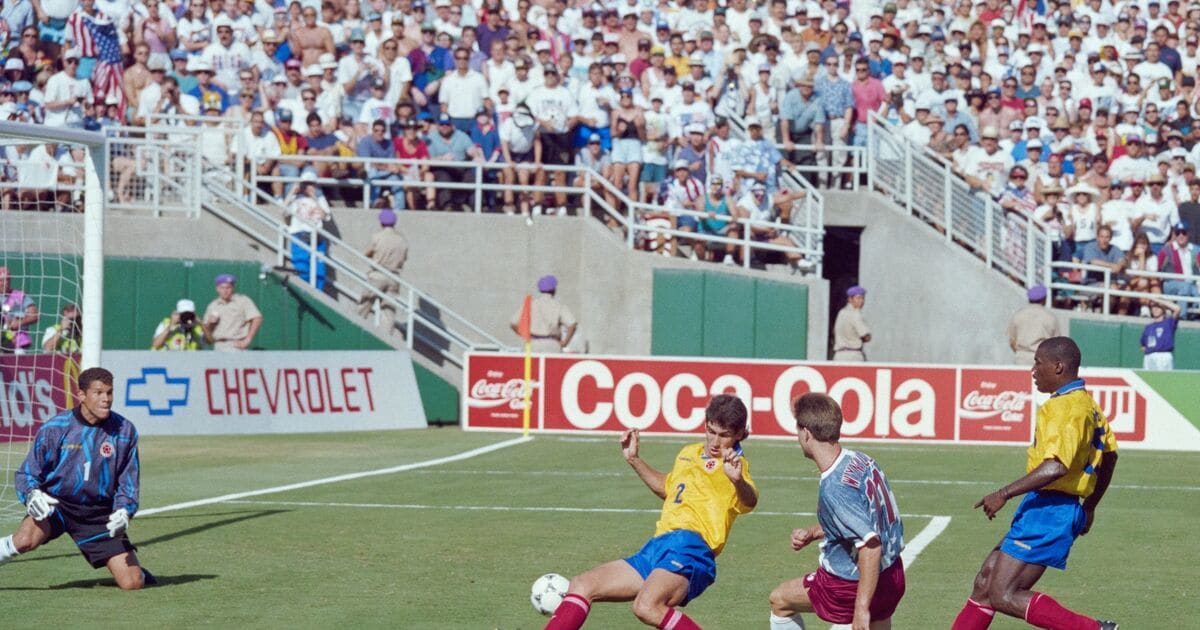
Since the 1994 pivot in the United States, the FIFA World Cup has redefined the economics of global sports. This article explores how this evolution influences the Indian market, focusing on the shift from traditional broadcasting to digital dominance and the specific NSE/BSE stocks positioned to capture this $100 billion global ecosystem.
The 1994 Paradigm Shift: When Football Became a Business
To understand why the commercial evolution of the FIFA World Cup matters to a Nifty 50 investor today, one must look back at the 1994 tournament in the United States. Before 1994, the World Cup was a prestigious sporting event; after 1994, it became a global commercial product. The transition from 'sport' to 'intellectual property' was catalyzed by the American model of sports marketing, which prioritized stadium hospitality, tiered sponsorship, and aggressive media rights auctions.
Today, this evolution has reached a fever pitch. The 2022 Qatar World Cup generated a record $7.5 billion in revenue for FIFA, an increase of $1 billion over the previous cycle. This massive capital influx doesn't stay within FIFA’s coffers; it trickles down into global advertising budgets, infrastructure contracts, and digital streaming wars. For India, a country with one of the fastest-growing digital consumer bases, the World Cup represents a stress test for our digital pipes and a goldmine for brands with global footprints.
How will the FIFA World Cup impact Indian media rights valuation?
The valuation of sports media rights in India has undergone a tectonic shift. We are no longer in an era where terrestrial television holds a monopoly. The entry of Reliance Industries (RELIANCE) through Viacom18 and the subsequent merger with Disney Star has created a media behemoth valued at approximately $8.5 billion (₹70,000 crore). During the 2022 World Cup, JioCinema’s decision to stream the tournament for free was not a philanthropic gesture; it was a calculated move to capture the 'attention economy.'
This strategy disrupted the traditional subscription model, forcing a re-valuation of how digital ad-rates are calculated. During peak matches, digital viewership in India surpassed 32 million concurrent viewers. For investors, this signifies that the 'winner-takes-all' dynamics of sports broadcasting are now tied to data ecosystem dominance rather than just cable TV subscriptions. The high cost of these rights—often running into thousands of crores—puts immense pressure on operating margins in the short term but builds a moat of user data that is invaluable for long-term cross-selling.
Deep Market Impact: Connecting Global Goals to Indian P&L
The commercial evolution of football creates a 'halo effect' on consumer discretionary spending. Historically, during World Cup cycles, we observe a 12-15% uptick in ad-spends from sectors like Fintech, EdTech (though cooling), and FMCG. In 2022, despite the odd timing of the tournament, the Indian advertising market saw an infusion of nearly ₹2,000-₹2,500 crore specifically tied to the event.
The impact is bifurcated into two categories: The Infrastructure Providers and The Sentiment Beneficiaries. Infrastructure providers include telecom giants and data transit firms that handle the surge in terabytes per second. Sentiment beneficiaries are the QSR (Quick Service Restaurant) chains and beverage companies that thrive on the 'communal viewing' culture that football fosters, even in a cricket-crazy nation like India.
Why are FMCG stocks like Westlife and Jubilant linked to global sports events?
The correlation between late-night sports viewing and high-calorie consumption is a well-documented consumer behavior pattern. In India, the time zones for major tournaments (often European or Middle Eastern) align perfectly with the peak delivery hours for QSR brands. This leads to a significant bump in Same-Store Sales Growth (SSSG) during the tournament month. For instance, during major global sporting finals, delivery volumes for pizza and burger chains can spike by 25-40% compared to standard weekends.
Stock-by-Stock Breakdown: The Indian Lineup
1. Reliance Industries Ltd (NSE: RELIANCE)
Reliance is the primary gateway to the World Cup's commercial evolution in India. Through Viacom18 and the Jio ecosystem, Reliance has effectively commoditized sports viewing to drive 5G adoption. With a Market Cap of over ₹19 lakh crore and a P/E ratio hovering around 28x, the impact of sports is seen in the 'Media and Services' segment. Investors should monitor the EBITDA margins of the media business, as the high cost of rights can lead to temporary 'margin bleed' even as user acquisition skyrockets.
2. Westlife Foodworks Ltd (NSE: WESTLIFE)
As the operator of McDonald’s in West and South India, Westlife is a direct beneficiary of FIFA’s global partnership. McDonald’s has been a long-standing sponsor of the World Cup, often launching 'Match Day' meals and limited-edition merchandise. With a P/E ratio of approximately 95-100x, the stock is priced for high growth. The World Cup provides the necessary 'event-led' volume to justify these valuations. A successful campaign during a global tournament can move their quarterly SSSG by 200-300 basis points.
3. Tata Communications Ltd (NSE: TATACOMM)
Often the 'unsung hero' of global sports, Tata Communications provides the underlying digital infrastructure for many global broadcasters. Their 'Video Connect' network carries much of the world’s live sports traffic. As the World Cup moves toward 4K and 8K streaming, the demand for low-latency, high-bandwidth data transit increases. With a Market Cap of ~₹55,000 crore, any increase in global data traffic directly impacts their data business margins, which currently contribute over 75% to their bottom line.
4. PVR INOX Ltd (NSE: PVRINOX)
The evolution of 'stadium-like' experiences in cinemas has turned PVR INOX into a niche player in the sports business. By screening World Cup semi-finals and finals, they tap into high-margin Food & Beverage (F&B) revenue. F&B margins for PVR INOX are typically north of 70%, making these 'alternative content' screenings highly accretive to the bottom line, even if they only happen over a few days.
5. Jubilant Foodworks Ltd (NSE: JUBLFOOD)
Dominos India remains the king of the 'delivery-at-home' sports experience. While not an official FIFA partner, their aggressive 'Occasion-Based Marketing' during World Cup windows allows them to capture the spillover demand. With a focus on 20-minute delivery, they are the primary beneficiary of the 'halftime rush.' Investors should watch for their operating margins (currently ~20%) during tournament quarters.
Expert Perspective: The Bulls vs. The Bears
"The commercialization of the World Cup is a double-edged sword. While it drives unprecedented reach, the 'Winner’s Curse' in media rights is real. Companies are paying 3x the historical average for rights, betting on future digital growth that may not monetize as quickly as expected." — Senior Media Analyst, WelthWest Research
The Bull Case: Bulls argue that the World Cup is a 'top-of-funnel' acquisition tool. The lifetime value (LTV) of a customer acquired during a World Cup through a streaming app or a QSR app far outweighs the initial acquisition cost. They see the tournament as a catalyst for the 'Digital India' story.
The Bear Case: Bears point to 'Ad-Spend Fatigue.' With the IPL and World Cup often occurring in close proximity, corporate ad-budgets are stretched thin. They argue that for companies like Reliance or Jubilant, the incremental gain is often offset by the massive marketing spend required to stay relevant in a crowded field.
Actionable Investor Playbook
- The 12-Month Rule: Accumulate positions in QSR stocks (Westlife, Jubilant) at least 9-12 months before a major tournament. Prices often bake in the 'event hype' 3 months prior to kickoff.
- Watch the ARPU: For Reliance, don't just look at subscriber growth; look at Average Revenue Per User (ARPU). If the World Cup doesn't lead to a shift from 'free' to 'paid' tiers, the commercial impact is limited.
- The Infrastructure Play: Tata Communications is a 'secular growth' play on sports. Regardless of which team wins or which brand gets the most clicks, the data must flow. This is a lower-risk entry into the sports commercialization theme.
- Exit Strategy: Consider trimming positions in consumer discretionary stocks 10 days after the final match. Historical data suggests a 'cool-off' period where stocks give back 5-7% of their event-led gains.
Risk Matrix: What Could Go Wrong?
- Hyper-inflation of Rights (Probability: High): If media companies continue to overbid, we will see a sustained period of low ROIC (Return on Invested Capital) for the media sector.
- Consumer Sentiment Shift (Probability: Medium): If inflation remains sticky, the 'discretionary' part of consumer spending (ordering pizzas, buying jerseys) will be the first to be cut, regardless of the tournament's scale.
- Regulatory Hurdles (Probability: Low): Any changes in TRAI regulations regarding 'Free-to-Air' sports or anti-siphoning laws could disrupt the exclusivity of media rights.
What to Watch Next
The next major catalyst is the 2026 FIFA World Cup expansion to 48 teams. This will increase the number of matches and, consequently, the inventory for ad-spots. Watch for the Viacom18-Disney merger completion in late 2024, as this will dictate the bidding power for the next cycle of global sports rights. Additionally, keep an eye on monthly UPI transaction data in the 'Entertainment' and 'Food' categories leading up to major qualifiers; this is the leading indicator of consumer appetite for the 'Big Game' economy.
See Westlife Foodworks's AI Score
Our algorithmic screener scores Westlife Foodworks on fundamentals, momentum, and risk — free to try, no card needed.
Try the AI Screener →Have questions about this story?
Ask Welth, our finance-focused AI research assistant, for a deeper breakdown — free trial included.
Chat with Welth AI →Disclaimer: This content is generated by WelthWest Research Desk based on publicly available reports and is for informational purposes only. It does not constitute financial advice, investment recommendations, or an offer to buy or sell securities. Always consult a qualified financial advisor before making investment decisions.