Key Takeaway
The unexpected surge in French unemployment above the 8% psychological barrier signals a structural slowdown in the Eurozone's second-largest economy, threatening nearly 30% of Indian IT revenue and critical automotive export channels.
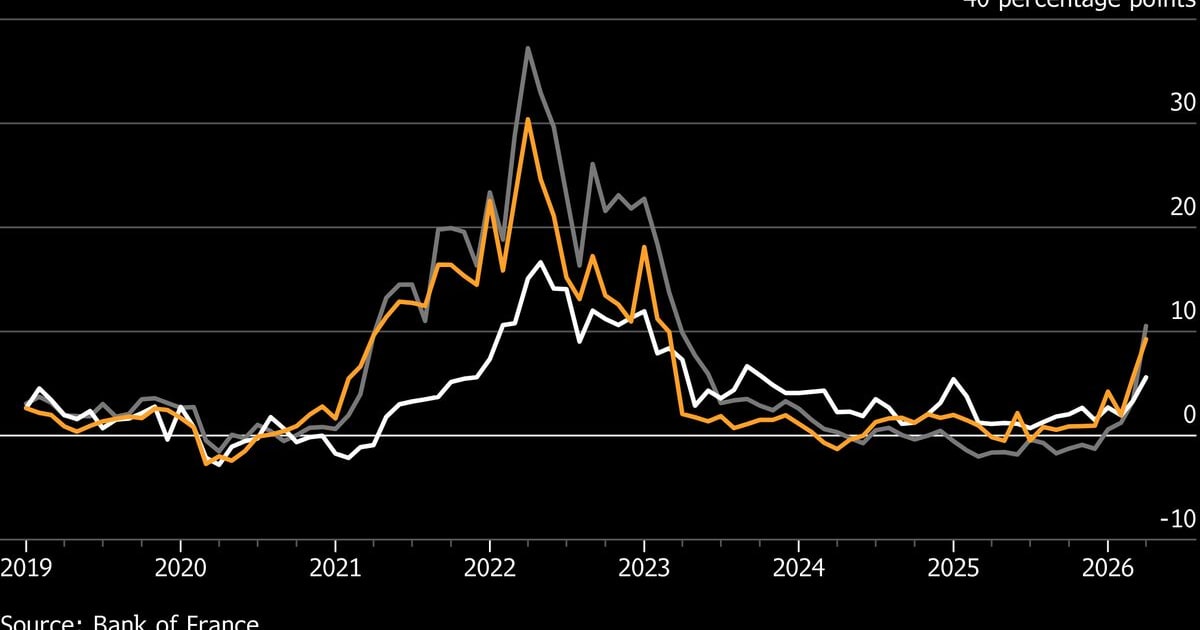
France's labor market is cooling faster than anticipated, with unemployment hitting levels not seen since 2021. As a primary engine of European demand, this fragility poses a direct threat to Indian IT services, engineering exports, and the Euro-Rupee exchange stability, necessitating a defensive shift in investor portfolios.
The French Crack in the Eurozone Shield: A Macro Catalyst for Indian Markets
For the first time in five years, the French unemployment rate has breached the 8% threshold, sending shockwaves through the European Central Bank (ECB) and reverberating across the trading floors of Mumbai and Bengaluru. While a 0.5% jump might seem incremental to the casual observer, in the context of the Eurozone’s second-largest economy, it represents a systemic failure of post-pandemic recovery momentum. France, which has long been the bastion of industrial stability in Europe, is now showing signs of labor market fatigue that usually precedes a broader regional recession.
For Indian investors, the concern isn't just about Parisian job queues; it’s about the contracting discretionary spend of European enterprises. Historically, when the French labor market softens, German industrial sentiment follows within two quarters. This 'contagion of caution' is particularly lethal for the Indian IT sector, which derives approximately 25-30% of its top-line revenue from the European geography. When European CFOs see rising unemployment and cooling consumer demand, the first line item to be slashed is the 'Digital Transformation' budget.
How will the Eurozone recession affect Indian IT spending?
The relationship between European GDP growth and Indian IT exports is highly correlated. During the 2011-2012 Eurozone debt crisis, the Nifty IT index witnessed a significant valuation de-rating as clients in the BFSI (Banking, Financial Services, and Insurance) and Manufacturing verticals moved from 'growth-oriented' projects to 'cost-optimization' mandates. Today, we are seeing a similar pattern emerge.
The French unemployment surge is a lead indicator of reduced enterprise throughput. As French giants like AXA, BNP Paribas, and Renault face a softening domestic market, their appetite for large-scale cloud migration or AI integration projects—the bread and butter of firms like TCS and HCLTech—diminishes. We anticipate a 'wait-and-see' approach from European clients, leading to longer deal conversion cycles and a potential stagnation in Total Contract Value (TCV) growth for the remainder of FY25.
Deep Market Impact: The Rupee, the Euro, and the FII Flow
The macro-economic fallout extends beyond sector-specific woes. A weak French labor market forces the ECB’s hand toward more aggressive rate cuts to stimulate the economy. While lower rates are generally good for equities, the immediate impact is a volatile Euro-Rupee (EURINR) exchange rate. Indian exporters who have not hedged their European receivables effectively could see significant margin erosion as the Euro weakens against the Rupee.
Furthermore, Foreign Institutional Investors (FIIs) often view emerging markets through the lens of global risk appetite. A stumbling Europe frequently triggers a 'flight to safety,' where capital exits perceived riskier assets in India to seek refuge in US Treasuries or Gold. During the last major European slowdown in late 2022, FIIs were net sellers in the Indian market for three consecutive months, putting downward pressure on the Nifty 50 despite robust domestic earnings.
Stock-by-Stock Breakdown: Identifying the Vulnerabilities
To navigate this volatility, investors must dissect individual stock exposure to the Continental European market. Here are the key NSE-listed entities currently in the crosshairs:
1. Tata Consultancy Services (TCS) | NSE: TCS
TCS is the bellwether for European exposure. With nearly 30% of its revenue coming from Europe (excluding the UK), TCS is highly sensitive to French and German economic health. The company’s current P/E ratio of approximately 28x leaves little room for earnings misses. If European BFS (Banking and Financial Services) clients scale back, TCS could see a 150-200 basis point impact on its operating margins. Peer Comparison: Infosys (INFY) has slightly lower exposure but remains vulnerable to the same regional sentiment.
2. HCL Technologies | NSE: HCLTECH
HCLTech’s strength in Engineering and R&D (ER&D) services makes it uniquely exposed to the French automotive and aerospace sectors. With clients like Airbus and various European Tier-1 auto suppliers, a slowdown in French industrial output directly hits HCLTech’s high-margin ER&D segment. The stock has recently traded near all-time highs; however, a sustained Eurozone slowdown could trigger a mean reversion toward its historical P/E of 22x.
3. Samvardhana Motherson International | NSE: MOTHERSON
Motherson is perhaps the most 'European' company listed on the Indian bourses. With over 40% of its consolidated revenue derived from the European Union, its plants in France and Germany are critical. Rising unemployment in France signals falling consumer confidence, which translates to lower car sales. As OEMs (Original Equipment Manufacturers) cut production, Motherson’s capacity utilization takes a hit. Investors should watch the €70,000-80,000 revenue per vehicle metric closely.
4. Tech Mahindra | NSE: TECHM
Tech Mahindra’s heavy reliance on the Telecom vertical (nearly 35-40% of revenue) is a double-edged sword. European telcos like Orange (France) and Deutsche Telekom are notorious for slashing CAPEX during economic downturns. As 5G rollouts in Europe reach maturity and economic headwinds mount, TechM may struggle to find new growth levers in its core geography. Sector Peer: LTIMindtree also shares significant exposure to European high-tech and manufacturing verticals.
5. Gokaldas Exports | NSE: GOKEX
Beyond IT and Auto, the textile sector is a hidden casualty. Gokaldas Exports caters to global apparel brands that have a massive footprint in the French high street. If French unemployment leads to a 'Consumer Staples only' mindset, discretionary apparel spending will plummet. This could lead to inventory pile-ups and pricing pressure for Indian garment exporters who operate on thin 10-12% EBITDA margins.
Expert Perspective: The Bull vs. Bear Argument
"The French labor data is the 'canary in the coal mine.' While the US economy remains resilient, India cannot ignore the dragging anchor of Europe. We are advising clients to rotate out of high-beta exporters and into domestic-focused cyclicals like Power and Infrastructure." — Senior Strategy Note, WelthWest Research
The Bear Case: Bears argue that the Eurozone is entering a 'lost decade' of stagnant growth, exacerbated by high energy costs and aging demographics. They believe Indian IT valuations are priced for 12-15% growth, which is impossible if Europe stays in a perma-recession. They expect a 10-15% correction in export-oriented themes.
The Bull Case: Bulls contend that a weak Europe will force the ECB to cut rates faster than the Fed, providing a liquidity boost. They argue that Indian IT companies are no longer just 'vendors' but 'strategic partners' who are essential for the cost-cutting measures that European firms must now undertake. In this view, a crisis in France is an opportunity for Indian firms to gain market share from more expensive European consultancies like Capgemini.
Actionable Investor Playbook: Navigating the Euro-Headwinds
Investors should not panic, but a portfolio rebalancing is overdue. Here is the WelthWest tactical plan:
- The Defensive Pivot: Increase allocation to Defensive Pharma (e.g., Sun Pharma, Dr. Reddy’s) and Consumer Staples (e.g., ITC, HUL). These sectors are insulated from European macro-shocks and provide a hedge against Rupee volatility.
- Gold as a Proxy: As the Euro weakens and global uncertainty rises, Gold (via Gold ETFs or Sovereign Gold Bonds) remains the premier asset class for capital preservation.
- IT Strategy: Avoid 'catching the falling knife' in mid-cap IT with high European concentration. Stick to large-caps like TCS but wait for a 5-7% correction from current levels to enter. Look for a P/E entry point of 24-25x for TCS.
- Fixed Income: With the potential for global rate cuts, long-duration Indian Government Bonds look attractive as they offer high yields with the prospect of capital appreciation when the RBI eventually follows global easing trends.
Risk Matrix: Assessing the Downside
| Risk Factor | Probability | Impact on Indian Markets |
|---|---|---|
| Full Eurozone Recession | High (65%) | High: Significant EPS cuts for Nifty IT and Auto Ancillaries. |
| Euro-Rupee Collapse (< ₹85) | Medium (40%) | Medium: Margin compression for unhedged exporters. |
| Aggressive FII Sell-off | Medium (50%) | High: Short-term liquidity crunch and Nifty volatility. |
What to Watch Next: The Critical Catalysts
The story doesn't end with the unemployment print. Investors must keep a close eye on the following dates and data points to gauge the depth of the crisis:
- ECB Policy Meeting: Watch for dovish commentary. If the ECB signals a 'whatever it takes' approach, it might provide a temporary floor for European stocks.
- German Ifo Business Climate Index: As France’s primary trading partner, German business sentiment will confirm if the slowdown is localized or continental.
- Q3 FY25 Management Commentary: Specifically, listen to the 'vertical-wise' commentary from TCS and HCLTech regarding European deal pipelines and budget cycles.
- EUR/INR Exchange Rate: Any breach below the 88.00 level will be a technical sell signal for Indian export themes.
The French unemployment surge is more than just a statistic; it is a fundamental shift in the global economic landscape. For the Indian investor, the mantra for the next two quarters should be caution over capital appreciation in sectors tied to the European dream.
Disclaimer: This content is generated by WelthWest Research Desk based on publicly available reports and is for informational purposes only. It does not constitute financial advice, investment recommendations, or an offer to buy or sell securities. Always consult a qualified financial advisor before making investment decisions.


