Key Takeaway
Goldman Sachs’ 'buy the dip' signal on US equities acts as a liquidity catalyst for emerging markets. Expect a rotation back into high-beta Indian sectors like IT and Financials as global risk appetite stabilizes.
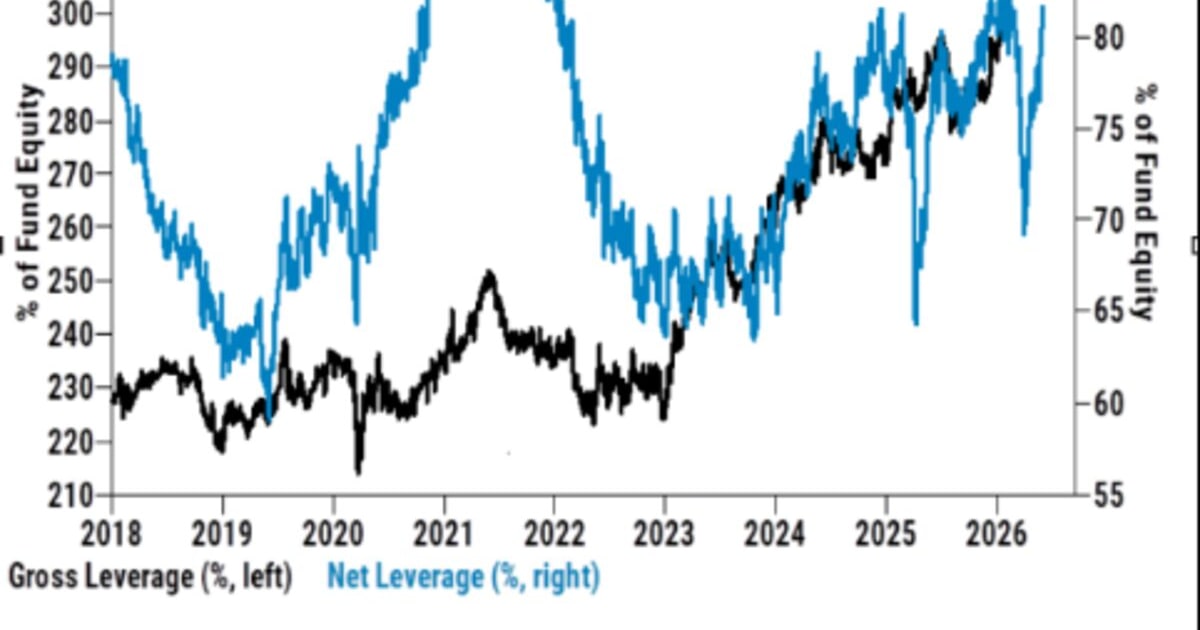
As Goldman Sachs pivots to a bullish stance on the S&P 500, the ripple effect is set to hit Indian markets. We analyze how this shift in global sentiment will likely reverse recent FII outflows, creating a tactical entry point for Nifty 50 investors.
The Goldman Pivot: A Tactical Buying Opportunity?
Wall Street’s primary architect of market sentiment, Goldman Sachs, has officially signaled that the recent volatility in US equity markets is a classic consolidation phase rather than the precursor to a structural bear market. For the discerning investor, this is more than just a headline; it is a tactical directive. When the S&P 500 finds a floor, the global liquidity spigot begins to reopen, invariably favoring high-growth, high-beta emerging markets like India.
Historically, the correlation between the S&P 500 and the Nifty 50 has tightened during periods of global monetary uncertainty. In the 2022 correction, the Nifty 50 demonstrated resilience, but it remained tethered to the DXY (US Dollar Index) movements. As Goldman’s outlook suggests a cooling of the 'safe-haven' trade, we expect a pivot in Foreign Institutional Investor (FII) sentiment, moving capital away from stagnant gold holdings and back into the engine room of Indian growth.
Why Does the US 'Buy the Dip' Signal Matter for the Nifty 50?
The nexus between US market stability and Indian equity performance is primarily driven by the 'Risk-On/Risk-Off' trade. When the VIX (Volatility Index) is elevated in the US, global asset managers engage in a defensive deleveraging process, often trimming positions in emerging markets to cover margin calls or reduce risk exposure. Conversely, when Goldman Sachs identifies a tactical bottom, the 'carry trade' dynamics shift.
We are currently tracking a significant divergence in valuation. With the Nifty 50 trading at a forward P/E of approximately 21x-22x, the market is pricing in sustained earnings growth. If the US market stabilizes, the 'cost of risk' premium applied to Indian assets will compress, allowing for a valuation re-rating. This is particularly relevant for the IT Services sector, which earns the bulk of its revenue in USD and is highly sensitive to the health of the US enterprise spending cycle.
How will RBI rate policy interact with global liquidity shifts?
While the US Fed’s path remains the primary global driver, the Reserve Bank of India (RBI) operates with a distinct mandate. However, if global liquidity returns, the pressure on the INR (Indian Rupee) will ease. A stable rupee reduces the need for the RBI to maintain an aggressively hawkish stance to defend the currency, which in turn benefits interest-rate-sensitive sectors like Banking and Real Estate. Investors should watch the yield differential between the 10-year US Treasury and the 10-year Indian G-Sec as the primary indicator of capital flow trends.
Sectoral Winners: Where is the Smart Money Moving?
Our analysis of the Goldman thesis points to a rotation into three distinct buckets within the Indian landscape:
- IT Services: As US corporate profitability outlooks improve, IT budgets—which were curtailed in Q1 and Q2—are likely to see a thaw.
- Banking & Financials: Strong credit growth and stable NIMs (Net Interest Margins) make Indian private banks the primary beneficiaries of renewed foreign capital.
- Global Cyclicals: Companies with high export exposure will benefit from a stabilization in the DXY, reducing the volatility in their hedging costs.
Stock-by-Stock Breakdown: The High-Conviction List
1. Infosys (INFY): As a bellwether for US enterprise spending, INFY is the first to capture the upside of a US tech recovery. With a robust balance sheet and a focus on AI-led digital transformation, it remains a core holding for institutional investors.
2. HDFC Bank (HDFCBANK): Despite recent margin compression, the bank's massive distribution network and growth in retail advances make it the go-to proxy for India's domestic consumption story. It is currently trading at a valuation that reflects the 'worst-case' scenario, providing a favorable risk-reward ratio.
3. Tech Mahindra (TECHM): A strategic play on the turnaround of the telecom vertical. As global telcos stabilize their capex, TECHM is uniquely positioned to capture the infrastructure upgrade cycle.
4. ICICI Bank (ICICIBANK): With a superior asset quality profile and consistent ROA (Return on Assets) improvement, ICICI continues to outperform peers in credit growth. It is our top pick for a secular bull run in the financial sector.
The Contrarian View: Bulls vs. Bears
Bulls argue that the current market pullback is a healthy 'shakeout' of weak hands, clearing the path for a year-end rally. They point to domestic inflows (SIPs) as a structural buffer that prevents deep corrections in India. Bears, however, maintain that if US inflation proves 'sticky,' the Fed will keep rates higher for longer, causing a liquidity crunch that will hit Indian mid-caps the hardest. The reality likely lies in the middle: a period of range-bound volatility where stock selection becomes more critical than market timing.
Actionable Investor Playbook
For the medium-term investor, we recommend a 'Laddered Entry' strategy:
- Accumulate on Dips: Do not lump-sum. Use the current volatility to build positions in IT and Financials over the next 4-6 weeks.
- Monitor the DXY: A DXY reading above 105 is a signal to slow down buying; a reading below 102 indicates an ideal environment for emerging market allocation.
- Focus on Quality: Avoid high-debt, low-moat companies. In a high-interest-rate environment, balance sheet strength is the ultimate defense.
Risk Matrix
| Risk Factor | Probability | Impact |
|---|---|---|
| Sustained US Inflation | Medium | High |
| Geopolitical Escalation | Low | Very High |
| Hawkish Fed Policy Shift | Medium | High |
What to Watch Next
The upcoming US CPI print and the subsequent FOMC meeting minutes are the next major catalysts. Investors should also pay close attention to the quarterly earnings guidance from major US tech giants, as this will provide the definitive outlook for Indian IT services revenue for the next two quarters.
Disclaimer: This content is generated by WelthWest Research Desk based on publicly available reports and is for informational purposes only. It does not constitute financial advice, investment recommendations, or an offer to buy or sell securities. Always consult a qualified financial advisor before making investment decisions.


