Key Takeaway
India’s export-led growth is signaling manufacturing resilience, but the $28.38 billion trade deficit creates a 'double-edged sword' scenario for the Rupee and RBI policy. Investors should pivot toward logistics and diversified exporters while hedging against import-heavy consumer sectors.
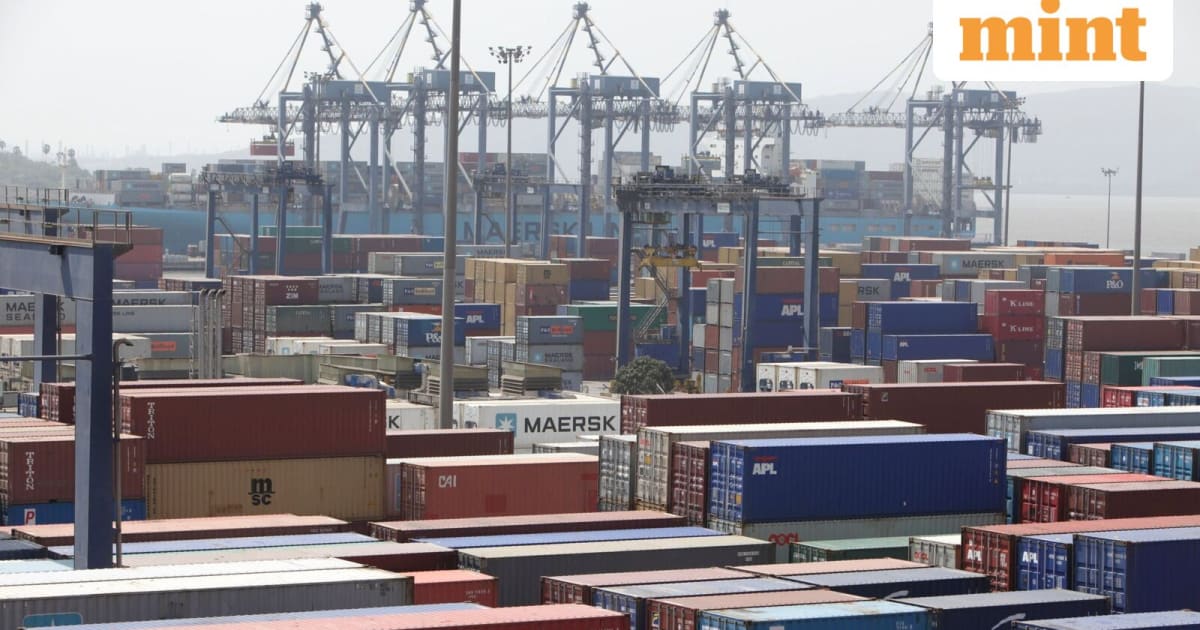
India’s merchandise exports have surged to a 49-month peak, reflecting a robust rebound in global demand and manufacturing output. However, the accompanying widening of the trade deficit poses significant risks to currency stability and domestic inflation, forcing a re-evaluation of sector-specific equity exposure.
The Macro Paradox: Export Surge Meets Trade Deficit
India’s recent trade data has triggered a complex debate in Dalal Street corridors. Merchandise exports hitting a 49-month high is a testament to the success of the Production Linked Incentive (PLI) schemes and a broader shift in global supply chains toward 'China Plus One' strategies. Yet, the headline figure masks an underlying tension: a widening trade deficit of $28.38 billion. This divergence between export growth and import demand creates a challenging environment for the Reserve Bank of India (RBI) and currency traders alike.
Historically, when the trade deficit expands alongside a strong export cycle, it often signals an economy transitioning from consumption-led to investment-led growth. However, this transition is capital-intensive and heavily reliant on imported raw materials and energy. The last time India faced a similar trade imbalance in Q3 2022, the Nifty 50 saw a 4% correction over two months as the INR depreciated against the USD. Investors today must discern whether this current surge is a structural shift or a temporary inventory-led spike.
How will the RBI interest rate trajectory influence export-heavy stocks?
The RBI finds itself in a precarious position. While strong exports support GDP growth, a widening trade deficit threatens to weaken the Rupee, potentially importing inflation through energy and commodity costs. If the RBI maintains high rates to defend the currency, it increases the cost of capital for the very manufacturing firms driving the export surge. Conversely, a rate cut could stimulate domestic demand but might exacerbate the current account deficit (CAD). Expect the central bank to maintain a 'higher for longer' stance until the trade balance shows signs of narrowing.
Deep Market Impact: A Sectoral Dissection
The divergence in market performance will be driven by 'currency sensitivity.' Companies with high import intensity—particularly in electronics and consumer durables—face margin compression as the Rupee faces pressure. Conversely, logistics and infrastructure players are positioned to capture the volume gains associated with increased export movement.
- The Winners: Logistics, shipping, and agri-processing. These sectors benefit from the sheer volume of goods moving through ports and the increased demand for value-added agricultural exports.
- The Losers: Oil Marketing Companies (OMCs) and firms with high forex-denominated debt or import-heavy supply chains. As the trade deficit widens, the cost of servicing external liabilities rises, impacting bottom-line profitability.
Stock-by-Stock Breakdown: Where to Allocate Capital
1. TCI Express (NSE: TCIEXP)
As a leader in B2B express logistics, TCIEXP is a direct beneficiary of increased manufacturing output. With a P/E ratio hovering near 35x, it commands a premium due to its asset-light model. Increased export volumes directly correlate to their 'last-mile' demand.
2. Container Corporation of India (NSE: CONCOR)
CONCOR acts as the backbone of India’s trade infrastructure. As export volumes hit 49-month highs, CONCOR’s rail-freight utilization is expected to see a 12-15% uptick. Its strong balance sheet makes it a defensive play in a volatile market.
3. ITC (NSE: ITC)
While traditionally a FMCG play, ITC’s agri-business division is a massive export powerhouse. The company’s ability to leverage global demand for wheat and spices provides a natural hedge against domestic inflation.
4. Reliance Industries (NSE: RELIANCE)
Reliance represents the 'double-edged sword.' While its O2C (Oil-to-Chemicals) business benefits from high refining margins, its import-heavy retail arm and high capex in telecommunications face headwinds from a weakening Rupee and rising cost of imported technology.
5. Hindustan Unilever (NSE: HINDUNILVR)
HUL faces the brunt of import-heavy costs for raw materials. With a P/E of 55x, the stock is vulnerable if margin pressure continues to mount due to currency volatility, making it a 'hold' at best in the current climate.
Expert Perspective: The Bull-Bear Tug of War
The Bull Case: Proponents argue that the export surge is structural. They point to the $100 billion+ in FDI inflows over the last two years as evidence that India is becoming a global manufacturing hub. In this view, the trade deficit is merely the 'cost of growth'—a necessary input for future export capacity.
The Bear Case: Skeptics warn that the export growth is largely driven by high global commodity prices rather than volume expansion. If global demand cools, the trade deficit will remain, but the export revenue will evaporate, leading to a 'stagflationary' environment where the Rupee collapses under the weight of the twin deficits.
Actionable Investor Playbook
Investors should adopt a 'Barbell Strategy' to navigate this volatility:
- Accumulate Logistics: Focus on firms with strong infrastructure moats like CONCOR or Blue Dart. These are volume-driven plays that bypass currency risks.
- Trim Import-Heavy Exposure: Reduce exposure to consumer electronics and companies with high import content (above 40% of COGS) until the Rupee stabilizes below 83.50 against the USD.
- Monitor Agri-Exports: Companies with diversified export baskets are safer than pure-play domestic manufacturing firms during this period of high commodity price sensitivity.
Risk Matrix
- Currency Depreciation (High Probability): Continued widening of the trade deficit could push the Rupee to record lows, necessitating aggressive RBI intervention.
- Global Commodity Volatility (Medium Probability): Since much of the current export growth is commodity-linked, a sudden price reversal would hit revenue figures immediately.
- Supply Chain Bottlenecks (Low Probability): If logistics infrastructure fails to scale with export volumes, the growth will be capped by physical capacity constraints.
What to Watch Next
The most critical catalyst for the next quarter is the RBI Monetary Policy Committee (MPC) meeting minutes, which will provide insight into how the central bank plans to balance the trade deficit with growth. Additionally, keep a close watch on the monthly WPI (Wholesale Price Index) data; if imported inflation begins to bleed into the WPI, expect a sharp correction in mid-cap manufacturing stocks.
Disclaimer: This content is generated by WelthWest Research Desk based on publicly available reports and is for informational purposes only. It does not constitute financial advice, investment recommendations, or an offer to buy or sell securities. Always consult a qualified financial advisor before making investment decisions.