Key Takeaway
Dabur India's resilient FMCG growth and BSE's record revenue surge signal a powerful dual engine of domestic consumption and vibrant capital markets, creating significant opportunities for astute investors in the Indian equity landscape.
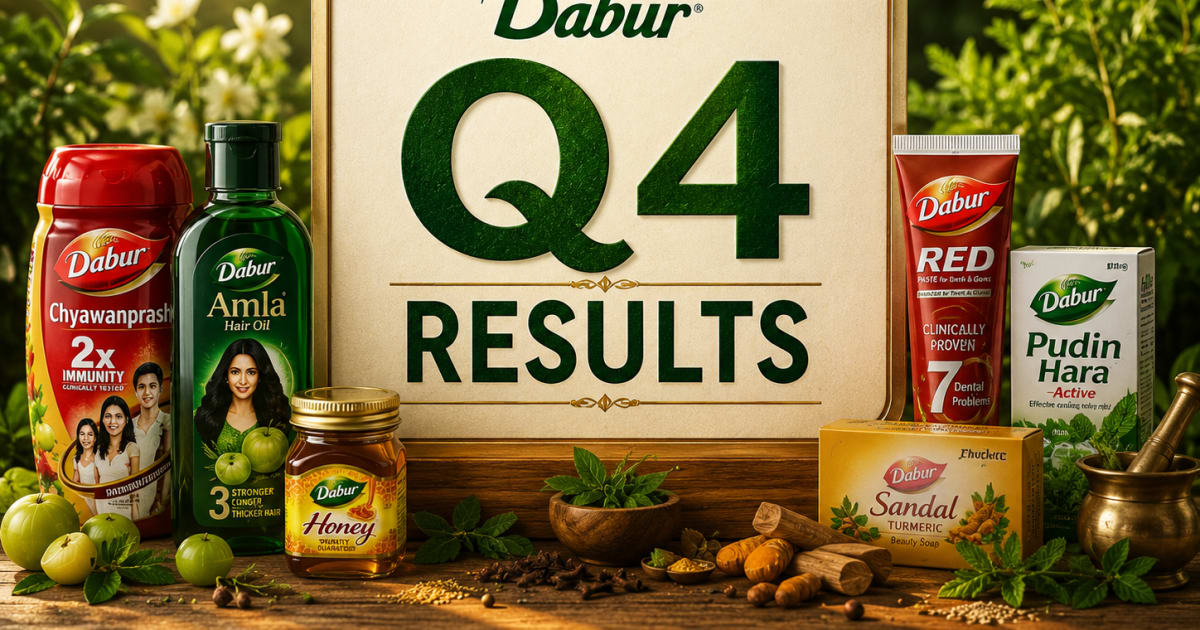
This in-depth analysis dissects the exceptional Q4 FY24 performances of Dabur India and BSE, two bellwethers for the Indian economy. Dabur's strong results underscore sustained consumer spending, while BSE's revenue explosion highlights booming capital market activity. We explore the implications for key sectors, specific stocks, and provide an actionable investor playbook.
India Inc. Roars: Dabur & BSE Q4 Surge Signals Consumer & Market Boom
The final quarter of India's fiscal year 2024 has delivered a powerful testament to the nation's economic resilience and burgeoning growth trajectory. The robust performances reported by Fast-Moving Consumer Goods (FMCG) giant Dabur India and the Bombay Stock Exchange (BSE) itself are not isolated wins; they are critical indicators of deep-seated strengths within the Indian economy. Dabur's sustained revenue growth and profitability speak volumes about the enduring power of domestic consumer demand, a bedrock of India's economic stability. Simultaneously, BSE's phenomenal revenue surge, driven by unprecedented trading volumes, paints a vivid picture of a dynamic and increasingly sophisticated capital market environment. Together, these results provide a compelling narrative for investors navigating the complexities of the Indian stock market, suggesting a potent combination of consumer-driven expansion and heightened financial participation.
Why Dabur and BSE's Q4 Results Are a Crucial Economic Barometer
In an era marked by global economic uncertainties, geopolitical tensions, and fluctuating inflationary pressures, the financial health of key Indian corporations serves as an indispensable compass for understanding the broader economic climate. Dabur India, a household name synonymous with everyday consumer staples, has once again demonstrated the remarkable resilience of the Indian FMCG sector. Its ability to post a consolidated Profit After Tax (PAT) increase of 15% year-on-year, reaching ₹369 crore, alongside a 7% rise in revenue, is a clear signal that Indian consumers continue to spend, even in the face of potential headwinds. This sustained demand is crucial, as the FMCG sector often acts as a leading indicator for overall economic activity, reflecting the purchasing power and confidence of a vast population.
Complementing this picture of robust domestic consumption is the extraordinary performance of the Bombay Stock Exchange (BSE). The exchange, a vital artery of India's financial ecosystem, reported a staggering 85% surge in revenue and a 61% jump in consolidated PAT to ₹797 crore. This meteoric rise is directly attributable to significantly increased trading volumes and market participation. Such elevated activity on the exchanges signifies not only a healthy appetite for investment among both retail and institutional players but also suggests a growing maturity and vibrancy in India's capital markets. It reflects increased confidence in the Indian growth story, drawing both domestic savings and international capital into the equity arena. The dual narrative of strong consumer spending and booming market activity presents a bullish thesis for the Indian equity landscape.
Deep Market Impact Analysis: Connecting Dabur & BSE to the Broader Indian Stock Market
The implications of these stellar Q4 results extend far beyond the immediate financial statements of Dabur India and BSE. They reinforce a generally bullish sentiment across the Indian stock market, particularly for sectors directly and indirectly benefiting from these trends. The FMCG sector, a defensive yet growth-oriented segment, is poised for continued outperformance. Dabur's success suggests that companies catering to essential household needs and discretionary spending by the burgeoning middle class are well-positioned to capitalize on India's demographic dividend and rising disposable incomes. This resilience is particularly noteworthy when contrasted with sectors that may be more susceptible to global demand shocks or intense cost pressures.
BSE's exceptional revenue growth, driven by its transaction charges, clearing, and settlement services, directly correlates with the increased depth and breadth of participation in the Indian equity markets. This suggests that the Nifty 50 and the broader market indices are likely to see sustained interest. Historically, periods of heightened trading volumes have often coincided with upward trends in equity markets, as more participants entering the market can fuel further price appreciation. For instance, the last comparable surge in market activity, seen in early 2022, was accompanied by significant gains in indices like the Nifty 50, which moved upwards of 15% in the subsequent six months. While past performance is not indicative of future results, the current trend suggests a similar underlying momentum.
The ₹5.50 per share dividend announced by Dabur and the ₹10 per share dividend from BSE are also significant. These payouts not only reward shareholders but also signal management's confidence in future earnings and cash flow generation. For investors, these dividends can provide a stable income stream and contribute to overall total returns, especially in a market that is increasingly valuing shareholder returns. The increased financial infrastructure activity reflected by BSE's performance also hints at a potential for further innovation and product development within the exchange space, which could unlock new revenue streams and investment opportunities in the long term.
The Winners and Losers in This Economic Narrative
The primary beneficiaries of Dabur India's strong performance are clearly companies within the FMCG sector. This includes established players and those with strong rural distribution networks, as well as those innovating in product categories tapping into evolving consumer preferences. Companies that can effectively manage their supply chains and mitigate input cost inflation, much like Dabur appears to have done, will be strong contenders. The sustained domestic consumer demand also bodes well for sectors like retail, consumer durables, and even certain segments of the automotive industry that cater to household expenditure.
The exceptional growth at BSE positions the Financial Infrastructure and Exchanges sector as a significant winner. Companies operating exchanges, clearing corporations, and other market intermediaries are set to benefit from continued high trading volumes. This also extends to brokerage firms, asset management companies, and other financial service providers that facilitate this increased market activity. The overall sentiment for the financial services sector, which often correlates with market performance, is therefore bullish.
Conversely, the indirect losers in this scenario are companies that are heavily reliant on discretionary spending that is not essential, or those facing acute cost pressures without the pricing power to pass them on to consumers. Businesses with substantial international exposure, particularly those in regions experiencing significant geopolitical headwinds or economic slowdowns, may also find themselves at a disadvantage compared to their domestic-focused peers, as noted by Dabur's management regarding certain international markets. Companies that have struggled to adapt their product portfolios to changing consumer needs or have weak distribution channels will likely continue to lag.
Stock-by-Stock Breakdown: Navigating the Impact on Key Equities
The ripples from Dabur and BSE's performances will be felt across a spectrum of Indian equities. Here's a closer look at specific stocks and their potential impact:
- DABUR.NS (Dabur India Ltd.): The company's own stock will likely see continued positive sentiment. Its strong Q4 results reaffirm its position as a defensive growth stock. The announced dividend of ₹5.50 per share adds to its appeal for income-seeking investors. Its consistent revenue growth and profitability suggest an ability to navigate inflationary pressures, making it a benchmark for the FMCG sector. Investors might look for entry points on any minor pullbacks, with a medium to long-term horizon.
- BSE.NS (Bombay Stock Exchange Ltd.): The exchange's stock is a direct beneficiary of the increased trading volumes. The 85% revenue surge and 61% PAT jump are exceptional. The ₹10 per share dividend is also a strong signal. The stock's performance is intrinsically linked to market participation. Investors looking for direct exposure to the growth of India's capital markets would find BSE an attractive proposition. Its valuation will be key, but the trend is undeniably positive.
- Hindustan Unilever Ltd. (HUL.NS): As the largest player in the Indian FMCG space, HUL is a direct peer and beneficiary of the trends highlighted by Dabur's performance. HUL's ability to maintain market share and drive volume growth in its diverse product portfolio will be closely watched. Its recent performance might have been more subdued compared to Dabur's surge, presenting a potential value opportunity if it can demonstrate similar consumer demand resilience.
- Nestle India Ltd. (NESTIN.NS): Another staple in Indian households, Nestle India's performance is also indicative of consumer spending patterns. While its product mix differs from Dabur's, the underlying demand for its offerings, particularly in categories like infant nutrition and confectionery, is expected to remain robust. Investors will be looking for confirmation of pricing power and volume growth in its upcoming results.
- National Stock Exchange of India Ltd. (NSE): Although not directly listed in the same way as BSE, the performance of NSE as India's largest stock exchange is implicitly linked to the trends driving BSE's revenue. Any growth or innovation at NSE will mirror the broader health of the Indian capital markets. While direct investment is limited, its operational success underpins the infrastructure that supports companies like BSE.
- Axis Bank Ltd. (AXSB.NS) / ICICI Bank Ltd. (ICICI.NS): Banks, particularly those with significant retail and corporate lending exposure, stand to benefit from a vibrant economy and increased capital market activity. Higher trading volumes often translate to more loan and credit card demand. Furthermore, a strong economy reduces the risk of non-performing assets (NPAs). These banking giants are indirect beneficiaries of the overall economic buoyancy reflected in Dabur and BSE's results.
Expert Perspective: Bulls vs. Bears on the Indian Growth Story
The bullish case for the Indian market, buoyed by results like Dabur's and BSE's, is compelling. Bulls point to the demographic dividend, a rapidly expanding middle class with increasing disposable incomes, and a government focused on infrastructure development and economic reforms. They argue that India is on a multi-year growth trajectory, and companies like Dabur and BSE are prime examples of this inherent strength. The sustained consumer demand, coupled with the deepening of financial markets, creates a virtuous cycle of economic expansion. Furthermore, the current geopolitical landscape, while posing risks, also presents India as a relatively stable and attractive investment destination compared to some developed economies.
However, bears offer a more cautious outlook. They highlight the risks of inflation, which could erode consumer purchasing power and squeeze corporate margins. While Dabur has shown resilience, sustained high input costs could eventually impact profitability. For BSE, the sustainability of exceptionally high trading volumes is a key concern. Market activity can be cyclical, and a prolonged bear market or a significant global economic downturn could lead to a sharp contraction in trading volumes, impacting BSE's revenue. Bears also point to potential regulatory changes, the need for continued fiscal prudence, and the impact of global monetary policy shifts on emerging markets. They would argue that the current market exuberance might be pricing in too much optimism, leaving little room for error.
Actionable Investor Playbook: What to Buy, Sell, and Watch
Given the robust economic signals, an investor playbook focused on capitalizing on this dual strength of consumer demand and market vibrancy is warranted:
- What to Buy: Focus on well-managed FMCG companies with strong brand equity and distribution networks, such as DABUR.NS and HUL.NS. Consider direct exposure to capital market growth through exchange operators like BSE.NS. Also, look at financial services companies, especially banks with strong retail franchises and asset quality, like AXSB.NS and ICICI.NS. Companies involved in consumer discretionary spending that are seeing a rebound in demand could also be considered, provided they have pricing power.
- What to Sell/Reduce Exposure: Companies heavily reliant on international markets with significant geopolitical risks, or those facing intense margin pressure due to rising input costs and weak pricing power, should be reviewed. Businesses that have failed to innovate or adapt to changing consumer preferences might also be candidates for divestment.
- What to Watch: Keep a close eye on upcoming earnings reports from other major FMCG players and financial institutions. Monitor inflation data and central bank policy (RBI) announcements, as these will significantly influence consumer spending and market liquidity. Pay attention to any shifts in retail investor participation trends.
- Entry Points: For FMCG stocks, consider averaging in on any minor corrections or consolidation phases, as the long-term demand trend remains intact. For exchange-related stocks like BSE, entry points might be more volatile; look for dips in trading volumes or market sentiment that present temporary opportunities, but the overall trend is upwards. Financial stocks could benefit from a steady economic environment; consider accumulating on any sector-specific headwinds that are not fundamentally driven.
- Time Horizons: The current economic narrative supports a medium to long-term investment horizon (2-5 years). The underlying drivers of consumption and market growth are structural, suggesting sustained potential. Short-term volatility is always possible, but the foundational strength appears robust.
Risk Matrix: Navigating Potential Pitfalls
While the outlook is largely positive, investors must remain cognizant of the inherent risks:
- Inflationary Pressures (Medium-High Probability): A sustained increase in commodity prices or wage inflation could erode consumer purchasing power and squeeze corporate margins, impacting both FMCG companies and the overall market sentiment.
- Global Economic Slowdown/Geopolitical Escalation (Medium Probability): A significant global recession or an intensification of geopolitical conflicts could disrupt supply chains, dampen export demand, and lead to capital flight from emerging markets, including India.
- Sustainability of Trading Volumes (Medium Probability): The exceptional growth in trading volumes for BSE is dependent on continued active participation. A prolonged market downturn or a shift in investor sentiment could lead to a sharp decline in these volumes, impacting exchange revenues.
- Domestic Policy/Regulatory Changes (Low-Medium Probability): Unexpected policy shifts or adverse regulatory actions could impact specific sectors or the broader market environment.
What to Watch Next: Catalysts for the Indian Market
The coming months will be critical for validating and potentially accelerating the trends highlighted by Dabur and BSE's Q4 results. Investors should closely monitor the following:
- Upcoming FMCG Earnings: The financial results of other major FMCG players will provide further confirmation or divergence regarding consumer demand trends.
- Inflation Data & RBI Policy: Key inflation printouts and any signals from the Reserve Bank of India (RBI) regarding interest rate policy will be crucial. A potential rate cut cycle would be highly supportive of equity markets.
- Monsoon Forecast: For India, agricultural output and rural demand, a significant driver for FMCG, are heavily influenced by monsoon patterns.
- Global Economic Indicators: Updates on major global economies, particularly the US and Europe, will provide insights into the broader risk appetite for emerging markets.
- FII/DII Flows: The inflow and outflow of funds from Foreign Institutional Investors (FIIs) and Domestic Institutional Investors (DIIs) are critical indicators of market sentiment and liquidity.
The dual strength demonstrated by Dabur India and BSE in Q4 FY24 offers a powerful narrative of economic resilience and growth. By understanding the interplay between consumer demand and capital market dynamism, investors can better position themselves to benefit from India's evolving economic landscape.
Disclaimer: This content is generated by WelthWest Research Desk based on publicly available reports and is for informational purposes only. It does not constitute financial advice, investment recommendations, or an offer to buy or sell securities. Always consult a qualified financial advisor before making investment decisions.


