Key Takeaway
NITI Aayog’s $180 billion semiconductor blueprint is a structural pivot, not a cyclical play. Investors should pivot from pure-play importers to deep-tech infrastructure and specialty chemical enablers to capture the next decade of domestic value-add.
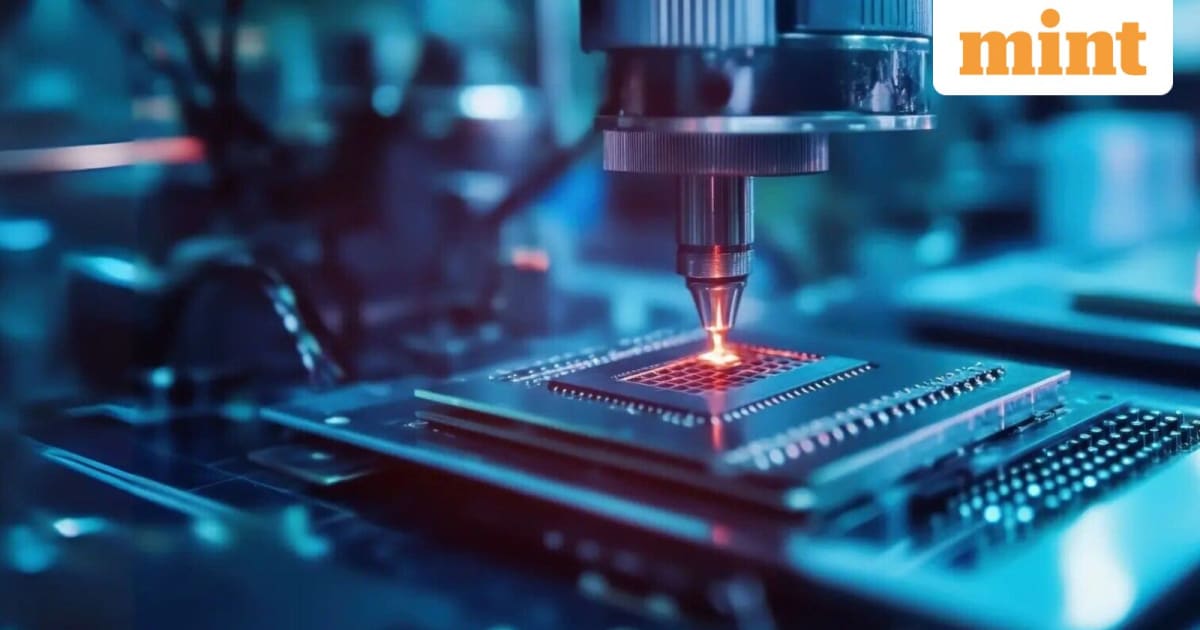
India is embarking on a multi-decade journey to achieve semiconductor self-reliance. With a proposed $180 billion investment roadmap, this sector is poised to become the cornerstone of Indian manufacturing. We analyze the high-growth winners and the structural risks inherent in this monumental shift.
The $180 Billion Pivot: Decoding India’s Semiconductor Ambition
For decades, India has been the global back-office for software while remaining a captive consumer of foreign hardware. The NITI Aayog’s latest proposal to inject $180 billion into the semiconductor ecosystem by 2035 marks a definitive end to this era of passive reliance. This is not merely a subsidy scheme; it is a structural industrial policy designed to replicate the success of East Asian tech hubs by creating a sovereign, end-to-end silicon supply chain.
The core of this strategy lies in the 33% government de-risking commitment. By absorbing a third of the capital expenditure risk, the state is effectively lowering the barrier to entry for private players in a sector notorious for high gestation periods and extreme technical complexity. For the Indian investor, this transforms the semiconductor sector from a speculative 'theme' into a long-term capital allocation essential.
Why does this semiconductor roadmap matter for Indian markets now?
Historically, India’s electronics manufacturing growth has been assembly-heavy—importing components and soldering them in local facilities. The NITI Aayog plan seeks to move up the value chain toward fabrication (fab) and advanced packaging (OSAT). If we look back at the 2022 PLI (Production Linked Incentive) rollout, the Nifty IT index saw a significant re-rating as companies diversified into hardware. This new roadmap represents a 10x scale-up of that ambition.
The shift is driven by geopolitical necessity. With China’s dominance in legacy chips and Taiwan’s concentration risk, global OEMs are desperate for a 'China+1' or 'Taiwan+1' manufacturing base. India is uniquely positioned to capture this shift, provided it can solve the 'trinity of barriers': specialized talent, consistent power, and ultra-pure chemical supply chains.
Which sectors will capture the $180 billion windfall?
The capital flow will follow a waterfall effect. Initial liquidity will hit the construction and power infrastructure sectors, followed by specialty chemicals (essential for etching and cleaning), and finally, high-end Electronics Manufacturing Services (EMS) and OSAT providers.
Stock-by-Stock Breakdown: The Front-Runners
- CG Power & Industrial Solutions (CGPOWER): As a key player in the joint venture for OSAT (Outsourced Semiconductor Assembly and Test), CG Power is the most direct play on the assembly and testing requirements of the chip ecosystem. Their ability to leverage Renesas technology provides a significant moat.
- Kaynes Technology (KAYNES): As a leader in high-end EMS, Kaynes is moving rapidly into PCB assembly and component manufacturing. Their order book growth reflects the rising domestic demand for industrial electronics.
- Dixon Technologies (DIXON): The behemoth of Indian EMS. Dixon’s scale allows it to absorb the infrastructure costs that smaller players cannot. They are the primary beneficiary of the government’s push for 'Made in India' consumer and industrial hardware.
- Tata Power (TATAPOWER): Semiconductor fabrication is one of the most energy-intensive processes on earth. Tata Power’s pivot to green energy and industrial-grade power supply is critical; they are the implicit utility partner for any major fab facility in India.
- Linde India (LINDEINDIA): Often overlooked, industrial gas providers are the 'unsung heroes' of fabs. Semiconductor manufacturing requires ultra-high-purity gases (nitrogen, argon, helium). Linde's existing infrastructure makes them the default supplier for upcoming semiconductor clusters.
Expert Perspective: The Bull vs. Bear Divide
The Bull Case: Proponents argue that India’s demographic dividend and the current global tech-war create a once-in-a-generation window. With the government acting as a 'co-investor,' the IRR (Internal Rate of Return) for private fabs becomes attractive, potentially triggering a massive surge in FDI (Foreign Direct Investment) over the next 36 months.
The Bear Case: Critics point to the 'execution trap.' Semiconductor manufacturing is not just about money; it is about intellectual property and a multi-decade culture of engineering precision. Skeptics argue that without a massive influx of foreign talent and a more streamlined land-acquisition process, the $180 billion could become 'dead capital' that puts excessive pressure on the national fiscal deficit.
Actionable Investor Playbook: How to position your portfolio
Short-Term (1-2 years): Focus on infrastructure and power providers. Any semiconductor fab needs power and industrial gases before the first chip is even designed. Look at Linde India and Tata Power as defensive proxies for the sector.
Medium-Term (3-7 years): Look for 'Enablers.' Specialty chemical companies that provide high-purity solvents and etching chemicals are essential. These firms often trade at lower P/E ratios than the high-flying EMS stocks but possess higher operational moats.
Long-Term (7-15 years): The 'Fabricators.' This is where the true wealth will be created, but also where the risk of failure is highest. Focus on firms that have secured joint ventures with global tech leaders (e.g., the Tata Group or CG Power). Avoid 'pure-play' component importers, as their margins will be squeezed by domestic competition.
Risk Matrix: Navigating the Hazards
| Risk Factor | Probability | Impact |
|---|---|---|
| Fiscal Deficit Expansion | Medium | High |
| Execution/Delay in Fab Setup | High | High |
| Global Technology Price War | Medium | Medium |
| Talent Shortage | High | Medium |
What to watch next: Upcoming Catalysts
Investors should closely monitor the upcoming Union Budget sessions for specific line-item allocations related to the 33% de-risking fund. Furthermore, track the progress of the Dholera and Sanand semiconductor clusters; any news regarding the first 'tape-out' (the final stage of chip design before mass production) from these facilities will serve as a massive sentiment catalyst for the entire sector.
Disclaimer: This content is generated by WelthWest Research Desk based on publicly available reports and is for informational purposes only. It does not constitute financial advice, investment recommendations, or an offer to buy or sell securities. Always consult a qualified financial advisor before making investment decisions.