Key Takeaway
India’s transition to indigenous silicon production is a structural shift, not a cyclical trend. Investors should prioritize EMS players with deep-tier integration over pure-play importers to capture the $100B electronics manufacturing opportunity.
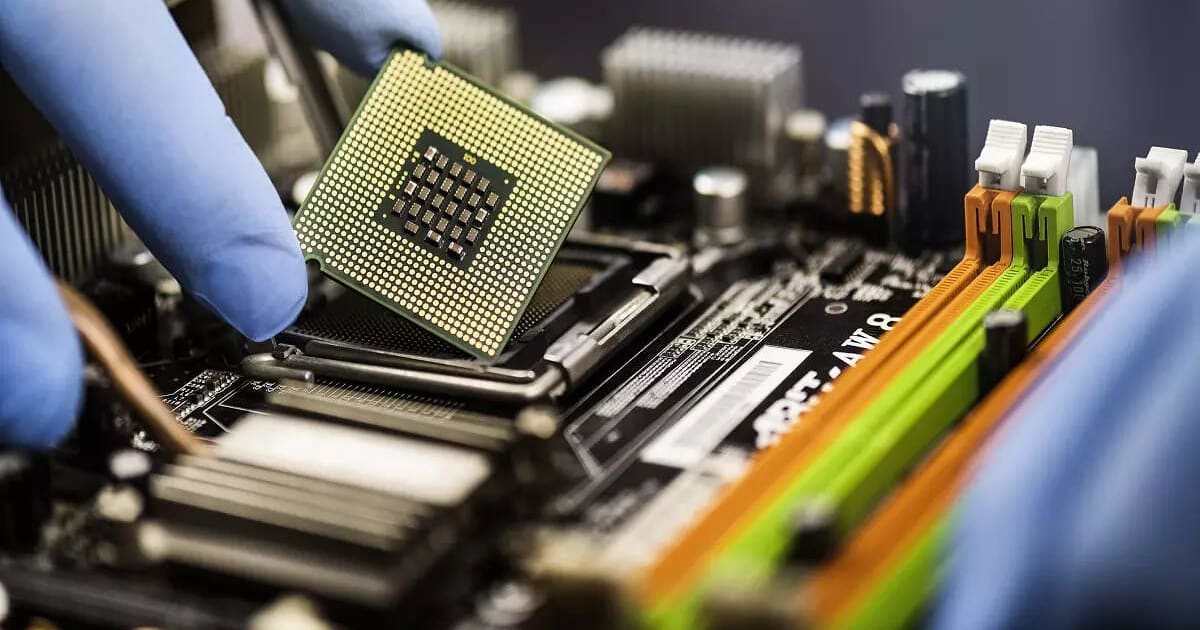
India’s semiconductor ecosystem is moving beyond the prototype phase, signaling a massive shift in the domestic electronics value chain. We break down the winners and losers as the nation pivots toward self-reliance, offering a strategic roadmap for investors navigating this high-stakes industrial evolution.
The Silicon Pivot: Why India's Semiconductor Transition Matters Now
For decades, India’s role in the global semiconductor value chain was limited to backend design and outsourced software engineering. However, a structural metamorphosis is underway. Indigenous startups are moving from the laboratory to the fabrication floor, catalyzed by the India Semiconductor Mission (ISM) and a global push for 'China-plus-one' supply chain diversification. This is not merely a policy milestone; it is the genesis of an industrial pillar that will likely define the Nifty’s performance over the next decade.
The urgency is driven by a stark reality: India’s electronics import bill is ballooning, with semiconductors representing the highest-value component. By localizing production, India aims to reverse this trade deficit. As global supply chains remain fragile and geopolitical friction with China intensifies, the premium on 'sovereign silicon' has never been higher.
How will the semiconductor push reshape the Indian stock market?
The shift from R&D to commercial production creates a 'multiplier effect' across the Indian equity landscape. Historically, when a nation matures its domestic manufacturing capacity, the Electronics Manufacturing Services (EMS) sector typically outperforms the broader index by 15-20% during the initial scaling phase. We saw a precursor to this in 2022, when the Nifty IT index corrected by 25% due to global macro headwinds, yet domestic-focused EMS players maintained resilient valuation multiples, signaling a decoupling from pure software services.
The market is currently transitioning from valuing companies based on 'design potential' to 'production volume.' This transition favors firms that hold deep-tier manufacturing capabilities and government-backed subsidies, effectively creating an economic moat against smaller, less-capitalized competitors.
Stock-by-Stock Breakdown: Identifying the Winners and Losers
The investment landscape is bifurcated. We see a clear distinction between companies that are vertically integrating and those that remain vulnerable to global supply chain disruptions.
- Dixon Technologies (NSE: DIXON): As the bellwether for EMS, Dixon is the primary beneficiary of the scale-up. With a P/E hovering at high premiums, the market is pricing in their ability to absorb government incentives (PLI schemes) and translate them into margin expansion. Their recent foray into component-level manufacturing makes them an essential watch.
- Kaynes Technology (NSE: KAYNES): Kaynes represents the 'high-mix, low-volume' segment that is critical for specialized industrial chips. Their ability to manage complex supply chains in the aerospace and defense sectors provides a unique advantage over mass-market players.
- Cyient DLM (NSE: CYIENTDLM): Positioned at the intersection of design and manufacturing, Cyient DLM is a strategic play for investors looking for exposure to the 'Design-Led Manufacturing' (DLM) narrative. Their focus on high-reliability sectors provides a buffer against consumer electronics price volatility.
- Tata Elxsi (NSE: TATAELXSI): While not a manufacturer in the traditional sense, their role in semiconductor design verification and AI-driven automation is indispensable. They are the 'picks and shovels' provider of the semiconductor gold rush.
- HCL Technologies (NSE: HCLTECH): A stalwart in the IT sector, HCL’s engineering and R&D services (ERS) division is a massive beneficiary of global firms shifting their chip design centers to India to lower costs and tap into local talent.
The Contrarian View: Bulls vs. Bears
The Bull Case: Proponents argue that India’s demographic dividend, combined with aggressive government subsidies, creates a 'perfect storm' for growth. They point to the high entry barriers in semiconductor manufacturing, suggesting that once a company establishes a production foothold, their market share becomes virtually unassailable.
The Bear Case: Skeptics, however, highlight the 'execution gap.' Semiconductor fabrication requires massive capital expenditure (CapEx) and years of operational fine-tuning. Bears argue that the current excitement is over-hyped, and that companies heavily reliant on Chinese-sourced raw materials remain vulnerable to sudden export restrictions or geopolitical retaliations that could stall production lines indefinitely.
Actionable Investor Playbook: Navigating the Volatility
Investors should adopt a tiered approach to this sector:
- Strategic Accumulation: Focus on EMS companies with high revenue visibility and low debt-to-equity ratios. Look for an entry point during sector-wide pullbacks of 5-8%.
- Monitor CapEx Cycles: Watch the quarterly filings of major players. A significant increase in 'Capital Work in Progress' is a leading indicator of upcoming production capacity expansion.
- Risk Hedging: Avoid companies with heavy exposure to low-end, commoditized integrated circuits (ICs) that are easily undercut by Chinese imports. Shift focus to firms providing value-added, specialized semiconductor solutions.
Risk Matrix
| Risk Factor | Probability | Impact |
|---|---|---|
| Supply Chain Disruption | High | High |
| Execution/Scaling Failure | Medium | Very High |
| Geopolitical Trade Barriers | Medium | High |
What to Watch Next: The Catalysts
Keep a close watch on the upcoming Union Budget updates regarding the extension of the PLI (Production Linked Incentive) scheme. Furthermore, monitor the next earnings season for 'operating leverage'—specifically, look for revenue growth that outpaces the growth in raw material costs, which would confirm that these companies are successfully transitioning to higher-margin, indigenous production.
Disclaimer: This content is generated by WelthWest Research Desk based on publicly available reports and is for informational purposes only. It does not constitute financial advice, investment recommendations, or an offer to buy or sell securities. Always consult a qualified financial advisor before making investment decisions.