Key Takeaway
A ballooning trade deficit fueled by energy volatility creates a 'triple threat' for Indian investors: currency depreciation, deferred interest rate cuts, and margin compression for domestic-focused manufacturers. Tactical rotation into IT and Pharma exporters is now the primary defensive play.
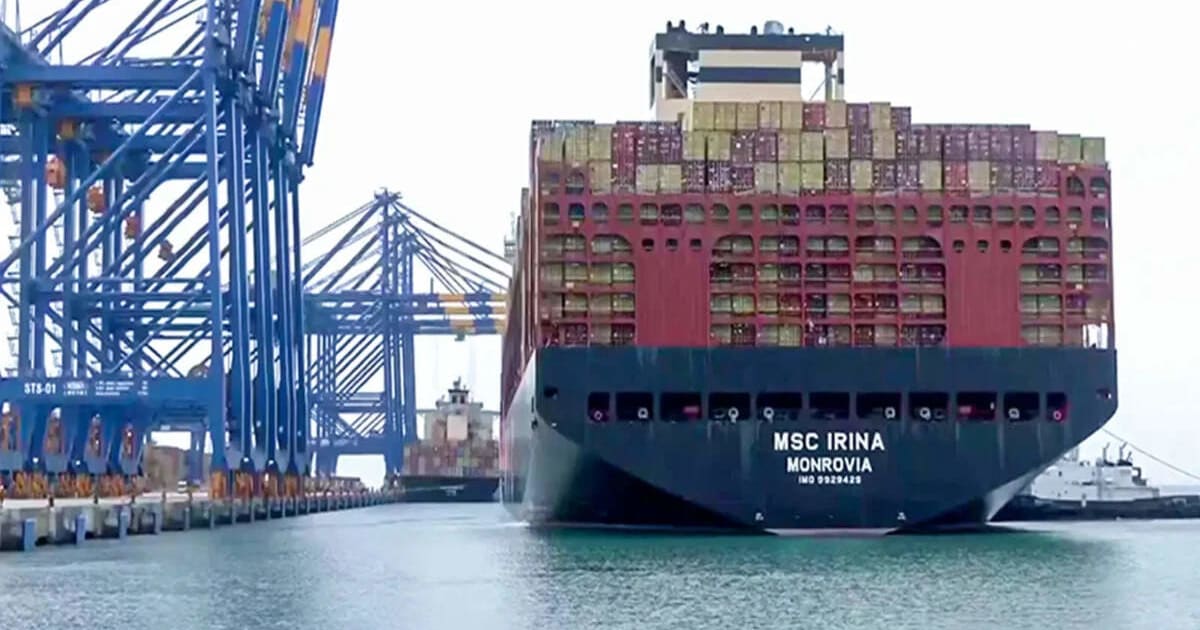
India's trade deficit surged to a multi-month high of $28.38 billion in April 2024, driven by a spike in energy imports amid Middle East tensions. This analysis explores the structural risks to the Indian Rupee, the potential for FII outflows, and specific stock-level impacts across the OMCs, IT, and Pharmaceutical sectors.
The $28.38 Billion Wake-Up Call: Understanding India’s Widening Trade Gap
On the surface, India’s economic engine appears to be firing on all cylinders, with high GST collections and robust GDP growth. However, the latest trade data from the Ministry of Commerce reveals a widening fissure in the structural foundation. In April 2024, India’s trade deficit—the gap between what we import and what we export—swelled to $28.38 billion. While exports grew by approximately 1% year-on-year to $34.99 billion, imports outpaced them significantly, surging to $63.37 billion.
The primary culprit? Energy. As geopolitical instability in the Middle East persists, the cost of securing crude oil and liquefied natural gas (LNG) has escalated. For a nation that imports over 85% of its crude requirements, a $10 move in Brent crude isn't just a statistic—it’s a direct hit to the national balance sheet. This matters now more than ever because it coincides with a period where the Reserve Bank of India (RBI) was expected to pivot toward a more accommodative monetary policy. A widening deficit puts the Rupee under siege, forcing the RBI to maintain high interest rates to prevent capital flight.
How will the trade deficit impact the Indian stock market?
The relationship between the trade deficit and the Nifty 50 is often mediated through the USDINR exchange rate. Historically, when the trade deficit breaches the $25 billion monthly threshold consistently, we see a correlated increase in Foreign Institutional Investor (FII) selling. In 2022, when energy prices spiked following the Russia-Ukraine conflict, the Nifty experienced a 10% correction as the Current Account Deficit (CAD) fears peaked.
Currently, the Current Account Deficit (CAD) is projected to widen if this trend continues. A higher CAD implies that India is a net borrower from the rest of the world. For equity investors, this translates to 'Imported Inflation.' When energy costs rise, transportation and logistics costs for companies like Asian Paints (ASIANPAINT) or Hindustan Unilever (HUL) surge, eating into gross margins. We are likely entering a phase where 'top-line growth' may look healthy due to price hikes, but 'bottom-line profitability' will be squeezed by rising input costs.
The Rupee Factor: A Double-Edged Sword
The Indian Rupee has been hovering near record lows against the US Dollar. A trade deficit of $28.38 billion necessitates a higher demand for dollars to pay for imports. If the RBI intervenes to stabilize the Rupee, it depletes forex reserves. If it doesn't, the Rupee depreciates. For the stock market, a weak Rupee is a nightmare for importers (Electronics, Chemicals) but a windfall for exporters (IT, Pharma). Investors should anticipate a sector-wise divergence in the coming quarters.
Sectoral Breakdown: Winners and Losers
The widening deficit creates a clear bifurcated market. Analysts at WelthWest Research identify the following shifts:
- The Losers (Domestic Cyclicals & Energy Consumers): Oil Marketing Companies (OMCs) are at the frontline. While crude prices rise, these companies often face political pressure to keep retail fuel prices steady, leading to 'under-recoveries.' Similarly, the Aviation sector, led by InterGlobe Aviation (INDIGO), faces immediate pressure as Aviation Turbine Fuel (ATF) accounts for nearly 40% of their operating expenses.
- The Winners (Service Exporters & Global Defensives): The IT services sector, which earns primarily in USD but spends in INR, sees an immediate margin expansion. A 1% depreciation in the Rupee typically adds 30-50 basis points to the EBIT margins of Tier-1 IT firms.
Stock-by-Stock Breakdown: Identifying the Impact
1. Reliance Industries (NSE: RELIANCE)
As India’s largest refiner, Reliance is in a complex position. While higher crude prices increase input costs, the company benefits from higher Gross Refining Margins (GRMs) if global product cracks remain high. However, its massive retail and telecom arms are sensitive to domestic inflation. With a P/E ratio currently around 26x, any sustained weakness in the refining cycle combined with higher debt-servicing costs (due to delayed rate cuts) could lead to a de-rating.
2. Bharat Petroleum Corporation Ltd (NSE: BPCL)
BPCL and its peers (IOC, HPCL) are the most vulnerable to a widening trade deficit driven by energy. If the government restricts their ability to pass on costs to consumers, their marketing margins turn negative. Historically, when the trade deficit stays above $25B, OMCs underperform the Nifty by 5-8% on an annualized basis. Watch for the $600 support level on BPCL; a breach could signify deeper institutional selling.
3. Tata Consultancy Services (NSE: TCS)
TCS is a primary beneficiary of the 'Deficit-Rupee' correlation. With over $29 billion in annual revenue, predominantly in USD and Euro, TCS acts as a natural hedge against a widening trade gap. As the Rupee slides toward 83.80-84.00, TCS's margins are protected even if volume growth remains muted in the US and Europe. It remains a 'Strong Buy' on dips for those looking to hedge currency risk.
4. Sun Pharmaceutical Industries (NSE: SUNPHARMA)
With a significant portion of its revenue coming from the US generics and specialty market, Sun Pharma is a classic 'defensive winner.' Pharmaceutical exports are one of the few bright spots in the trade data. With a healthy pipeline and a weakening INR, Sun Pharma is positioned to outperform domestic-focused mid-cap stocks in the near term.
5. Maruti Suzuki India (NSE: MARUTI)
Maruti represents the 'Loser' category in this scenario. Higher energy prices lead to higher steel and plastic costs (crude derivatives). Furthermore, if the trade deficit keeps inflation high, the RBI won't cut interest rates, keeping auto loans expensive. This hits the entry-level car segment particularly hard. Maruti’s margins are highly sensitive to the JPYINR and USDINR pairs due to component imports.
Expert Perspective: The Bull vs. Bear Case
"The current trade deficit is a temporary spike caused by inventory restocking and geopolitical noise. India's forex reserves of over $640 billion provide an unprecedented cushion. We expect the deficit to narrow as gold imports cool and service exports continue their record-breaking run."
— The Bull View (Optimistic on structural resilience)
"We are looking at a structural imbalance. The 'China+1' strategy is increasing capital goods imports, but our export growth isn't keeping pace. If Brent stays above $85, the fiscal math fails, and we will see a significant outflow of FII money from the Nifty, potentially dragging the index down to 21,500 levels."
— The Bear View (Focus on fiscal fragility)
Actionable Investor Playbook: Navigating the Deficit
Investors should not panic, but a portfolio rebalancing is mandatory. Here is the WelthWest tactical plan:
- Accumulate IT and Pharma: Increase weightage in TCS, Infosys, and Sun Pharma. These stocks provide a 5-7% 'currency cushion' in a volatile macro environment.
- Reduce Exposure to OMCs and High-Debt Industrials: Avoid BPCL, HPCL, and IOC until crude stabilizes below $80. High-debt companies will suffer as the 'higher-for-longer' interest rate regime persists.
- The Gold Hedge: As the trade deficit pressures the Rupee, domestic gold prices (denominated in INR) will likely rise. Consider Sovereign Gold Bonds (SGBs) or Gold ETFs as a 5% portfolio allocation.
- Monitor the $30B Mark: If the monthly trade deficit breaches $30 billion, it is a 'Sell' signal for domestic mid-caps, as the currency risk will become systemic.
Risk Matrix: What Could Go Wrong?
Understanding the probability of various risk factors is crucial for capital preservation:
- Geopolitical Escalation (Probability: High): A closure of the Strait of Hormuz would send oil to $120, pushing India's trade deficit to $35B+ and causing a sharp Nifty correction.
- US Fed Hawkishness (Probability: Medium): If the US Fed delays its own rate cuts, the USD will strengthen further, exacerbating the Rupee's pain regardless of India's domestic performance.
- Monsoon Failure (Probability: Low-Medium): A poor monsoon would necessitate higher food imports, further widening the trade gap and fueling domestic inflation.
What to watch next: Catalysts and Dates
The story doesn't end with the April data. Keep these key dates and data points on your radar:
- RBI MPC Meeting: Watch for the tone regarding 'imported inflation.' Any shift from 'neutral' to 'hawkish' will be a negative catalyst for banking stocks like HDFC Bank and ICICI Bank.
- Brent Crude Monthly Average: If the average price stays above $88 for May, expect the next trade deficit print to be equally grim.
- FII Flow Data: Daily tracking of NSDL data will reveal if foreign investors are beginning to price in a Current Account crisis.
India's trade deficit is more than just a number; it is a barometer of the country's vulnerability to global shocks. In a world of 'Permacrisis,' the savvy investor moves away from the path of least resistance and toward the sectors that turn a national deficit into a corporate surplus.
Disclaimer: This content is generated by WelthWest Research Desk based on publicly available reports and is for informational purposes only. It does not constitute financial advice, investment recommendations, or an offer to buy or sell securities. Always consult a qualified financial advisor before making investment decisions.


