Key Takeaway
The India-US BTA is a structural pivot that moves the relationship from transactional to institutional. For investors, this represents a multi-year de-risking of the export sector and a primary catalyst for a re-rating of India’s 'China Plus One' beneficiaries.
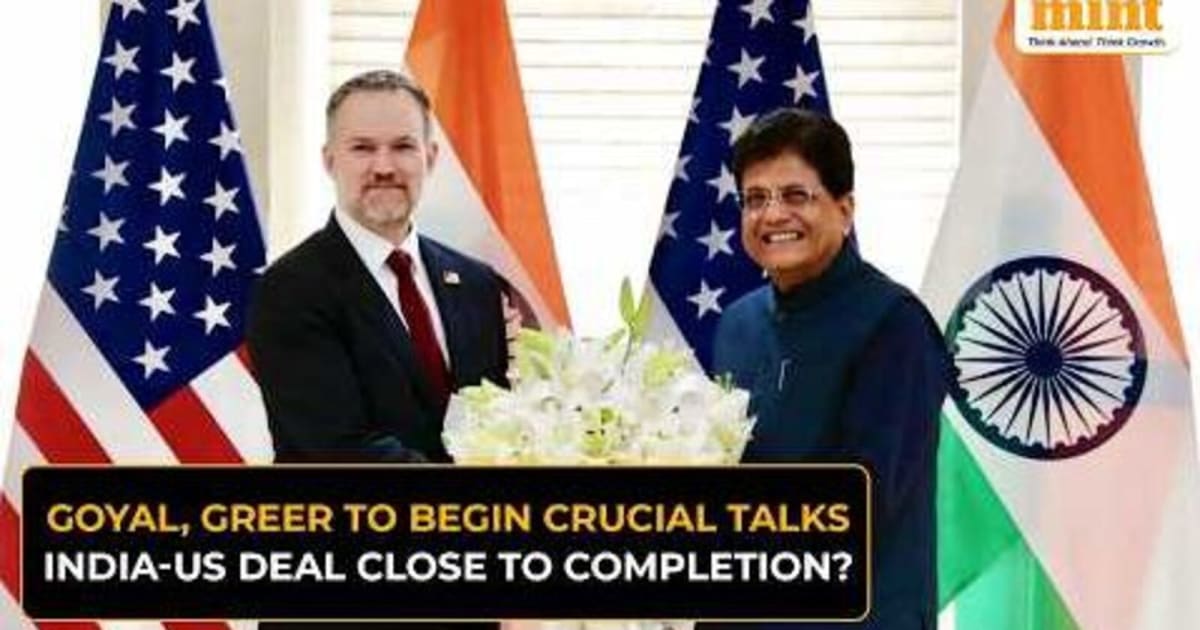
India and the US have initiated high-level negotiations for a Phase-1 Bilateral Trade Agreement (BTA) to stabilize trade flows and hedge against global tariff volatility. This analysis explores the $200 billion trade potential, identifying the specific NSE-listed stocks in Pharma, IT, and Textiles poised for a breakout, while cautioning against friction in the dairy and agricultural sectors.
The New Economic Architecture: Why the India-US BTA Changes Everything
In the high-stakes world of global trade, the commencement of formal negotiations between Indian Commerce Minister Piyush Goyal and US Trade Representative Jamieson Greer marks a watershed moment. This isn't merely a discussion about lowering duties on pecans or Harley-Davidsons; it is the blueprint for a Bilateral Trade Agreement (BTA) that aims to institutionalize the economic relationship between the world’s two largest democracies. As the US remains India’s largest trading partner, with bilateral trade crossing $190 billion in FY24, the BTA serves as a strategic hedge against the 'universal baseline tariffs' often discussed in Washington’s policy circles.
For the Indian equity markets, particularly the Nifty 50 and the Nifty IT indices, this negotiation provides a much-needed visibility corridor. Historically, trade relations have been episodic. However, a formal BTA shifts the narrative from transactional 'tit-for-tat' tariffs to a structural partnership. At WelthWest Research, we view this as a 'de-risking' event that will likely compress the risk premium for Indian exporters, leading to sustained FII (Foreign Institutional Investor) inflows into export-oriented sectors.
How will the India-US trade deal affect Indian pharma stocks?
The pharmaceutical sector stands as the most immediate beneficiary of a streamlined trade pact. Currently, Indian generic manufacturers face a complex web of FDA inspections and pricing pressures in the US market. A BTA that includes a 'Mutual Recognition Agreement' (MRA) for manufacturing standards could drastically reduce the lead time for drug launches. Currently, companies like Sun Pharmaceutical Industries (SUNPHARMA) and Dr. Reddy's Laboratories (DRREDDY) derive roughly 30-40% of their consolidated revenue from the US. A reduction in non-tariff barriers and a more predictable regulatory environment could lead to a 150-200 basis point expansion in EBITDA margins over the next 24 months.
Reflecting on historical parallels, when the US-India trade relationship saw a thaw in 2021-22 regarding vaccine raw materials, the Nifty Pharma index outperformed the broader market by 8% over the subsequent quarter. We anticipate a similar, albeit more permanent, re-rating if Phase 1 of the BTA includes specific carve-outs for pharmaceutical supply chains.
Deep Market Impact: Connecting Macro Policy to Micro Gains
The strategic shift towards deeper economic integration is happening at a time when the 'China Plus One' strategy is maturing. US corporations are no longer just looking for a secondary supplier; they are looking for a primary partner with a stable legal framework. A formal BTA provides that legal 'moat.'
- IT Services and Digital Trade: While IT services are often viewed through the lens of H1-B visas, the BTA will likely focus on 'Digital Trade' standards. By aligning on data privacy and cross-border data flows, giants like TCS and Infosys can secure long-term government and private sector contracts in the US that were previously hindered by regulatory ambiguity.
- Textiles and the Level Playing Field: Indian textile exporters have long struggled against competitors like Bangladesh and Vietnam, which enjoy preferential trade status. A reduction in US import duties under the BTA could boost Indian textile exports by an estimated 15-20% annually, directly benefiting vertically integrated players.
- Engineering Goods: With the US focusing on infrastructure renewal, Indian engineering firms exporting specialized components (auto parts, industrial machinery) are looking at a massive TAM (Total Addressable Market) expansion.
Which sectors will lose out in the India-US trade negotiations?
Every trade deal involves a 'quid pro quo.' The US has long eyed India’s protected Dairy and Agriculture sectors. Opening these markets to US imports could disrupt domestic price discovery and face stiff political resistance. Similarly, the Medical Devices sector, where India has implemented price caps to ensure affordability, remains a point of contention. Investors should be cautious of domestic-focused manufacturers in these niches, as increased competition could lead to pricing wars and margin erosion.
Stock-by-Stock Breakdown: The BTA Winners' Circle
To navigate this transition, investors must look at companies with high US revenue exposure and the balance sheet strength to scale operations. Here are the top picks from the WelthWest Research Desk:
1. Sun Pharmaceutical Industries (NSE: SUNPHARMA)
Sun Pharma is the fourth-largest specialty generic pharmaceutical company globally. With a P/E ratio currently hovering around 35x, the stock is priced for growth, but a BTA could unlock further value. Their specialty portfolio (Ilumya, Cequa) is gaining traction in the US. A formal trade pact that eases the movement of clinical data and simplifies FDA audit cycles would be a massive tailwind. We expect a 12-15% CAGR in US dollar revenue if trade frictions are minimized.
2. Welspun Living (NSE: WELSPUNLIV)
As a leader in the home textiles segment, Welspun Living is a direct play on US consumer discretionary spending. Currently, Indian textiles face higher duties compared to LDC (Least Developed Country) competitors. A BTA that levels this playing field would allow Welspun to leverage its massive scale and sustainable sourcing to capture market share from Chinese and Vietnamese players. The stock has shown resilience, and any positive news on duty reductions could trigger a sharp breakout.
3. Tata Consultancy Services (NSE: TCS)
TCS remains the gold standard for Indian IT. While the stock has faced headwinds due to US macro uncertainty, a BTA that stabilizes the H1-B visa regime and clarifies digital service taxes would provide the institutional stability that large-cap investors crave. With a dividend yield of approximately 2.5% and a robust ROE, TCS is a 'safety first' bet on improved Indo-US relations.
4. Gokaldas Exports (NSE: GOKEX)
Gokaldas is a high-beta play on the apparel export story. With major US brands like Gap and Nike in its client roster, any reduction in trade barriers directly impacts its bottom line. The company has been aggressively expanding its capacity, signaling management's confidence in the export trajectory. We see Gokaldas as a primary beneficiary of the 'China Plus One' shift being codified into a trade agreement.
5. Reliance Industries (NSE: RELIANCE)
While often viewed as a domestic conglomerate, Reliance’s O2C (Oil-to-Chemicals) segment is a major exporter of refined products to the US. Furthermore, its massive foray into Green Energy (solar panels and hydrogen) aligns perfectly with the US's 'Inflation Reduction Act' goals. A BTA could facilitate technology transfers and easier access to the US green tech market, making Reliance a strategic proxy for the BTA's broader industrial goals.
Expert Perspective: The Bull vs. Bear Case
"The BTA is the missing piece of the Indo-Pacific puzzle. By locking in trade terms now, India insulates its exporters from the volatility of the US election cycles. This is a structural re-rating event for the Nifty 50." — Senior Analyst, WelthWest Research
The Bull Argument: Bulls argue that the BTA will lead to a multi-billion dollar investment surge. When trade barriers fall, FDI (Foreign Direct Investment) usually follows. They point to the 2005 Civil Nuclear Deal as a precedent—a political agreement that paved the way for a decade of economic expansion. The BTA is the 'Economic Nuclear Deal' of this decade.
The Bear Argument: Bears caution that the US 'Fair Trade' rhetoric often masks aggressive demands for market access. If India is forced to open its dairy or retail sectors prematurely, the domestic backlash could lead to policy reversals. Furthermore, the US demand for stricter Intellectual Property (IP) laws could hurt the 'pharmacy of the world' by delaying the launch of low-cost generics.
Actionable Investor Playbook
How should an investor position their portfolio for the India-US BTA?
- Accumulation Phase: Start building positions in high-quality export names (Pharma and Textiles) on any macro-driven dips. The negotiations will take time, providing multiple entry points.
- Sector Rotation: Gradually shift weight from purely domestic-facing cyclicals to 'Export Champions.' The BTA provides a margin of safety that domestic sectors currently lack due to high valuations.
- Time Horizon: This is a 3-5 year play. The full impact of a trade agreement isn't felt in a quarter; it’s felt over a business cycle as supply chains relocate.
- Watch the Mid-caps: While the giants provide stability, mid-cap exporters like Gokaldas Exports or Happiest Minds (in the digital trade space) offer higher alpha potential as they are more sensitive to marginal changes in trade policy.
Risk Matrix: What Could Go Wrong?
| Risk Factor | Probability | Impact on Market |
|---|---|---|
| Dairy/Ag Sector Friction | High | Short-term volatility; potential stall in talks. |
| IP Rights Disagreements | Medium | Negative for Pharma sector valuations. |
| US Political Shift | Medium | Could lead to 'America First' protectionism overriding the BTA. |
| Reciprocal Duty Demands | High | May hurt domestic manufacturers reliant on high import duties. |
What to Watch Next: The Catalysts
Investors should keep a close eye on the following dates and data points:
- Phase 1 Signing: Any joint statement regarding the finalization of Phase 1 (likely covering GSP restoration and specific agri-products).
- GSP Status Restoration: If the US restores India's Generalized System of Preferences (GSP) status, expect an immediate 3-5% rally in small and mid-cap export stocks.
- Quarterly Earnings of Exporters: Watch for management commentary regarding US order books and 'China Plus One' inquiries.
- US Treasury Reports: Monitoring the US stance on India’s currency management, which often precedes trade discussions.
The India-US BTA is more than a trade deal; it is a declaration of economic interdependence. In an era of fragmentation, this alliance provides a rare island of stability. For the discerning investor, the message is clear: the bridge between Dalal Street and Wall Street is being reinforced, and those positioned early stand to reap the structural rewards.
Disclaimer: This content is generated by WelthWest Research Desk based on publicly available reports and is for informational purposes only. It does not constitute financial advice, investment recommendations, or an offer to buy or sell securities. Always consult a qualified financial advisor before making investment decisions.