Key Takeaway
The mid-week closure on May 28, 2026, triggers a 'Super Wednesday' expiry for Nifty/Bank Nifty, creating a liquidity vacuum and heightened 'gap' risk due to 24 hours of unhedged exposure to global market volatility.
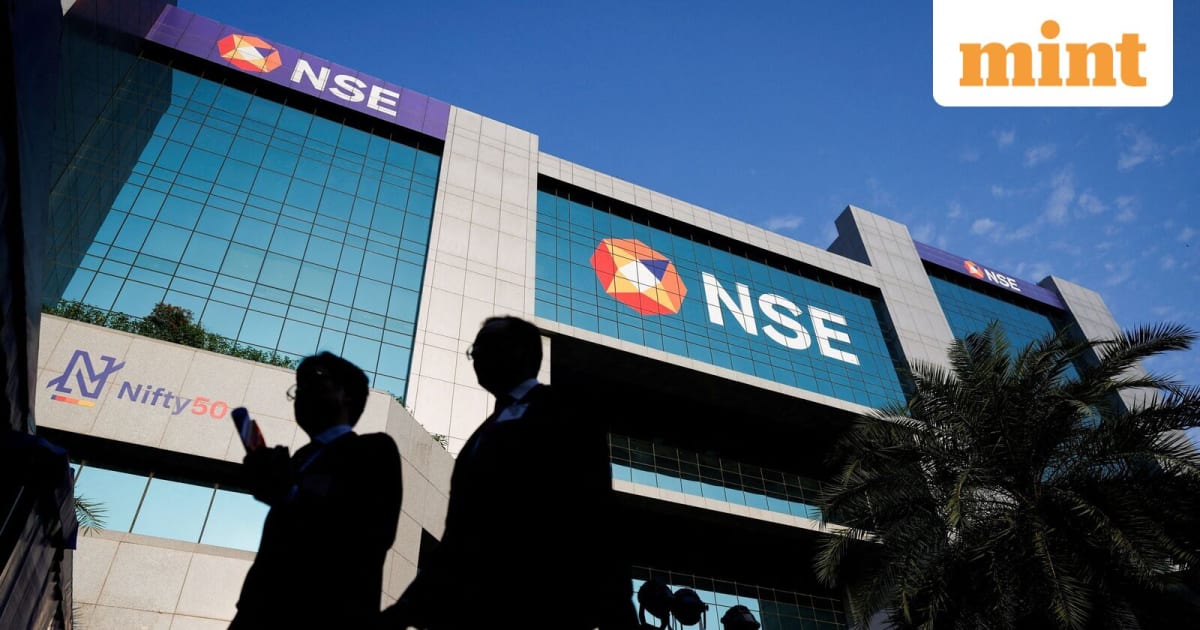
The Indian equity markets will observe a scheduled holiday on May 28, 2026, in observance of Bakri Id (Eid-ul-Adha). While a standard calendar event, the mid-week timing disrupts the T+1 settlement cycle and forces a premature weekly derivatives expiry, significantly impacting intraday traders and exchange-linked stocks like BSE and MCX.
The Anatomy of a Mid-Week Market Pause: Why May 28, 2026, Matters
On May 28, 2026, the rhythmic pulse of the Indian financial ecosystem—the National Stock Exchange (NSE) and the Bombay Stock Exchange (BSE)—will come to a standstill in observance of Bakri Id. To the casual observer, it is merely a day of rest. To the institutional desk and the high-frequency trader, it is a structural disruption that recalibrates risk parameters across the board.
In the high-stakes world of Indian equities, where the T+1 settlement cycle has become the global gold standard for efficiency, a mid-week holiday acts as a friction point. When the markets close on a Thursday, the standard flow of capital and securities is interrupted. For instance, a trade executed on Wednesday, May 27, which would typically settle on Thursday, will now see its funds and securities delivery pushed to Friday, May 29. This delay, while seemingly minor, affects the 'cost of carry' for leveraged positions and alters the liquidity profile of the entire week.
How does a Thursday market holiday affect Nifty expiry?
Perhaps the most significant impact of the May 28 holiday is the forced rescheduling of the weekly options expiry. Traditionally, Nifty 50 and Nifty Bank weekly contracts expire every Thursday. Because the exchanges are closed on May 28, the expiry is preponed to Wednesday, May 27. This creates what veteran traders call a 'Super Wednesday.'
Historically, when an expiry is moved forward, we see a compression of Theta (time decay). Option sellers, who usually have four trading days to benefit from the eroding value of out-of-the-money contracts, now only have three. This often leads to increased volatility on Tuesday and Wednesday as participants scramble to roll over positions or hedge their delta exposure. In 2023, during a similar mid-week holiday shift, the India VIX (Volatility Index) saw a 4.5% spike in the 48 hours leading up to the holiday as institutional desks adjusted their Greeks.
Deep Market Impact Analysis: The Cost of a Silent Trading Floor
The financial impact of a market holiday is quantifiable. The NSE currently handles an Average Daily Turnover (ADTV) in the cash segment exceeding ₹80,000 crore, while the F&O (Futures and Options) segment often sees notional turnover surpassing ₹350 lakh crore. A single day of closure represents a 100% revenue loss on transaction fees for that session for the exchanges and the clearing corporations.
The Liquidity Vacuum and the 'Gap' Risk
The primary risk for Indian investors during the Bakri Id holiday is global decoupling. While the domestic markets are closed, major global hubs—the New York Stock Exchange (NYSE), the London Stock Exchange (LSE), and the Tokyo Stock Exchange—remain fully operational. If the Federal Reserve makes an unscheduled announcement or if geopolitical tensions escalate in Eastern Europe or the Middle East on May 28, Indian traders are left 'naked'—unable to react until the Friday morning bell.
This frequently results in significant gap openings. For example, if the S&P 500 drops 1.5% on Thursday night, the Nifty 50 is almost guaranteed to open with a 150-200 point gap down on Friday morning. This 'overnight risk' (which in this case is 'over-holiday risk') is why we typically see a reduction in 'buy-today-sell-tomorrow' (BTST) volumes on the Wednesday preceding the holiday.
Stock-by-Stock Breakdown: Who Feels the Pinch?
While the broader market sentiment remains neutral, specific listed entities whose business models are tied to market activity will see a direct, albeit temporary, impact on their Q1 FY27 metrics.
- BSE Ltd (BOM: 540776): As one of the two primary exchanges, BSE is a direct loser of transaction revenue. With its current P/E ratio hovering around 45x (as of early 2024 trends), the market closely watches its volume growth. A shortened trading week in May will marginally dampen its monthly transaction fee collection. Sector peers like NSE (unlisted but tracked via proxy) face the same headwind.
- Multi Commodity Exchange of India (NSE: MCX): MCX is a unique case. Typically, for holidays like Bakri Id, the morning session (9:00 AM to 5:00 PM) is closed, but the evening session (5:00 PM to 11:30/11:55 PM) often remains open to align with global commodity prices. Investors should check the specific circular closer to the date, as a full-day closure would severely impact hedging for bullion and base metal traders.
- Angel One (NSE: ANGELONE): As a leading retail brokerage, Angel One's revenue is a function of orders executed. A holiday on a high-volume day like Thursday (expiry day) is a direct hit to the 'orders per day' metric that analysts use to value the stock. Expect a minor dip in active client engagement for the week.
- Central Depository Services Ltd (NSE: CDSL): CDSL earns from depository charges and settlement volumes. Since Thursday is a non-settlement day, the transaction volume for the week will be compressed into four days, potentially leading to a slight bottleneck in processing on Friday.
- ICICI Securities (NSE: ISEC): Similar to Angel One, the institutional and retail brokerage arms will see a 20% reduction in trading days for the week, impacting brokerage income.
Expert Perspective: The Bull vs. Bear Argument
"A mid-week holiday is a double-edged sword. While it reduces the immediate 'burn' for retail traders who often over-trade on expiry days, it creates a systemic risk where the Indian market loses its ability to price-in global data in real-time. We often see the 'Friday Catch-up' being more violent than the move would have been had the markets been open." — Senior Quantitative Strategist, WelthWest Research
The Bull Case: Bulls argue that the holiday provides a much-needed 'cooling-off' period during volatile months. It allows technical indicators to reset and prevents the 'exhaustion' of a trend. They point to historical data suggesting that markets often rally on the Friday following a mid-week holiday if global cues are even slightly positive, driven by pent-up demand.
The Bear Case: Bears focus on the liquidity crunch. They argue that institutional 'Big Money' avoids making large bets in a shortened week, leading to 'thin' markets where small sell orders can cause disproportionate price drops. The preponed expiry on Wednesday often leads to 'forced liquidations' of long positions if the margin requirements for the following week are not met.
Actionable Investor Playbook: Navigating May 28, 2026
How should you position your portfolio? Here is the WelthWest tactical guide:
- The 'No-Carry' Rule: Avoid carrying heavy long-gamma positions (buying naked calls or puts) into the holiday. The time decay over the 24-hour closure will erode the premium, even if the market doesn't move.
- Hedge with Commodities: If you are heavily invested in equities, monitor the MCX evening session on May 28. Often, gold and silver act as a safe haven if global equity markets start to tumble while the NSE is closed.
- Target Entry Points: Use the potential Friday 'gap' as an entry point. If the market gaps down due to global cues, look for 'quality' stocks like HDFC Bank (NSE: HDFCBANK) or Reliance Industries (NSE: RELIANCE) which often see 'buy-the-dip' institutional activity in the first 30 minutes of trade.
- Settlement Buffer: Ensure your trading account has sufficient margin by Tuesday evening. With the T+1 cycle disruption, fund transfers initiated on Wednesday might not reflect until Friday, leading to potential margin shortfalls.
Risk Matrix: Assessing the Threats
| Risk Factor | Probability | Impact |
|---|---|---|
| Global Decoupling (Gap Opening) | High | Moderate to High |
| Liquidity Crunch (Slippage) | Medium | Low (Institutional) |
| Settlement Delay Friction | Certain | Minimal |
What to watch next?
In the lead-up to May 28, 2026, investors should keep a close eye on the US FOMC meeting minutes and crude oil inventories usually released on Wednesday nights. Any surprise in these data points will be magnified when the Indian markets reopen on Friday. Furthermore, check for the official NSE/BSE circular regarding the MCX evening session and the specific expiry timings for currency derivatives, which may follow a different holiday schedule.
Disclaimer: This content is generated by WelthWest Research Desk based on publicly available reports and is for informational purposes only. It does not constitute financial advice, investment recommendations, or an offer to buy or sell securities. Always consult a qualified financial advisor before making investment decisions.