Key Takeaway
Japan’s 'stealth' Yen intervention forces a liquidation of US Treasuries, driving up global yields and inadvertently triggering FII outflows from Indian equities. Investors must pivot toward USD-earning sectors like IT and Pharma while hedging JPY-exposed auto stocks.
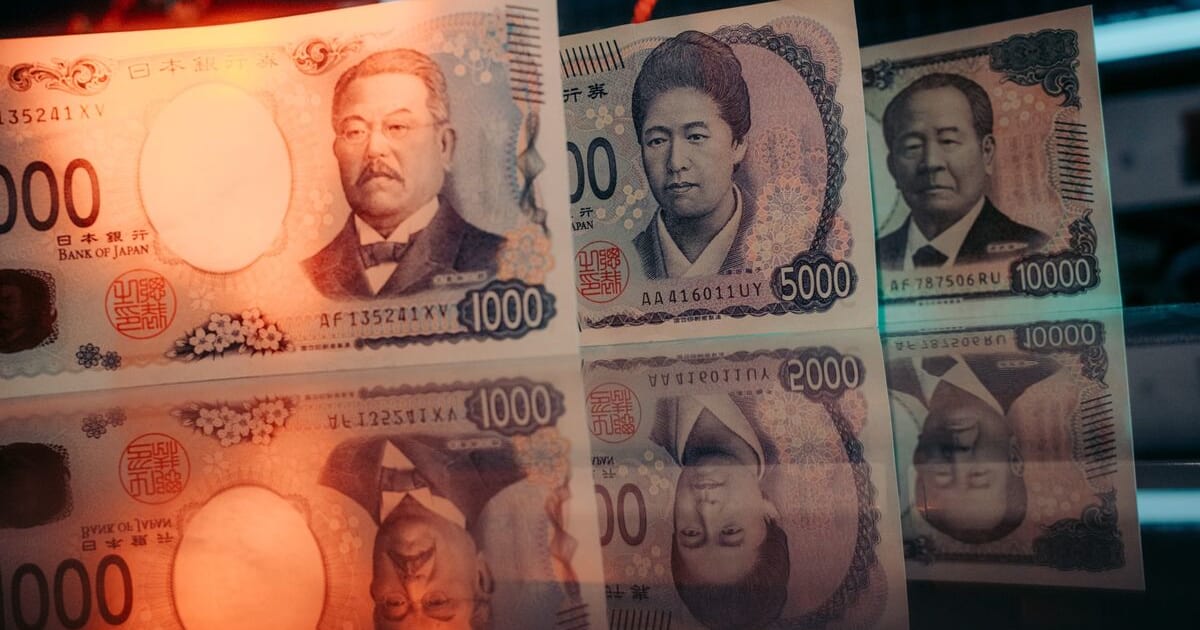
As Japan battles a free-falling Yen, the lag in official reserve data has created a 'data fog' masking the true scale of US Treasury liquidation. This analysis explores the systemic transmission from Tokyo to Dalal Street, highlighting why rising US yields are the primary threat to Nifty's stability and which specific NSE stocks are caught in the crossfire.
The Tokyo-Mumbai Connection: Why Japan’s 'Data Fog' Matters to Your Portfolio
In the high-stakes world of global macroeconomics, the distance between the Bank of Japan (BoJ) in Tokyo and the National Stock Exchange (NSE) in Mumbai is shorter than most retail investors realize. In late April and early May 2024, the Japanese Yen (JPY) breached the psychological 160 level against the USD—a 34-year low. While the Ministry of Finance (MoF) remained tight-lipped, market participants estimated an intervention of approximately $35 billion to $60 billion. However, the official reserves data for April fails to capture the full magnitude of this move, creating what we at WelthWest call a 'Data Fog.'
This isn't just a currency story for tourists visiting Kyoto; it is a liquidity story for every Indian investor. To support the Yen, Japan must sell US Dollars. To get those dollars, they often liquidate their massive holdings of US Treasuries. Japan is the largest foreign holder of US debt, with over $1.1 trillion in its coffers. When Japan sells, US yields rise. When US yields rise, the 'risk-free' rate globally increases, making emerging markets like India less attractive to Foreign Institutional Investors (FIIs). This is the 'hidden' transmission mechanism currently depressing the Nifty 50's upside potential.
The Triangular Arbitrage of Risk: Treasuries, Yields, and Nifty
To understand the current volatility in the Indian market, one must look at the 10-year US Treasury yield. Historically, when the 10-year yield crosses the 4.5% threshold, FIIs begin a tactical retreat from Indian equities. In April 2024, as suspected Japanese intervention intensified, the 10-year yield flirted with 4.7%.
Historical Parallel: During the 2022 Yen intervention cycle, a similar spike in US yields led to a sustained 4-week sell-off in the Nifty, where the index corrected by nearly 6% despite strong domestic earnings. The current 'data fog' means the market hasn't fully priced in the potential for further Treasury dumping. If Japan continues to defend 155-160 JPY/USD, the resulting yield spike could see the Nifty testing its 200-day Moving Average (DMA) near the 21,500-21,800 zone.
"The BoJ is essentially exporting its currency volatility to the US bond market, which in turn imports selling pressure into the Indian equity market through the FII channel." — Senior Macro Strategist, WelthWest Research.
How will Japan's Treasury sales affect Indian banking liquidity?
When FIIs exit Indian stocks due to rising global yields, they sell INR and buy USD. This puts pressure on the USD/INR pair, which has been hovering near the 83.50 mark. To prevent a sharp rupee depreciation, the Reserve Bank of India (RBI) often intervenes by selling its own USD reserves and sucking out INR liquidity. This tightening of domestic liquidity can lead to higher short-term borrowing costs for Indian banks, potentially squeezing Net Interest Margins (NIMs) for heavyweights like HDFC Bank (HDFCBANK) and ICICI Bank (ICICIBANK).
Sectoral Impact: Winners and Losers in the Yen Cross-Currents
The impact of a volatile Yen and rising yields is not uniform across the NSE. It creates a distinct set of winners and losers based on debt denomination and revenue geography.
The Losers: JPY-Debt and Import Dependency
- Automobiles (JPY-Heavy): Companies with significant Japanese partnerships or royalty payments are directly hit. When the Yen is volatile, it creates uncertainty in cost structures, even if a weak Yen technically makes imports cheaper, the 'intervention risk' creates hedging nightmares.
- EM Equity Funds: As global liquidity tightens due to Japan's actions, passive EM funds see outflows, leading to indiscriminate selling in high-weightage Indian stocks.
The Winners: USD-Earners and Defensive Plays
- IT Services: While higher yields are generally bad for tech valuations, a strengthening Dollar (the byproduct of Yen weakness) boosts the top line of Indian IT firms.
- Pharmaceuticals: Similar to IT, US-focused pharma companies benefit from a favorable USD/INR conversion, providing a natural hedge against domestic market volatility.
Stock-by-Stock Breakdown: Navigating the Volatility
1. Maruti Suzuki India Ltd (MARUTI)
Maruti is perhaps the most sensitive Indian stock to JPY fluctuations. The company pays significant royalties to its parent, Suzuki Motor Corp, in Yen. While a weak Yen reduces the royalty burden in INR terms, the volatility and the BoJ's intervention threat make profit forecasting difficult. Maruti’s margins (currently around 12-13%) face a 20-30 bps sensitivity for every 5% move in the JPY/INR cross.
Verdict: Neutral to Bearish in the short term until Yen stability returns.
2. Samvardhana Motherson International (MOTHERSON)
With a massive global footprint, Motherson has significant exposure to both European and Japanese markets. The company carries foreign currency-denominated debt. A sudden spike in global yields (driven by Japan's Treasury sales) increases the cost of refinancing their international debt.
Verdict: Watch for debt-servicing ratios; the stock may see pressure if US 10-year yields stay above 4.6%.
3. Infosys (INFY) & Wipro (WIPRO)
The IT giants are in a paradoxical position. The 'Data Fog' suggests a stronger USD, which is a tailwind for their 80%+ export revenue. However, the high-interest-rate environment in the US (exacerbated by Japan) delays discretionary tech spending by BFS clients.
Verdict: Accumulate on dips. The currency tailwind will likely offset the macro slowdown in the H2FY25 earnings.
4. Tata Elxsi (TATAELXSI)
As a premium engineering R&D player, Tata Elxsi operates on high margins but also high P/E multiples (currently ~55-60x). High global yields are the 'kryptonite' for high-PE stocks. Any further liquidation of US Treasuries by Japan will likely lead to a de-rating of premium valuation stocks like Elxsi.
Verdict: Avoid until valuations mean-revert or yields cool down.
Expert Perspective: The Bull vs. Bear Case
The Bear View: Bears argue that Japan is trapped. To save the Yen, they must sell Treasuries, which pushes US yields to 5%. This will trigger a massive 'Carry Trade Unwind,' where investors who borrowed in cheap Yen to invest in Indian equities will be forced to liquidate. This could lead to a 10-15% correction in the Nifty.
The Bull View: Bulls suggest that the 'Data Fog' is temporary. They believe the RBI has sufficient reserves ($640B+) to insulate the Rupee and that Indian domestic SIP flows (currently ₹20,000 Cr/month) are strong enough to absorb any FII selling triggered by the BoJ. They see the current yield spike as a 'buy the dip' opportunity for long-term investors.
Actionable Investor Playbook
- Short-term (0-3 months): Increase cash levels to 15-20%. The uncertainty regarding Japan's next move and the US CPI data creates a 'sell on rallies' environment for the Nifty.
- Medium-term (3-12 months): Focus on 'Dollar-Proxy' stocks. Look at Sun Pharma (SUNPHARMA) or Apollo Hospitals (APOLLOHOSP) which offer defensive growth regardless of the JPY/USD volatility.
- Entry Points: For Maruti, look for entries near the ₹11,500 support zone. For Infosys, the ₹1,350-₹1,380 range offers a strong margin of safety.
Risk Matrix
| Risk Factor | Probability | Impact on Indian Market |
|---|---|---|
| US 10Y Yield hits 5.0% | High | Severe (FII Exodus) |
| BoJ Rate Hike to 0.5% | Medium | Moderate (Carry Trade Unwind) |
| Crude Oil Spikes >$95 | Low | High (Inflationary pressure) |
What to Watch Next
Investors should keep three dates on their radar:
- The Next MoF Reserves Release: This will reveal the true extent of the April/May intervention and how many Treasuries were sacrificed.
- US FOMC Minutes: To see if the Fed is concerned about Japan's selling of their debt.
- RBI MPC Meeting: To gauge how the Indian central bank plans to manage the liquidity fallout from global yield volatility.
In conclusion, the 'Data Fog' from Japan is a warning sign. While the Indian economy remains a 'bright spot,' it does not exist in a vacuum. As Japan defends its currency, the collateral damage in the form of higher global yields will continue to test the resilience of the Indian stock market. Stay vigilant, stay hedged, and watch the yields more than the headlines.
Disclaimer: This content is generated by WelthWest Research Desk based on publicly available reports and is for informational purposes only. It does not constitute financial advice, investment recommendations, or an offer to buy or sell securities. Always consult a qualified financial advisor before making investment decisions.