Key Takeaway
Kevin Warsh’s inaugural hawkish pivot signals a 'higher-for-longer' US interest rate regime. Investors should brace for FII outflows, pressure on the Rupee, and a rotation toward high-margin exporters while avoiding debt-laden growth plays.
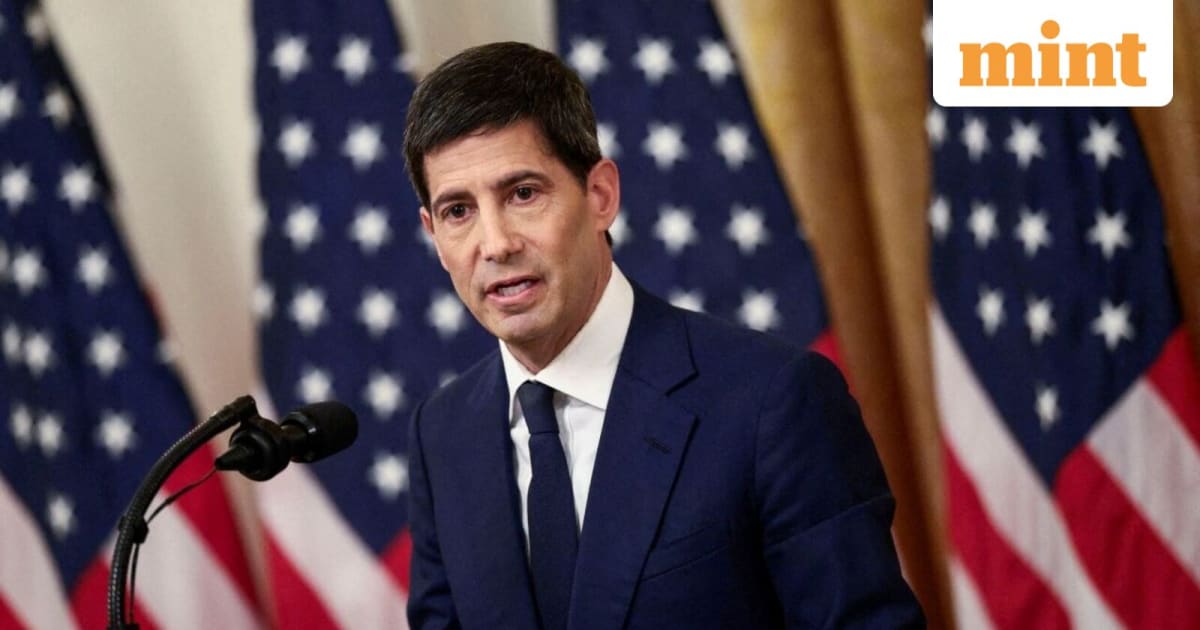
The Federal Reserve’s shift under Kevin Warsh has fundamentally altered the global liquidity landscape. We analyze why this hawkish stance threatens India’s equity valuations and identify the sectors positioned to withstand the incoming volatility.
The Kevin Warsh Era: A Paradigm Shift for Global Liquidity
The global financial landscape just witnessed a structural pivot. With Kevin Warsh’s inaugural Federal Reserve policy meeting, the narrative has shifted from 'when will they cut' to 'how high must they go.' While the immediate decision was to keep rates unchanged, the underlying guidance—a hawkish signal of future rate hikes—has sent shockwaves through global bond markets. For Indian investors, this is not merely a US policy nuance; it is a direct threat to the liquidity flows that have buoyed the Nifty 50 for the past eighteen months.
How will the Fed’s hawkish shift impact Indian stock market liquidity?
When the Fed signals a terminal rate climb, the US Dollar Index (DXY) inevitably strengthens. This creates a dual-threat for emerging markets: it forces Foreign Institutional Investors (FIIs) to repatriate capital to the safety of high-yielding US Treasuries, and it imports inflation into India via a depreciating Rupee. Historically, during the 2022 rate hike cycle, the Nifty 50 witnessed a 12% correction over six months as liquidity tightened. We are currently observing a similar setup where the 'carry trade' is unwinding, putting the Reserve Bank of India (RBI) in a difficult position: defend the currency or prioritize domestic growth.
Sectoral Winners and Losers: Navigating the Volatility
In a higher-for-longer environment, the market rewards balance sheets with pricing power and net cash positions. Conversely, the 'growth at any cost' narrative is facing a harsh reckoning.
The Winners: Banking and Export-Oriented IT
- Banking (HDFC Bank, ICICI Bank): While higher rates increase borrowing costs, large-cap private banks with robust Net Interest Margins (NIMs) are best positioned to pass on these costs. ICICI Bank, currently trading at a P/E of ~18x, maintains a strong CASA ratio that acts as a buffer against rising funding costs.
- IT Services (Infosys, TCS): A stronger USD against the INR is a direct tailwind for Indian IT giants. With over 60% of their revenue derived from North American markets, the currency translation benefit will likely bolster EBITDA margins, providing a hedge against the domestic slowdown.
The Losers: Debt-Heavy Infrastructure and Real Estate
- Real Estate (DLF): The sector is hypersensitive to the repo rate. With borrowing costs poised to remain elevated, the mortgage affordability index is declining, likely slowing booking velocity for high-end residential projects.
- Auto (Tata Motors): Capital-intensive and debt-sensitive, the auto sector faces a double-whammy: expensive consumer financing and higher corporate debt service obligations.
Stock-by-Stock Analysis: Where the Smart Money is Moving
HDFC Bank (NSE: HDFCBANK): With a market cap exceeding ₹12 trillion, it remains the bellwether. We expect NIMs to remain stable, but institutional selling could keep the stock range-bound. Target: Defensive accumulation on dips below ₹1,650.
Infosys (NSE: INFY): As global enterprises tighten IT budgets, Infosys’s efficiency-led offerings remain in demand. Its strong balance sheet and cash flow yield make it a defensive play during macroeconomic uncertainty.
DLF (NSE: DLF): Trading at a premium valuation, DLF is vulnerable to a rotation away from debt-heavy sectors. Any indication of slowing pre-sales in the Q3 earnings will likely trigger a valuation derating.
Expert Perspective: The Bull vs. Bear Case
The Bull Argument: Bulls contend that India’s domestic consumption story is decoupling from US monetary policy. They point to robust GST collections and a resilient manufacturing sector, arguing that the 'India Premium' will continue to attract long-term FDI regardless of short-term Fed volatility.
The Bear Argument: Bears argue that current Nifty valuations (trading at ~22x forward earnings) are unsustainable in a high-rate environment. They highlight that FIIs have been net sellers in the cash segment, signaling a lack of conviction in current price levels.
Actionable Investor Playbook
Investors should adopt a 'Barbell Strategy' to navigate this transition:
- Defensive Allocation: Shift 40% of the portfolio into high-dividend, cash-rich IT and FMCG stocks to capture currency tailwinds and volume stability.
- Reduce Beta: Trim positions in high-leverage infrastructure and mid-cap real estate firms where interest coverage ratios are below 2.0x.
- Watch the Yields: Monitor the 10-year US Treasury yield; a breach of 4.5% could signal a deeper correction in Indian equities.
Risk Matrix
| Risk Factor | Impact | Probability |
|---|---|---|
| Aggressive Fed Hike | High | Moderate |
| INR Depreciation (>85/USD) | High | High |
| Global Liquidity Crunch | Very High | Moderate |
What to Watch Next
The immediate catalyst will be the upcoming FOMC minutes release, followed by the RBI’s next MPC meeting. Investors should specifically monitor the 'dot plot' revisions from Warsh’s team. Any further hawkish rhetoric will likely shift the Nifty’s support level from 24,000 to 22,500. Keep a close eye on the Q3 earnings season; focus on management commentary regarding debt servicing and margin outlooks rather than top-line growth alone.
Disclaimer: This content is generated by WelthWest Research Desk based on publicly available reports and is for informational purposes only. It does not constitute financial advice, investment recommendations, or an offer to buy or sell securities. Always consult a qualified financial advisor before making investment decisions.