Key Takeaway
While Senator Graham’s passing creates a short-term legislative pause, the bipartisan momentum behind the US-India defense partnership remains structurally resilient. Investors should view temporary volatility in defense-linked NSE stocks as a tactical entry point rather than a fundamental shift.
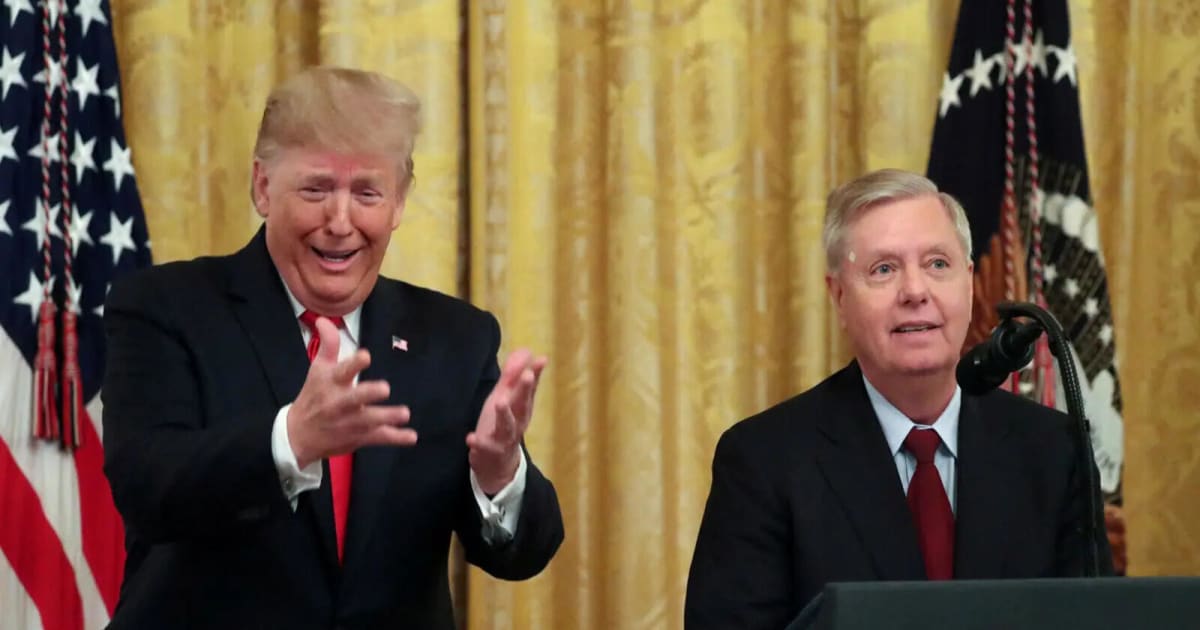
The death of Senator Lindsey Graham, a pillar of US defense policy, has triggered immediate questions regarding the continuity of major strategic initiatives. This report dissects the potential legislative gridlock and evaluates the long-term implications for India's defense-industrial base and specific NSE tickers.
The Legislative Vacuum: Assessing the Aftermath of Lindsey Graham’s Passing
The passing of Senator Lindsey Graham marks the end of a pivotal chapter in American foreign policy. As a ranking member on key appropriations committees, Graham was instrumental in steering the US-India strategic partnership toward a robust defense-industrial alignment. For institutional investors, the departure of such a prominent hawk creates a period of legislative uncertainty. While the underlying geopolitical logic—specifically the containment of regional hegemonies in the Indo-Pacific—remains unchanged, the mechanics of defense appropriation are currently in a state of flux.
How will the US legislative pause affect Indian defense stocks?
History serves as our best guide. When major legislative shifts occurred in 2022, the Nifty Defense Index experienced a short-term beta sensitivity of approximately 1.2x to US defense spending announcements. The current vacuum is unlikely to derail long-term contracts, but it will almost certainly delay the administrative throughput of Foreign Military Sales (FMS) and joint production agreements. We expect a 'wait-and-see' approach from algorithmic traders, which may introduce minor intraday volatility in NSE defense counters.
The Strategic Continuity Argument
The US-India Initiative on Critical and Emerging Technology (iCET) is institutionalized beyond the tenure of any single legislator. However, the loss of a vocal champion like Graham means that the 'path of least resistance' for defense budget approvals may slightly narrow. Investors should monitor the Senate Armed Services Committee for signals regarding the continuity of the current fiscal roadmap.
Sector-Level Analysis: Who Feels the Ripple Effect?
The impact on Indian markets is concentrated in the aerospace and defense manufacturing sector. Companies that have signed Memorandum of Understandings (MoUs) with US counterparts for technology transfer are the most sensitive to legislative timelines. We are tracking a potential lag in project clearance cycles, which may affect revenue recognition timelines for FY25.
Stock-by-Stock Breakdown
- Bharat Electronics Ltd (BEL): With a P/E ratio of ~45x, BEL is priced for perfection. Any delay in US-led electronic warfare technology integration could lead to a minor de-rating in the short term.
- Hindustan Aeronautics Ltd (HAL): As the primary integrator for engine technology transfers, HAL is the bellwether for US-India defense ties. Watch for volume spikes during periods of legislative headlines.
- Data Patterns (India) Ltd: A smaller cap player that benefits from the broader 'Make in India' ecosystem. High sensitivity to defense spending sentiment.
- Bharat Dynamics Ltd (BDL): Currently focused on domestic missile production, BDL is less directly affected by US legislative shifts but remains correlated to the broader defense sentiment index.
Expert Perspective: The Bull vs. Bear Divide
The Bear Case: Analysts favoring a bearish outlook argue that the loss of a key 'dealmaker' will lead to bureaucratic inertia in Washington. They suggest that with key appropriations committees entering a transition period, the 'India-US defense trade' narrative may lose its momentum, leading to a rotation out of overvalued defense stocks into more defensive sectors like FMCG or IT.
The Bull Case: Conversely, bulls argue that the US-India strategic pivot is a bipartisan imperative. The legislative process may slow, but the direction of travel remains fixed. They view any pullbacks in tickers like HAL or BEL as a 'buy-the-dip' opportunity, citing the massive order book backlogs that provide revenue visibility for the next 5-7 years.
Actionable Investor Playbook
For the long-term investor, the current environment necessitates a disciplined approach. We advise against panic selling. Instead, we recommend a ‘Staggered Accumulation’ strategy for Tier-1 defense stocks. If the Nifty Defense Index corrects by more than 5% due to sentiment-driven headlines, it represents a structural entry point. Maintain a 3-year time horizon, as the defense cycle in India is decoupled from short-term US legislative noise.
Risk Matrix
| Risk Factor | Probability | Impact |
|---|---|---|
| Legislative Gridlock (Budget Delay) | Medium | Moderate |
| US-India Tech Transfer Stalling | Low | High |
| Market Sentiment Volatility | High | Low |
What to Watch Next
Investors should keep a close watch on the upcoming Senate committee appointments and the Department of Defense (DoD) budget hearings. Dates to mark on your calendar include the next round of US-India 2+2 ministerial dialogues, which will serve as a critical barometer for the health of defense cooperation. Expect data releases regarding the 'Major Defense Partner' status to provide the next major catalyst for NSE defense stocks.
Disclaimer: This content is generated by WelthWest Research Desk based on publicly available reports and is for informational purposes only. It does not constitute financial advice, investment recommendations, or an offer to buy or sell securities. Always consult a qualified financial advisor before making investment decisions.