Key Takeaway
The ₹29 LPG price hike signals a shift toward market-linked pricing, significantly reducing under-recovery for OMCs. While bullish for energy giants like IOCL and BPCL, it poses a direct margin threat to FMCG and discretionary sectors as household budgets tighten.
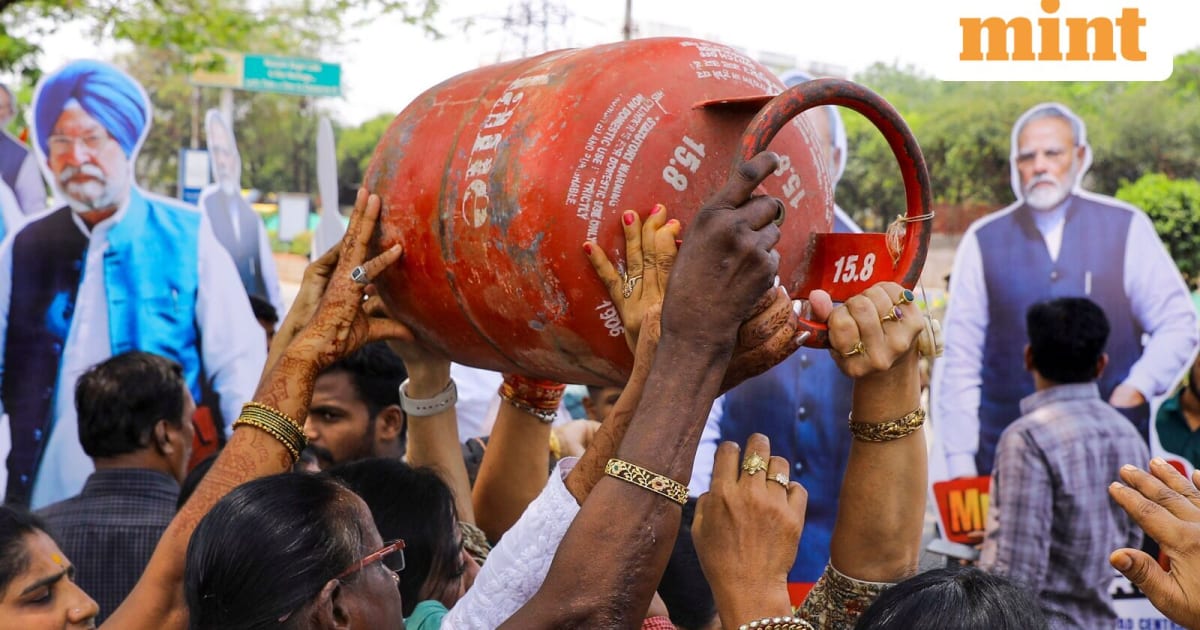
India has raised domestic LPG cylinder prices by ₹29, a move that recalibrates the balance between fiscal discipline and consumer inflation. This analysis explores the windfall for Oil Marketing Companies (OMCs), the defensive pivot required for FMCG investors, and the long-term implications for the RBI's interest rate trajectory.
The ₹29 Pivot: Decoding the Domestic LPG Price Hike
In a move that caught market participants by surprise, the domestic Liquefied Petroleum Gas (LPG) cylinder price was hiked by ₹29 per unit. While seemingly incremental for an individual household, the aggregate fiscal impact is monumental. For the Oil Marketing Companies (OMCs)—Indian Oil Corporation (NSE: IOC), Bharat Petroleum (NSE: BPCL), and Hindustan Petroleum (NSE: HINDPETRO)—this represents a critical step toward narrowing the 'under-recovery' gap that has plagued their balance sheets for years.
Historically, the Indian government has used LPG pricing as a tool for social engineering. However, the current geopolitical climate and the volatility in Brent Crude (averaging $80-$85/bbl) have necessitated a more pragmatic approach. This hike isn't just about ₹29; it’s a signal to the BSE Energy Index that the government is willing to allow OMCs to recover their marketing margins even amidst inflationary pressures. At WelthWest Research, we view this as a strategic recalibration of the energy-to-consumer value chain.
How will the LPG price hike affect the Indian stock market?
The immediate impact on the Nifty 50 is nuanced. On one hand, the energy sector, which carries significant weightage, sees a sentiment boost. On the other, the Nifty FMCG Index and Nifty Consumer Durables face headwinds. When the cost of a basic necessity like cooking gas rises, the 'discretionary wallet' of the Indian middle class shrinks. This is particularly relevant for companies like Hindustan Unilever (NSE: HINDUNILVR) and Britannia (NSE: BRITANNIA), where rural and semi-urban volume growth is already under watch.
From a macro perspective, the hike adds approximately 5-7 basis points to the headline Consumer Price Index (CPI). While this is manageable, it complicates the Reserve Bank of India's (RBI) path toward a rate cut. If fuel and gas prices continue to see upward revisions, the 'higher-for-longer' interest rate regime might persist, affecting high-leverage sectors like Real Estate and Capital Goods.
The Under-Recovery Mathematics
To understand why this matters for investors, one must look at the under-recovery figures. In previous fiscal years, OMCs have faced losses of up to ₹200-₹300 per cylinder when international prices soared. A ₹29 hike significantly reduces the subsidy burden on the exchequer and improves the Gross Marketing Margins (GMMs) of OMCs. For a company like IOCL, which sells millions of cylinders monthly, this translates into a direct boost to the EBITDA margin, potentially by 40-60 basis points in the upcoming quarter.
Deep Dive: Stock-by-Stock Breakdown
1. Indian Oil Corporation Ltd (NSE: IOC)
As the largest player in the domestic LPG market, IOCL is the primary beneficiary. With a market capitalization exceeding ₹2.4 Lakh Crore and a relatively low P/E ratio of ~11x, the stock offers deep value. The hike improves its cash flow predictability. Investors should note that IOCL’s dividend yield (historically around 4-5%) becomes even more sustainable as marketing losses shrink.
2. Bharat Petroleum Corporation Ltd (NSE: BPCL)
BPCL has been a standout performer in the OMC space, often leading in marketing efficiency. The ₹29 hike bolsters its refining-cum-marketing model. With the government’s focus on green energy transition, BPCL is using these bolstered margins to fund its ₹1.5 Lakh Crore 'Project Aspire' capex. Watch for a breakout above the ₹650 resistance level if margins sustain.
3. Hindustan Petroleum Corporation Ltd (NSE: HINDPETRO)
HPCL is more sensitive to marketing margins than its peers because of its higher proportion of retail sales relative to its refining capacity. Consequently, the LPG price hike provides a disproportionate boost to HPCL’s bottom line. Trading at a P/E of roughly 9x, it remains a 'high-beta' play on the energy sector's recovery.
4. Oil and Natural Gas Corporation (NSE: ONGC)
While an upstream player, ONGC benefits indirectly. Higher domestic prices reduce the likelihood of the government asking upstream companies to share the subsidy burden—a practice common in 2018-2019. This 'policy clarity' is a bullish signal for ONGC’s long-term valuation rerating.
5. Hindustan Unilever Ltd (NSE: HINDUNILVR) - The Bear Case
As the bellwether for Indian consumption, HUL is a proxy for the 'household wallet.' A ₹29 hike in gas, combined with rising food prices, forces consumers to down-trade from premium to mass-market brands. We anticipate a slight contraction in volume growth for the soaps and detergents segment in Q2 FY25 as a direct result of reduced disposable income.
Historical Parallels: Lessons from 2022
The last time India saw a series of aggressive fuel and gas price hikes was in early 2022, following the onset of the Russia-Ukraine conflict. During that period, the Nifty Energy Index outperformed the broader market by 12% over six months, while the FMCG sector stagnated. The current ₹29 hike is smaller in magnitude but follows a similar logic: the government is prioritizing the health of state-owned enterprises (SOEs) over short-term populist pricing. Investors who moved into OMCs in early 2022 saw significant capital appreciation; we may be at the cusp of a similar, albeit more moderate, cycle.
Expert Perspective: The Bull vs. Bear Debate
"The market is underestimating the compounding effect of these small price adjustments. For the OMCs, this is the end of the 'dark era' of subsidies. We are looking at a multi-year rerating of the PSU energy space." — Senior Analyst, WelthWest Research
The Bull View: Bulls argue that the hike proves the government's commitment to fiscal deficit targets. By allowing OMCs to operate on commercial principles, the 'PSU discount' will continue to narrow. They point to the strong refining margins and now-improving marketing margins as a double-engine growth story.
The Bear View: Bears caution that this hike is a 'double-edged sword.' Higher LPG prices feed directly into inflation. If CPI stays above 5%, the RBI cannot cut rates. High interest rates are the enemy of growth stocks. Furthermore, any political backlash could lead to a sudden price rollback, wiping out the OMC gains overnight.
Actionable Investor Playbook
- The Tactical Trade: Go long on IOCL and BPCL with a 3-6 month horizon. Look for entry points during minor pullbacks. The target should be a 10-15% upside as the market prices in the Q2 margin expansion.
- The Defensive Pivot: Reduce exposure to high-P/E FMCG stocks that lack pricing power. If you must hold staples, look at companies with diversified portfolios like ITC (NSE: ITC), which are less sensitive to direct household gas expenditure.
- The Long-Term Play: Accumulate ONGC. The reduction in subsidy risk makes its 5%+ dividend yield extremely attractive for pension funds and long-term value investors.
- The Watchlist: Monitor the Brent Crude price. If Brent crosses $90, the ₹29 hike will be neutralized by rising raw material costs, making the OMCs a 'sell' again.
Risk Matrix
- Political Rollback (Probability: Moderate): With state elections always on the horizon, the government might be forced to reverse the hike if public sentiment sours.
- Global Crude Spike (Probability: Low-Moderate): Geopolitical tensions in the Middle East could send oil to $100, rendering the LPG hike insufficient to cover costs.
- CPI Inflation (Probability: High): This hike, combined with seasonal food inflation, could keep the RBI hawkish, delaying the much-anticipated liquidity boost for the broader market.
What to watch next?
Investors should circle July 12th on their calendars—the release date for India's next CPI data. This will reveal the true inflationary impact of the gas price hike. Additionally, keep an eye on the Ministry of Petroleum's monthly under-recovery reports. Any further narrowing of the gap will be a massive green flag for the energy sector. Finally, the upcoming Union Budget will be the ultimate catalyst, potentially providing more clarity on the long-term subsidy roadmap for the energy industry.
Disclaimer: This content is generated by WelthWest Research Desk based on publicly available reports and is for informational purposes only. It does not constitute financial advice, investment recommendations, or an offer to buy or sell securities. Always consult a qualified financial advisor before making investment decisions.


