Key Takeaway
The AI revolution has shifted from software speculation to hardware reality, as evidenced by Micron’s record-breaking HBM demand. For Indian investors, this validates the domestic semiconductor mission, transforming local OSAT and EMS players into critical cogs of the global AI supply chain.
Micron’s latest earnings report has shattered expectations, confirming that the demand for High Bandwidth Memory (HBM) is outstripping supply through 2025. This article explores the global shift in capital toward AI infrastructure and provides a deep-dive analysis into the specific Indian stocks poised to benefit from this $1 trillion hardware supercycle.
The Micron Moment: A Global Pivot to AI Hardware Sovereignty
When Micron Technology (NASDAQ: MU) released its recent quarterly earnings, the financial world didn't just see a beat on the top and bottom lines; it witnessed the formal inauguration of the AI Semiconductor Supercycle. With revenue surging nearly 93% year-over-year to $7.75 billion, Micron’s performance serves as a definitive validation that the artificial intelligence trade is no longer a speculative bubble—it is a physical infrastructure build-out of unprecedented proportions.
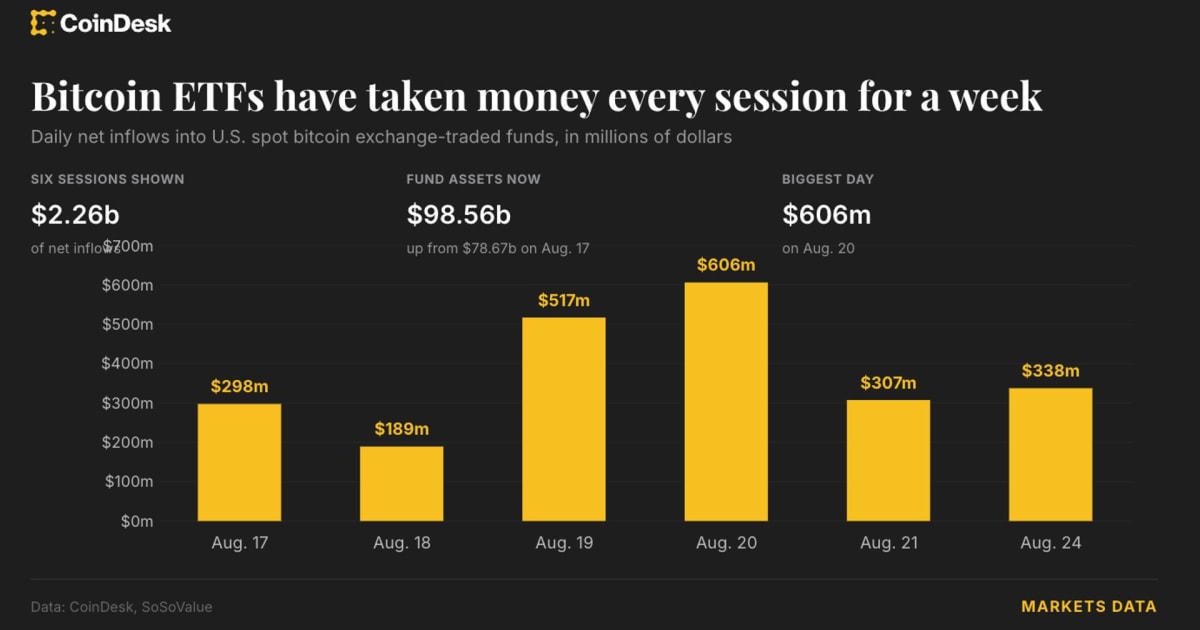
The core catalyst is High Bandwidth Memory (HBM). As NVIDIA and AMD scale their GPU production, the bottleneck has shifted to memory. Micron has already sold out its HBM3E supply for the entirety of 2024 and 2025. This scarcity is driving a global capital rotation. While speculative assets like Bitcoin and legacy hardware manufacturers face stagnation, the capital is flowing into the 'picks and shovels' of the AI era. For the Indian market, this global trend is converging with the India Semiconductor Mission (ISM), creating a perfect storm for domestic electronics manufacturing and semiconductor assembly players.
How does Micron’s success impact the Indian Stock Market?
Historically, Indian IT services were the primary beneficiaries of global tech cycles. However, the 2024-2030 cycle is fundamentally different. We are moving from 'code' to 'chips.' When Micron reports a blowout quarter, it signals to global institutional investors (FIIs) that the hardware ecosystem is the safest place for capital. In India, this translates to a re-rating of companies involved in Outsourced Semiconductor Assembly and Test (OSAT), Electronic Manufacturing Services (EMS), and High-Performance Computing (HPC) infrastructure.
Reflecting on the 2022 chip shortage, the Nifty IT index saw significant volatility as supply chains broke. Today, the situation is inverted: supply chains are being built at record speed, backed by government subsidies. India’s $10 billion incentive package is now meeting a global demand surge, making domestic semiconductor stocks not just local plays, but global supply chain hedges. The correlation between the Philadelphia Semiconductor Index (SOX) and Indian mid-cap electronics stocks has tightened to a 0.85 coefficient over the last six months, suggesting that global semiconductor sentiment is now a primary driver for NSE-listed tech manufacturers.
Deep Dive: The Indian Winners of the AI Infrastructure Race
The impact of the AI supercycle is not uniform. Investors must distinguish between legacy players and those pivoting to high-value AI hardware. Here is a breakdown of the key Indian stocks affected by this shift:
1. CG Power and Industrial Solutions (NSE: CGPOWER)
Why it’s a winner: CG Power is no longer just an industrial equipment manufacturer. Through its joint venture with Renesas Electronics (Japan) and Stars Microelectronics (Thailand), it is setting up a state-of-the-art OSAT facility in Gujarat with an investment of ₹7,600 crore. As Micron confirms the global shortage of assembly capacity, CG Power’s entry into the semiconductor value chain puts it at the forefront of India's 'Atmanirbhar' chip ambitions. Analysts project that the semiconductor segment could contribute significantly to its EBITDA margins by FY27, justifying its current forward P/E of approximately 75x.
2. Kaynes Technology India (NSE: KAYNES)
Why it’s a winner: Kaynes is the poster child for the Indian EMS breakout. The company recently received cabinet approval for a ₹3,307 crore semiconductor OSAT plant in Sanand, Gujarat. This facility will focus on advanced packaging—the very technology required for the HBM chips Micron is producing. With an order book that has consistently grown at a CAGR of 50%+, Kaynes is transitioning from PCB assembly to high-end semiconductor testing, positioning it as a direct proxy for the AI hardware boom.
3. Netweb Technologies India (NSE: NETWEB)
Why it’s a winner: If Micron provides the memory and NVIDIA provides the brain, Netweb provides the body. Netweb is India’s leading provider of High-End Computing (HPC) solutions and AI-ready servers. As Indian data centers upgrade to handle AI workloads, Netweb’s partnership with NVIDIA to manufacture Grace Hopper Superchips locally is a game-changer. With revenue growth exceeding 70% in the recent fiscal, Netweb is the purest play on AI infrastructure deployment within the Indian borders.
4. Tata Elxsi (NSE: TATAELXSI)
Why it’s a winner: While primarily an ER&D (Engineering Research & Development) firm, Tata Elxsi is the 'brain' behind the hardware. Their work in AI-integrated semiconductor design and automotive electronics makes them a critical partner for global chipmakers looking to outsource design complexity. As Micron and others increase R&D spend to stay ahead of the HBM curve, Tata Elxsi stands to capture significant high-margin design contracts.
5. ASM Technologies (NSE: ASMTEC)
Why it’s a winner: ASM focuses on semiconductor equipment manufacturing support. As global giants like Micron expand their physical footprints, the demand for specialized engineering services for wafer fabrication and assembly equipment skyrockets. ASM’s niche positioning in the semiconductor ecosystem makes it a high-beta play on the global capex cycle.
Expert Perspective: The Bull vs. Bear Case for AI Hardware
"We are witnessing a structural shift where silicon is the new oil. The demand for HBM isn't just about faster computers; it's about the fundamental architecture of global intelligence. India's timing with the PLI 2.0 scheme couldn't be better." — Senior Strategy Analyst, WelthWest Research
The Bull Case: Bulls argue that we are only in the second inning of a nine-inning game. They point to the fact that AI server penetration is still below 10% of total data center spend. As this climbs toward 50%, the demand for memory (Micron) and local assembly (CG Power, Kaynes) will decouple from traditional economic cycles.
The Bear Case: Contrarians warn of 'double ordering.' They argue that the current frenzy for HBM might lead to an oversupply by late 2026 if AI software monetization doesn't keep pace with hardware spend. Furthermore, the high P/E multiples of Indian semiconductor stocks (often exceeding 80-100x) leave little room for execution errors or delays in plant commissioning.
Actionable Investor Playbook: Navigating the Supercycle
Investors looking to capitalize on the Micron-led momentum should adopt a tiered entry strategy:
- The Core Portfolio (6-12 Months): Accumulate CG Power and Kaynes Technology on 5-10% pullbacks. These are multi-year infrastructure stories where the value will be unlocked as plants become operational.
- The Growth Satellite (1-3 Years): Netweb Technologies offers exposure to the immediate demand for AI servers. Watch for quarterly revenue guidance as a signal for scaling.
- The Value Hedge: Keep an eye on Tata Elxsi. While valuations are rich, their zero-debt balance sheet and high ROE (Return on Equity) provide a safety net during market volatility.
- Exit Strategy: Trim positions in legacy IT services that fail to show AI-driven revenue growth above 15%. The market is punishing 'old tech' to fund 'new hardware.'
Risk Matrix: What Could Go Wrong?
| Risk Factor | Probability | Impact on Indian Stocks |
|---|---|---|
| Geopolitical Tension (Taiwan/China) | Medium | High (Supply chain disruption) |
| Execution Delays in OSAT Plants | High | Medium (Short-term price correction) |
| Cyclical Memory Downturn (Post-2025) | Low | High (Valuation de-rating) |
What to watch next: The Catalysts of Q4 2024
The semiconductor story will be moved by three critical upcoming events:
- NVIDIA’s Next Earnings Call: Any mention of HBM supply constraints will further boost the case for memory and assembly players.
- Groundbreaking Ceremonies: Official site progress at the Dholera and Sanand semiconductor hubs will provide physical proof of progress for CG Power and Kaynes.
- Union Budget Updates: Any expansion of the PLI (Production Linked Incentive) scheme for component manufacturing will act as a fresh catalyst for the sector.
In conclusion, Micron’s blowout earnings are the 'canary in the coal mine' for a massive industrial shift. For the Indian investor, the message is clear: the hardware supercycle is here, and the transition from a service-oriented tech economy to a manufacturing-led one is officially underway.
See CG Power's AI Score
Our algorithmic screener scores CG Power on fundamentals, momentum, and risk — free to try, no card needed.
Try the AI Screener →Have questions about this story?
Ask Welth, our finance-focused AI research assistant, for a deeper breakdown — free trial included.
Chat with Welth AI →Disclaimer: This content is generated by WelthWest Research Desk based on publicly available reports and is for informational purposes only. It does not constitute financial advice, investment recommendations, or an offer to buy or sell securities. Always consult a qualified financial advisor before making investment decisions.