Key Takeaway
Geopolitical friction in the Middle East is decoupling gold from traditional safe-haven status, signaling a liquidity-driven market shift. Investors must hedge against a widening trade deficit and RBI hawkishness as energy costs threaten domestic margins.
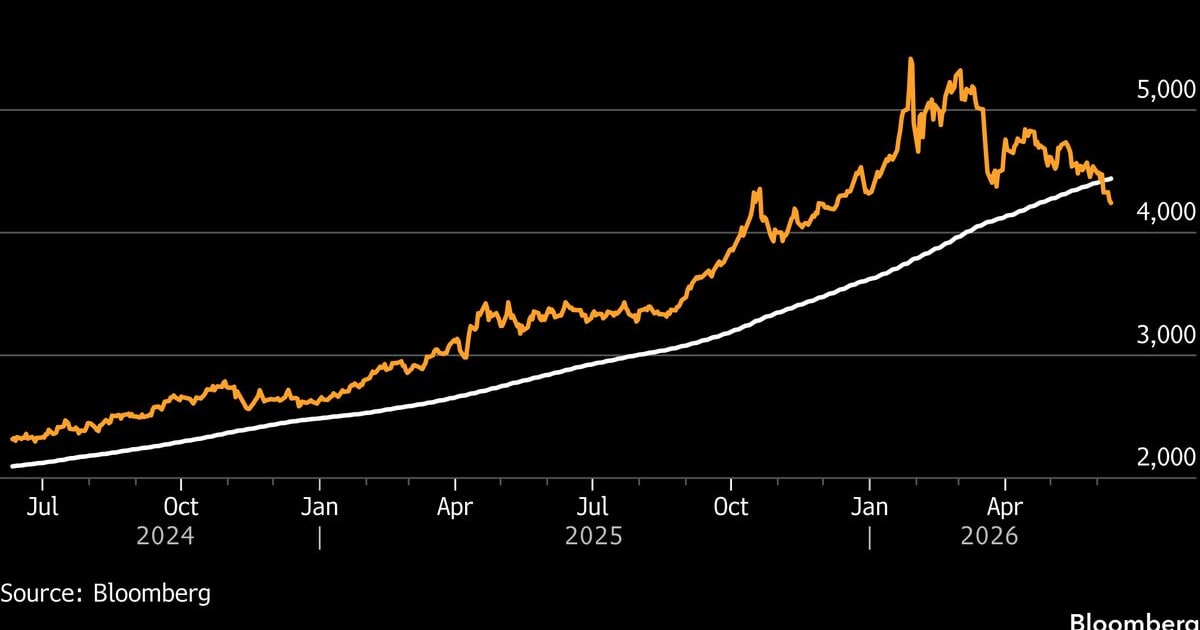
Renewed hostilities in the Middle East have triggered a paradoxical sell-off in gold, leaving Indian markets vulnerable to imported inflation. We analyze the ripple effects on energy-dependent sectors and identify the primary winners and losers in the current macroeconomic climate.
The Middle East Paradox: Why Gold is Failing as a Hedge
In a departure from historical norms, the recent escalation of geopolitical tensions in the Middle East has failed to ignite the traditional 'flight to safety' rally in gold. Instead, we are witnessing a liquidity-driven liquidation. For the Indian investor, this is not merely a commodity quirk; it is a signal of shifting risk appetite and a potential precursor to significant volatility in the Nifty 50 and BSE Sensex.
When conflict erupts in the Persian Gulf, the global market’s immediate reflex is to price in a supply-side shock for crude oil. Because India imports over 85% of its crude requirements, any sustained increase in Brent crude prices acts as an immediate tax on the domestic economy, widening the current account deficit (CAD) and exerting downward pressure on the Indian Rupee (INR).
How will rising crude oil prices affect Indian stock market sectors?
The transmission mechanism from oil prices to equity valuations is direct and often brutal. When crude prices climb, the input costs for manufacturing and logistics-heavy sectors inflate, compressing operating margins. Historically, during the 2022 energy price shock, the Nifty 50 saw a drawdown of nearly 8% in the two months following the initial outbreak of conflict, as institutional investors fled to cash.
The Energy Winners: Resilience in Upstream Assets
For upstream energy companies, higher crude prices are an unmitigated tailwind. As oil benchmarks rise, the realization price for these firms increases, often without a corresponding rise in extraction costs. ONGC (NSE: ONGC) and OIL (NSE: OIL) are the primary beneficiaries here. With ONGC trading at a forward P/E of approximately 7.5x, its valuation remains attractive compared to global peers, provided the government does not impose aggressive windfall taxes to subsidize OMCs.
The Aviation and Paint Headwinds
Conversely, sectors with high energy intensity are facing a margin squeeze. InterGlobe Aviation (NSE: INDIGO) stands at the epicenter of this risk. Aviation Turbine Fuel (ATF) accounts for roughly 40% of an airline's operating expenses. Any sustained 10% spike in oil prices could erode Indigo’s net profit margins by 200-300 basis points, threatening the stock's recent valuation premium.
Stock-by-Stock Analysis: Who Wins and Who Loses?
- ONGC (NSE: ONGC): As a pure-play upstream explorer, ONGC’s revenue is highly sensitive to Brent. A $10/barrel rise in oil significantly boosts their EBITDA. Verdict: Buy on dips.
- Bharat Electronics (NSE: BEL): Geopolitical tension necessitates higher defense spending. BEL, with its strong order book and government backing, remains a defensive play in a volatile market. Verdict: Hold for long-term growth.
- InterGlobe Aviation (NSE: INDIGO): High operational leverage to fuel prices makes this a high-beta play. In a rising oil environment, the cost-pass-through capability is limited by intense competition. Verdict: Reduce exposure.
- Asian Paints (NSE: ASIANPAINT): Crude oil derivatives are key feedstocks for paints. Rising prices hit the bottom line directly, and the premium valuation (P/E ~55x) leaves no room for margin disappointment. Verdict: Sell/Avoid.
Expert Perspective: The Inflationary Trap
The bears argue that this is a classic 'stagflationary' setup for India: rising input costs, slowing consumption, and a weakening currency. If Brent crude sustains above $90/barrel, the RBI faces a Hobson's choice: maintain high interest rates to support the Rupee and curb imported inflation, or cut rates to stimulate a cooling economy. A hawkish RBI stance would be a death knell for equity valuations, particularly in the banking and real estate sectors.
Bulls, however, point to India's robust domestic demand and the 'China Plus One' manufacturing shift. They argue that the current liquidity drain is temporary and that India's fiscal discipline will act as a shock absorber against global volatility.
Actionable Investor Playbook
1. Defensive Positioning: Increase allocation to the Defense sector (HAL, BEL) as a geopolitical hedge. These stocks are decoupled from oil prices and thrive on government capital expenditure cycles.
2. Trim High-Beta Cyclicals: Reduce exposure to paint manufacturers and logistics-dependent FMCG firms until oil prices demonstrate a clear reversal pattern.
3. Monitor the Rupee: If the USD/INR pair breaks above 84.50, expect significant FII outflows. Use this as a trigger to move into cash or short-term liquid funds.
Risk Matrix
| Risk Factor | Impact | Probability |
|---|---|---|
| Sustained Brent > $95 | High | Medium |
| RBI Monetary Policy Tightening | High | High |
| Supply Chain Disruption (Strait of Hormuz) | Severe | Low |
What to Watch Next
Investors must keep a close watch on the upcoming RBI Monetary Policy Committee (MPC) meeting for signals on inflation tolerance. Additionally, monitor the weekly EIA crude oil inventory data; an unexpected draw in inventories could lead to a rapid spike in prices, putting further pressure on the Rupee and Indian equities.
Disclaimer: This content is generated by WelthWest Research Desk based on publicly available reports and is for informational purposes only. It does not constitute financial advice, investment recommendations, or an offer to buy or sell securities. Always consult a qualified financial advisor before making investment decisions.


