Key Takeaway
A sub-par monsoon acts as a structural headwind for rural-linked equities, shifting the investment narrative from broad consumption recovery to defensive, yield-protecting asset allocation.
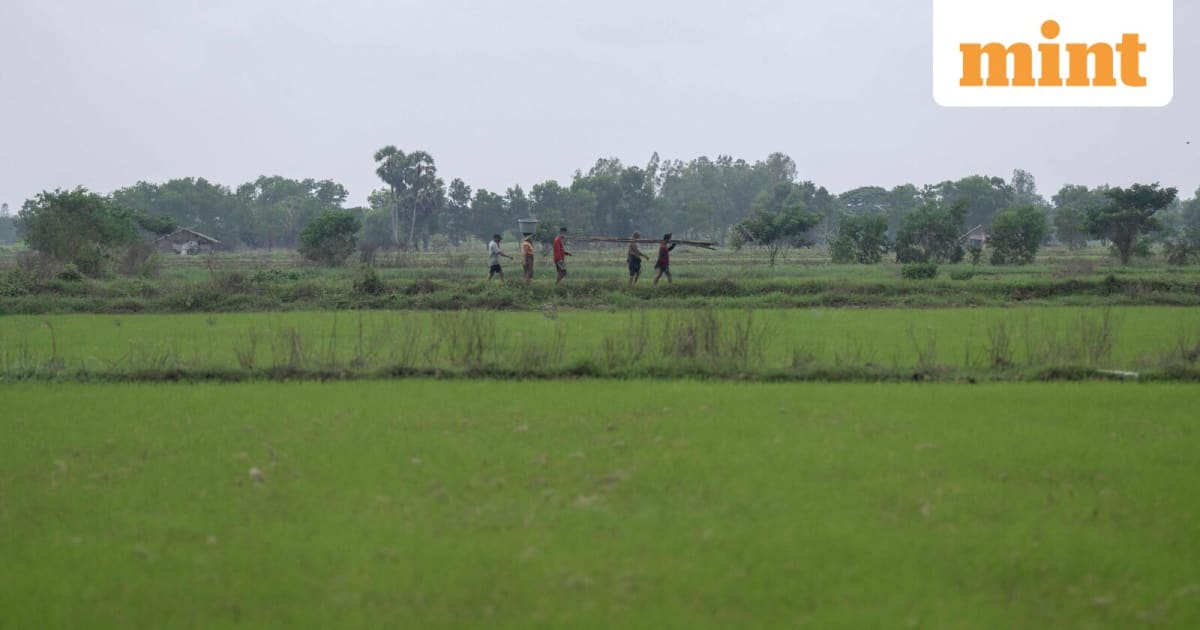
With the IMD downgrading monsoon expectations to 90% of the Long Period Average (LPA), the Indian economy faces a critical inflection point. This analysis explores the ripple effects on rural consumption, food inflation, and the RBI's interest rate trajectory, identifying the winners and losers in the NSE landscape.
The Monsoon Deficit: An Economic Crossroads
The India Meteorological Department (IMD) has officially revised its southwest monsoon forecast downward to 90% of the Long Period Average (LPA). In the complex machinery of the Indian economy, where nearly 45% of the workforce remains tethered to agriculture, this isn't just a weather event—it is a fiscal shock. As the El Niño phenomenon intensifies, the specter of drought-like conditions looms over the Kharif crop cycle, threatening to derail the nascent recovery in rural demand that investors have been banking on throughout FY24.
For the equity markets, this downgrade serves as a reality check. When rural income contracts, the 'bottom-of-the-pyramid' consumption story—the backbone of FMCG and entry-level automotive sales—inevitably falters. Historically, years with rainfall deficits under 92% of LPA have seen Nifty FMCG indices underperform the broader Nifty 50 by an average of 450-600 basis points over a six-month horizon.
How will a weak monsoon impact the RBI's interest rate policy?
The most immediate secondary effect of a deficient monsoon is the resurgence of food inflation. With staple prices for pulses, cereals, and oilseeds sensitive to rainfall distribution, the Reserve Bank of India (RBI) finds its 'higher-for-longer' interest rate narrative reinforced by supply-side constraints. If food inflation prints consistently above the 6% upper threshold of the RBI’s tolerance band, the central bank’s ability to pivot toward rate cuts in H2 FY25 will be severely curtailed.
Market participants must recognize that the RBI’s repo rate decisions are not made in a vacuum. A poor monsoon forces a hawkish stance to anchor inflation expectations, which disproportionately hurts interest-sensitive sectors like Banking, Real Estate, and NBFCs, while simultaneously squeezing the disposable income of rural consumers who are already grappling with higher credit costs.
Sector-Level Analysis: Winners and Losers
The market bifurcation is becoming increasingly clear. Investors must rotate portfolios away from volume-dependent discretionary consumption and toward companies that provide essential services to the agricultural value chain.
The Defensive Winners:
- Agrochemicals: Despite lower output, farmers prioritize crop protection to salvage yields. Companies with high R&D and specialized portfolios will see resilient demand.
- Irrigation & Infrastructure: Government spending on micro-irrigation and water management is counter-cyclical and often accelerates during dry spells to mitigate crop failure.
- Cold Chain Logistics: As food supply chains become more volatile, the premium on storage and distribution infrastructure rises.
The Cyclical Losers:
- FMCG (Rural-Focused): Companies like HUL and Dabur face a 'volume-pressure' trap. When rural wallets shrink, consumers trade down to cheaper, unorganized alternatives.
- Two-Wheeler Manufacturers: Rural demand historically accounts for 40-50% of volume for mass-market motorcycle manufacturers. A weak harvest leads to an immediate deferral of big-ticket purchases.
Stock-by-Stock Breakdown
Hindustan Unilever (HUL): With a P/E ratio hovering above 50x, HUL is priced for perfection. A 10% monsoon deficit directly impacts their rural distribution network, which contributes nearly 40% of their total revenue. Expect earnings compression if rural volume growth remains flat.
Mahindra & Mahindra (M&M): While M&M has successfully pivoted toward SUVs, their tractor division remains a bellwether for rural prosperity. A weak monsoon historically correlates with a 5-8% dip in tractor volume growth, which could dampen the stock's recent valuation re-rating.
PI Industries (PIIND): A leader in custom synthesis and crop protection. Unlike commodity chemical players, PI’s focus on high-value, patent-protected molecules provides a hedge against domestic monsoon volatility, making it a defensive compounder in this environment.
Hero MotoCorp (HEROMOTOCO): As the dominant player in the entry-level segment, Hero is the most vulnerable to rural income fluctuations. Investors should watch for inventory build-ups in rural dealerships as a leading indicator of waning demand.
The Investor Playbook: Navigating the Volatility
For the disciplined investor, this environment demands a shift from 'growth at any price' to 'resilience at a reasonable price.'
Strategic Action Plan:
- Trim Exposure: Reduce weightings in rural-heavy FMCG and two-wheeler stocks that have reached 52-week highs, as these are most exposed to earnings downgrades.
- Increase Defensive Allocation: Look for agrochemical firms with strong export components, which decouple their earnings from domestic rainfall patterns.
- Monitor Credit Quality: Rural-dependent NBFCs will see a spike in Gross Non-Performing Assets (GNPA). Favor lenders with high collateral coverage ratios.
Risk Matrix: Assessing the Downside
- Food Inflation Spike (High Probability): If cereal prices rise by >10% YoY, the RBI will be forced to maintain a restrictive policy, pressuring equity valuations.
- Supply Chain Disruption (Medium Probability): Persistent dry spells could lead to export bans on key commodities, hurting the profitability of agri-commodity processors.
- Market Sentiment Shift (High Probability): If the Nifty 50 breaks the 200-day moving average due to macro-fears, expect a sector-wide rotation out of consumption stocks into defensive utilities.
What to Watch Next
The next critical data point is the Sowing Data for Kharif crops released by the Ministry of Agriculture. Any deviation below the 5-year average will trigger further sell-offs in rural-dependent stocks. Additionally, watch the RBI Monetary Policy Committee (MPC) minutes for any mention of 'monsoon-led inflation risks,' which will serve as a signal for institutional fund outflows from mid-cap consumption plays.
Disclaimer: This content is generated by WelthWest Research Desk based on publicly available reports and is for informational purposes only. It does not constitute financial advice, investment recommendations, or an offer to buy or sell securities. Always consult a qualified financial advisor before making investment decisions.


