Key Takeaway
The IMF’s $1.32 billion lifeline for Pakistan acts as a circuit breaker for regional default risk. For Indian investors, this stabilizes the South Asian geopolitical risk premium, though direct equity exposure remains negligible.
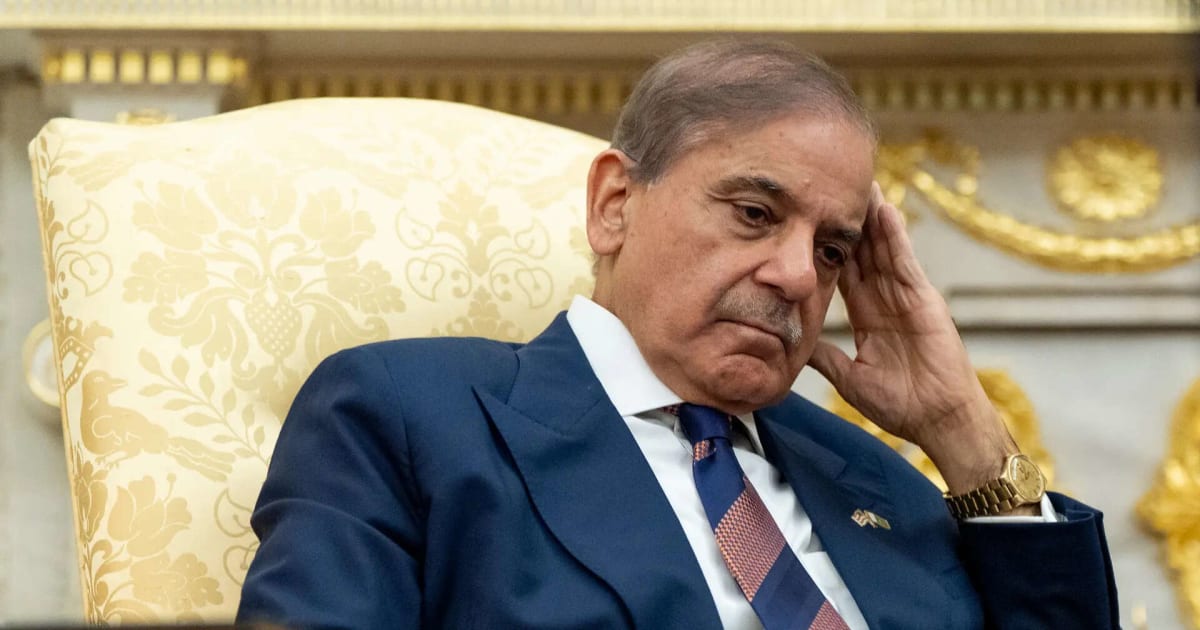
The IMF has cleared a $1.32 billion tranche for Pakistan, providing a critical buffer against sovereign default. While the immediate impact on Indian markets is neutral, the move prevents a potential contagion in South Asian trade corridors. We examine the long-term implications for logistics and regional security.
The $1.32 Billion Lifeline: What the IMF Approval Means for South Asia
The International Monetary Fund (IMF) has officially greenlit a $1.32 billion loan tranche for Pakistan, a move designed to stave off an imminent balance-of-payments crisis. For global observers, this is a routine stabilization measure. For regional investors, it is a critical firewall against the type of economic volatility that historically spills over into trade disruptions and heightened geopolitical tension.
At its core, this capital injection serves as a liquidity bridge. Pakistan’s external debt obligations have long threatened to trigger a sovereign default, a scenario that would have sent shockwaves through South Asian currency markets. By securing this funding, Islamabad has successfully purchased time to implement structural reforms, though the efficacy of these measures remains a subject of intense debate among emerging market analysts.
How does the Pakistan IMF bailout affect the Indian stock market?
While Indian markets operate with a low degree of correlation to Pakistan’s macroeconomic health, the geopolitical risk premium is the primary transmission mechanism. In periods of extreme distress—such as the 2022 currency volatility—Indian markets often witness a flight to safety, where institutional investors reduce exposure to the broader South Asian subcontinent to mitigate perceived regional instability.
The current bailout effectively neutralizes this risk for the next 12-18 months. Historically, when Pakistan avoids default, the Nifty 50 and BSE Sensex have shown a 'business as usual' trajectory, focusing instead on domestic variables like RBI policy and corporate earnings growth. The current market impact is neutral, but the removal of a 'tail risk' event allows for a more stable valuation environment for companies with peripheral exposure to the region.
The Logistics and Infrastructure Nexus
The impact is most visible in the logistics sector. Companies operating regional supply chains or those with cross-border cargo interests benefit from the predictability that a funded Pakistani economy brings to the table. While direct trade between India and Pakistan is restricted, the indirect stabilizing effect on regional maritime and land corridors is positive for logistics majors.
Stock-by-Stock Breakdown: Who is Influenced?
Investors should note that no Indian blue-chip has direct, material revenue exposure to Pakistan. However, companies with significant regional footprints or those sensitive to South Asian macro-stability see indirect benefits:
- Container Corporation of India (CONCOR): As a leader in multimodal logistics, CONCOR benefits when regional trade corridors remain unobstructed. A stable neighborhood reduces the cost of risk-mitigation for logistics firms. Current P/E: ~45x.
- Adani Ports and SEZ (APSEZ): With a massive footprint in the Arabian Sea, APSEZ is the regional bellwether. Stability in neighboring economies ensures that port throughput is not hampered by regional geopolitical flare-ups. Market Cap: ~₹3.2 Lakh Crore.
- State Bank of India (SBIN): While SBIN has no exposure to Pakistani debt, it acts as a proxy for 'India Inc.' stability. When regional risks subside, the banking index (Bank Nifty) typically sees an inflow of FII capital that had been sitting on the sidelines. P/E Ratio: ~10x.
- Tata Motors (TATAMOTORS): As a multinational entity with a global supply chain, Tata Motors benefits from the absence of regional trade shocks that could complicate logistics or component sourcing across the subcontinent.
Expert Perspective: The Bull vs. Bear Divide
The Bull Case: Proponents argue that the IMF loan is a 'reset button.' By forcing fiscal discipline and austerity, the IMF creates a more predictable economic partner, potentially opening doors for long-term regional trade normalization, which would be a massive tailwind for Indian export-oriented sectors.
The Bear Case: Skeptics, citing the recurring cycle of IMF programs (this is Pakistan's 23rd program), argue that the structural reforms are unlikely to take hold. They contend that the loan is merely 'kicking the can down the road,' and that the risk of a systemic collapse remains high in the medium term, necessitating a continued risk-off approach for regional investments.
Actionable Investor Playbook
For the average investor, this event should not trigger a portfolio shift. Instead, use this as a validation of the 'India Macro' thesis. When the neighborhood stabilizes, India’s status as a 'safe haven' in emerging markets is cemented.
- Monitor FII flows: Watch the Nifty 50 for inflows from global funds that have previously been underweight on South Asia due to 'regional risk.'
- Watch Logistics stocks: Keep an eye on operating margins for logistics players like CONCOR; stable regional trade often leads to volume growth.
- Maintain Long-Term Horizon: Do not react to short-term geopolitical headlines. Focus on the core fundamentals of the Indian economy, which remain decoupled from the specific fiscal health of neighboring nations.
Risk Matrix: Assessing the Future
| Risk Factor | Probability | Impact |
|---|---|---|
| Structural Reform Failure | High | Moderate |
| Regional Geopolitical Flare-up | Medium | High |
| Currency Volatility Spillover | Low | Low |
What to Watch Next
Investors should track the upcoming IMF progress reviews in Q3 and Q4. These reports will detail whether Pakistan is meeting its 'Prior Actions' for tax collection and energy subsidy reduction. Any slippage in these metrics will be a signal to increase hedging on regional logistics exposure. Furthermore, monitor RBI’s upcoming policy committee meeting, as the domestic interest rate trajectory remains a far more significant driver of Indian stock performance than any external regional bailout.
Disclaimer: This content is generated by WelthWest Research Desk based on publicly available reports and is for informational purposes only. It does not constitute financial advice, investment recommendations, or an offer to buy or sell securities. Always consult a qualified financial advisor before making investment decisions.