Key Takeaway
The Rs 665 crore block deal reflects a maturing ownership structure rather than a lack of conviction. By shifting equity from founders to high-conviction institutional heavyweights, PB Fintech is effectively insulating itself against retail-driven volatility.
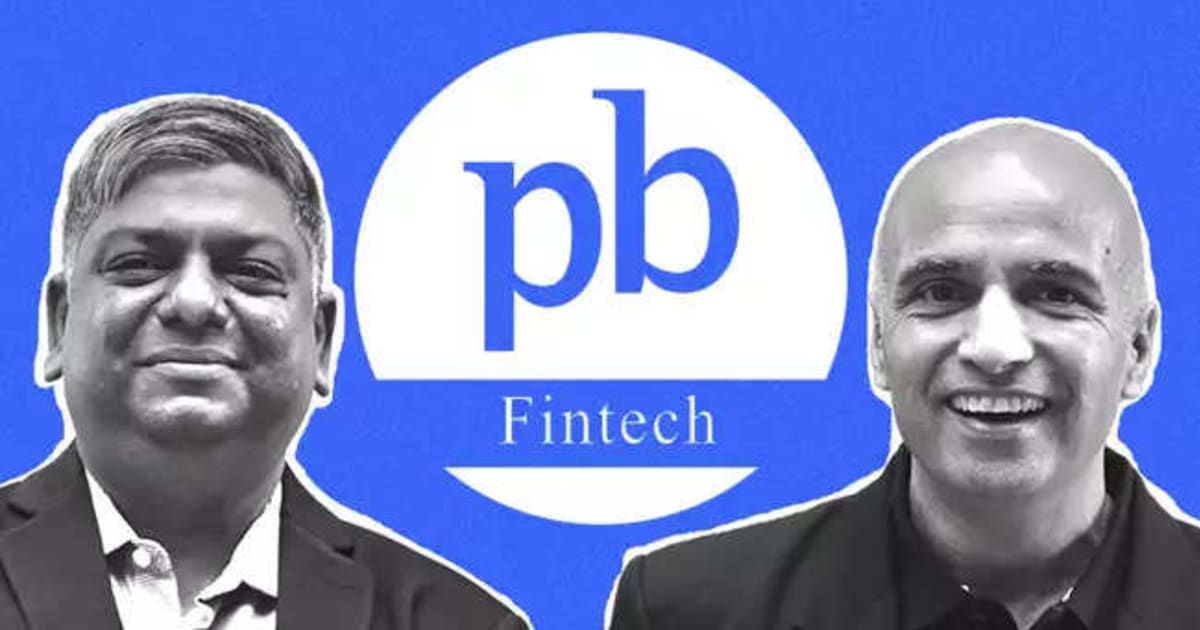
PB Fintech founders Yashish Dahiya and Alok Bansal have offloaded a 0.8% stake in a massive Rs 665 crore block deal. While retail investors often fear founder exits, this transition to marquee institutional ownership signals a long-term bullish narrative for India's leading insurtech platform.
The Anatomy of a Block Deal: Why Institutional Appetite Matters
In the high-stakes world of Indian fintech, few events trigger as much retail anxiety as a founder exit. However, the recent Rs 665 crore block deal involving PB Fintech (POLICYBZR) founders Yashish Dahiya and Alok Bansal is not a signal of retreat—it is a signal of institutional maturity. When marquee names like Goldman Sachs, Morgan Stanley, and Tata Mutual Fund step in to absorb 0.8% of the company's equity, they are effectively validating the firm’s long-term enterprise value over short-term price discovery.
This transaction is a classic example of 'liquidity recycling.' By moving shares from founder hands to institutional balance sheets, the company deepens its 'float'—the portion of shares available for trading—which is a critical prerequisite for inclusion in global indices and passive investment flows. Historically, companies that successfully manage this transition often see a reduction in price volatility as the shareholder base shifts from speculative retail sentiment to long-term fiduciary management.
How does founder selling impact long-term stock performance?
Market history offers a clear precedent. When large-cap or mid-cap founders offload shares, the immediate reaction is often a 2-4% dip due to supply-side pressure. Yet, data from 2022-2023 shows that when such sales are absorbed by Tier-1 institutions, the stock often recovers and outperforms the Nifty Fintech Index within two quarters. The key variable is the 'absorption quality.' In this instance, the presence of domestic mutual funds like Tata MF suggests that local institutional investors see a clear path to profitability, likely tied to the company’s improving unit economics and the scaling of its credit business, Paisabazaar.
Sector-Level Breakdown: The Fintech Ecosystem
The impact of this sale ripples across the broader Indian financial services sector. PB Fintech currently trades at a significant premium due to its dominant market share in the digital insurance aggregation space. Investors must monitor how this correlates with its peers:
- PB Fintech (POLICYBZR): The primary mover. Watch for consolidation near the 20-day moving average.
- One97 Communications (PAYTM): Struggling with regulatory headwinds and sentiment, making it a poor comparison for PB Fintech’s recent stability.
- HDFC Life / SBI Life: These traditional insurers are the 'competitor-partners.' If PB Fintech succeeds in its expansion, these giants may need to adjust their digital distribution budgets.
- Bajaj Finance (BAJFINANCE): Often viewed as the gold standard for fintech-led lending; PB Fintech’s credit business is a direct attempt to capture this market share.
Expert Perspective: The Bull-Bear Divide
The Bear Case: Skeptics argue that founder selling at current valuation multiples suggests that the 'easy money' phase of the stock is over. If the P/E ratio remains elevated (often hovering above 80x-100x forward earnings), further tranches of selling could trigger a deeper correction, especially if the company fails to show significant margin expansion in the upcoming quarterly results.
The Bull Case: Bulls point to the 'Institutional Floor.' With marquee funds increasing their stake, the stock has a natural support level. The company is no longer just an insurance aggregator; it is a full-stack financial services entity. The revenue growth, which has consistently tracked above 30% YoY, justifies the premium valuation as the company transitions from a customer acquisition phase to a monetization phase.
Actionable Investor Playbook
For the retail investor, the strategy should be one of patience and accumulation, not panic selling:
- Avoid the Noise: Ignore the immediate 1-2% daily fluctuations resulting from the block deal. These are technical, not fundamental.
- Entry Points: Look for accumulation opportunities if the stock dips toward its 50-day EMA (Exponential Moving Average).
- Monitor Profitability: The next two earnings reports are critical. If the company sustains its EBITDA-positive trajectory, the institutional confidence will likely lead to a re-rating of the stock.
- Time Horizon: This is a 24-month play. Do not treat PB Fintech as a swing trade; treat it as a long-term bet on the digitization of the Indian insurance sector.
Risk Matrix
| Risk Factor | Probability | Impact |
|---|---|---|
| Further Founder Selling | Medium | High |
| Regulatory Shift (IRDAI) | Low | Very High |
| Margin Contraction | Medium | Medium |
| Market-wide Correction | High | Low |
What to Watch Next
Investors should mark their calendars for the upcoming Q2/Q3 earnings release. Specifically, watch for the Contribution Margin—a key metric that separates profitable fintechs from those burning cash. Furthermore, any updates on the 'Point of Sale' (POS) agent expansion will dictate the next leg of growth. If the company maintains its current trajectory, expect institutional ownership to climb further, potentially leading to an entry into broader Nifty Next 50 or similar indices, which would act as a massive tailwind for the stock price.
Disclaimer: This content is generated by WelthWest Research Desk based on publicly available reports and is for informational purposes only. It does not constitute financial advice, investment recommendations, or an offer to buy or sell securities. Always consult a qualified financial advisor before making investment decisions.