Key Takeaway
Sustained fuel prices at multi-year highs act as a structural 'inflation tax' on the Indian economy, delaying RBI rate cuts and forcing a rotation from consumer discretionary to upstream energy and defensive value stocks.
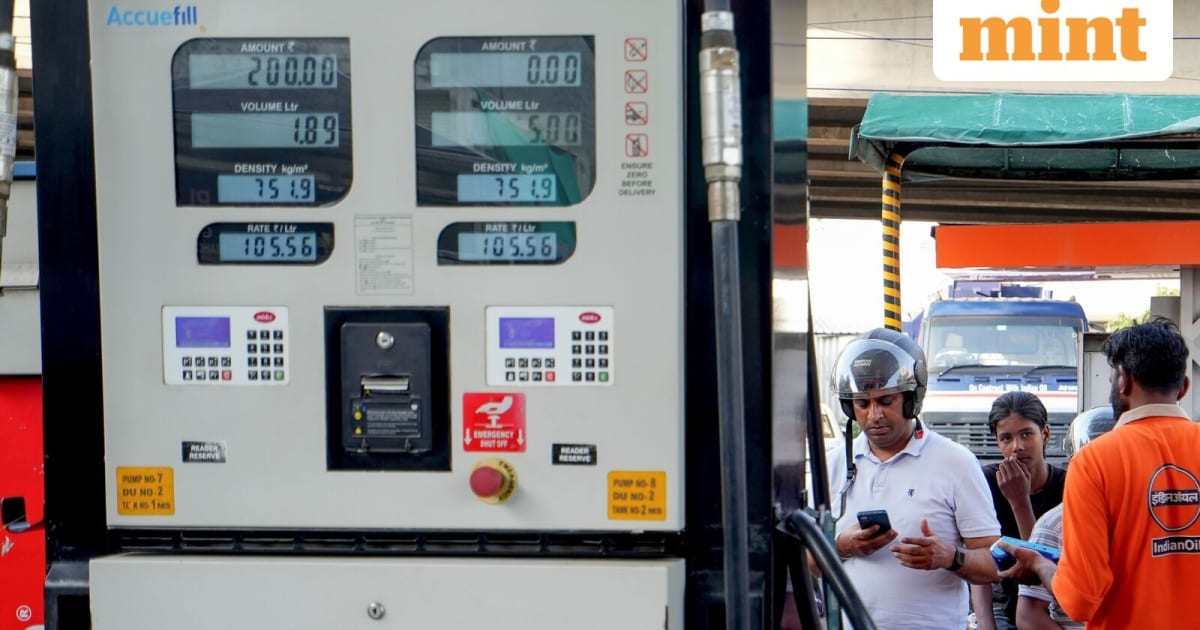
As petrol and diesel prices stabilize at elevated levels following a cumulative ₹7.5 per litre hike, the Indian equity landscape faces a significant realignment. This investigative report explores the ripple effects on corporate margins, the logistics squeeze, and why upstream oil producers are the only clear beneficiaries in a bearish macro environment.
The New Baseline: Why Stabilizing Fuel Prices at Multi-Year Highs is a Silent Market Killer
For the Indian economy, the recent stabilization of petrol and diesel prices following a cumulative hike of ₹7.5 per litre is not a sign of relief, but rather the solidification of a high-cost environment. In the world of macroeconomics, volatility is often preferred over sustained high costs because volatility allows for mean reversion. However, when fuel prices—the literal lifeblood of the Indian supply chain—plateau at multi-year highs, they embed themselves into the Consumer Price Index (CPI) as 'sticky inflation.'
At WelthWest Research, our data indicates that for every 10% increase in crude oil prices, India’s CPI typically sees a direct and indirect uptick of approximately 40-60 basis points. With fuel prices remaining elevated, the Reserve Bank of India (RBI) finds its hands tied. The 'higher-for-longer' interest rate narrative is no longer just a global phenomenon; it is a domestic necessity to prevent an inflationary spiral. For the Nifty 50 (INDEXNSE: NIFTY_50), this translates to a compression in valuation multiples as the discount rate remains high and earnings growth in consumption-heavy sectors begins to decelerate.
How will high fuel prices affect RBI interest rate cut timelines?
The most critical question for Indian investors in 2024 is the timing of the RBI’s pivot toward rate cuts. Historically, the RBI maintains a hawkish stance when fuel-led inflation threatens the 4% target. Crude oil derivatives and transport costs account for a significant portion of the non-food inflation basket. When petrol prices rise by ₹7.5 per litre, the 'second-round effects' are devastating. Logistics providers, from long-haul truckers to last-mile delivery partners like Delhivery (NSE: DELHIVERY), are forced to pass on costs to FMCG and retail companies.
During the 2022 energy crisis, when Brent crude surged past $110, the Nifty 50 saw a correction of nearly 12% over three months as the market priced in aggressive rate hikes. Today, while we are not at $110, the domestic retail price is effectively at record levels due to taxation structures and the depreciation of the Indian Rupee (INR) against the USD. This 'currency-energy' pincer movement means the RBI is unlikely to cut rates until late Q3 or Q4 of the fiscal year, keeping the cost of capital high for India Inc.
Sectoral Deep Dive: The Margin Squeeze Across the Value Chain
The impact of fuel inflation is never uniform. It creates a stark divide between those who extract energy and those who consume it. We categorize the current market impact into three distinct tiers:
- The Upstream Beneficiaries: Companies involved in exploration and production (E&P) realize higher prices for their output. As long as the government’s windfall tax remains calibrated, these firms see a direct boost to their bottom line.
- The Infrastructure & Logistics Victims: This sector operates on razor-thin margins. Fuel typically accounts for 35-45% of the operating costs for transport companies. A ₹7.5 hike can evaporate the entire quarterly profit margin of a mid-sized logistics firm.
- The Derivative Users: The Paints and Chemicals sectors use crude oil derivatives as primary raw materials. For Asian Paints (NSE: ASIANPAINT), crude-linked monomers and titanium dioxide represent a massive chunk of their Cost of Goods Sold (COGS).
Stock-by-Stock Breakdown: Identifying the Vulnerable and the Resilient
1. ONGC (NSE: ONGC) & Oil India (NSE: OIL)
ONGC and Oil India are the primary beneficiaries of high crude realizations. With Brent crude hovering in a range that supports healthy net realizations (post-windfall tax), ONGC’s cash flow generation remains robust. Currently trading at a P/E of approximately 7.5x, significantly lower than its historical average, ONGC offers a high dividend yield play for investors looking to hedge against energy inflation. Oil India, with its concentrated assets in the northeast, remains a high-beta alternative in this space.
2. InterGlobe Aviation - IndiGo (NSE: INDIGO)
Aviation Turbine Fuel (ATF) accounts for nearly 40% of the operating expenses for IndiGo. While the airline has demonstrated significant pricing power in a consolidated market, there is a ceiling to how much cost can be passed to the traveler before discretionary demand wanes. We expect a 150-200 basis point contraction in EBITDAR margins if fuel prices remain at these levels through the next two quarters. Peer: SpiceJet (NSE: SPICEJET) faces even greater risk due to its fragile balance sheet.
3. Asian Paints (NSE: ASIANPAINT)
The decorative paint industry is a proxy for the 'crude trade.' Asian Paints has historically seen its margins contract when oil prices rise, as there is a 3-6 month lag in passing on these costs to consumers. With rural demand already showing signs of fatigue, further price hikes could lead to volume degrowth. Investors should monitor the Gross Margins closely; any dip below 40% would be a signal for further downside. Peer: Berger Paints (NSE: BERGEPAINT).
4. Reliance Industries (NSE: RELIANCE)
RIL is a complex beast in this environment. Its O2C (Oil-to-Chemicals) segment benefits from higher Gross Refining Margins (GRMs), especially if it can source discounted Russian Urals while selling products at global benchmarks. However, its retail and telecom arms are sensitive to the broader inflationary pressure on the Indian consumer. RIL acts as a natural hedge within the Nifty, providing stability when other sectors falter.
5. Delhivery (NSE: DELHIVERY)
As a technology-led logistics player, Delhivery is highly sensitive to diesel price movements. While they utilize route optimization AI to reduce 'empty miles,' the base cost of fuel is unavoidable. Sustained high prices delay the company's path to consistent PAT (Profit After Tax) positivity. Peer: Blue Dart Express (NSE: BLUEDART).
Expert Perspective: The Bull vs. Bear Argument
"The market is underestimating the resilience of the Indian corporate sector. While fuel is a headwind, the massive infrastructure spend by the government acts as a counterbalance. We see this as a temporary margin blip, not a structural decline." — Bull Case Analyst
Conversely, the Bear case argues that the 'wealth effect' in India is currently concentrated in the top 10% of the population. For the bottom 60%, high fuel prices lead to immediate cuts in discretionary spending on FMCG products and two-wheelers. If companies like Hindustan Unilever (NSE: HUL) continue to report stagnant volume growth, the broader market indices will struggle to sustain their record-high P/E multiples.
Which sectors are most resilient to rising diesel prices?
Investors looking for a 'Fuel Hedge' should pivot toward Renewable Energy and Information Technology (IT). Companies like Tata Power (NSE: TATAPOWER) and Adani Green (NSE: ADANIGREEN) benefit indirectly as the 'Total Cost of Ownership' for electric vehicles and renewable alternatives becomes more attractive compared to fossil-fuel-dependent options. The IT sector, led by TCS (NSE: TCS) and Infosys (NSE: INFY), is largely immune to domestic fuel prices as their cost base is human capital and their revenue is USD-denominated, which actually benefits from the same macro conditions that often drive oil prices higher (a strong Dollar).
Actionable Investor Playbook: Navigating the High-Fuel Regime
Based on our analysis at WelthWest Research, here is the recommended strategy for the next 6-12 months:
- Accumulate Upstream Energy: Use dips in ONGC and Oil India to build a position. These are your 'inflation insurance' policies.
- Underweight FMCG and Paints: Until crude stabilizes below $75/barrel or the government announces a significant excise duty cut, these sectors will face an uphill battle in margin expansion.
- Monitor the Transporters: Avoid Delhivery and VRL Logistics until there is clarity on fuel surcharges being successfully implemented across their client base.
- Entry Points: For Nifty 50, a support level of 21,800 - 22,000 provides a safer entry if fuel-led inflation causes a knee-jerk sell-off.
Risk Matrix: What Could Go Wrong?
- Geopolitical Escalation (Probability: High): Any expansion of conflict in the Middle East could send Brent to $100+, forcing OMCs like BPCL and IOCL to absorb massive under-recoveries, potentially leading to a sharp correction in PSU stocks.
- Rural Demand Collapse (Probability: Medium): If fuel prices stay high alongside a sub-par monsoon, the rural economy—the engine of India's FMCG sector—could enter a recessionary phase.
- Fiscal Deficit Pressure (Probability: Low): The government may be forced to cut excise duties to cool inflation, which would increase the fiscal deficit and potentially lead to a sovereign rating outlook downgrade.
What to Watch Next: The Catalysts
Investors should keep a close eye on the following dates and data releases:
- Monthly CPI Data: Released around the 12th of every month. Any print above 5.5% will be a signal that the RBI will remain hawkish.
- OPEC+ Ministerial Meetings: Any shift in production quotas will immediately impact the stock prices of RIL and ONGC.
- OMC Quarterly Earnings: Watch the 'Marketing Margins' of BPCL, HPCL, and IOCL. If they are absorbing the ₹7.5 hike without passing it on, their stock prices will face significant de-rating.
In conclusion, the stabilization of fuel prices at these highs is a signal for investors to move away from aggressive growth and toward defensive value. The Indian market is resilient, but it is not immune to the laws of energy economics. Positioning your portfolio for a 'High-Fuel, High-Rate' environment is the only way to ensure capital preservation in the coming quarters.
Disclaimer: This content is generated by WelthWest Research Desk based on publicly available reports and is for informational purposes only. It does not constitute financial advice, investment recommendations, or an offer to buy or sell securities. Always consult a qualified financial advisor before making investment decisions.


