Key Takeaway
The RBI’s dismissal of premature rate hike talk acts as a 'valuation floor' for Indian equities, preventing a cost-of-capital spike that would have otherwise derailed the current bull run in interest-rate-sensitive sectors.
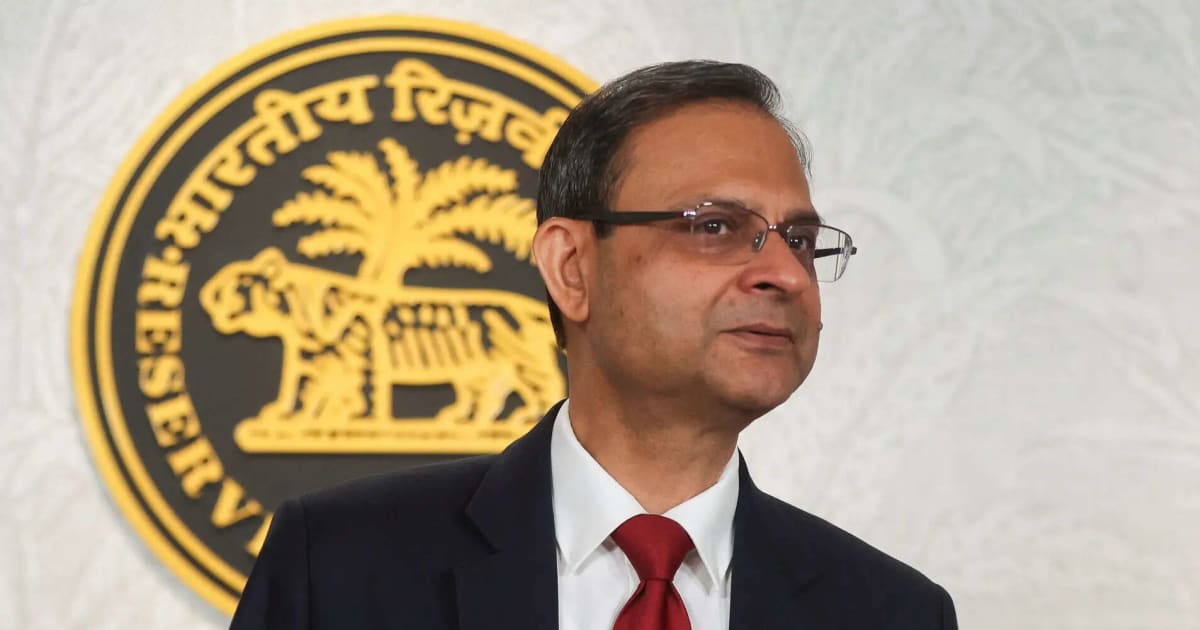
RBI Governor Sanjay Malhotra has effectively calmed market nerves by labeling rate hike speculation as 'premature.' This strategic neutrality provides a much-needed relief rally for the NSE and BSE, particularly for banking and real estate heavyweights. Our deep dive explores why this policy stability is the secret sauce for India's decoupling from global volatility.
The Great Relief: Why the RBI’s Neutrality is a Masterstroke for Indian Markets
In a global landscape where the Federal Reserve and the European Central Bank are wrestling with 'higher-for-longer' narratives, the Reserve Bank of India (RBI) has chosen a path of calibrated composure. Governor Sanjay Malhotra’s recent dismissal of rate hike speculation isn't just a comment on inflation; it is a tactical signal to the equity markets that the cost of capital in India has likely peaked. For the Indian stock market, which has been hovering near record highs, this stability is more valuable than an immediate rate cut.
The significance of this 'neutrality' cannot be overstated. When central banks hint at hikes, equity valuations undergo a 'derating' process. Future cash flows are discounted at a higher rate, leading to immediate P/E (Price-to-Earnings) contraction. By removing the immediate threat of a hike, the RBI has effectively protected the current Nifty 50 valuation, which currently trades at a forward P/E of approximately 21.5x—slightly above its 10-year average but justified by robust corporate earnings growth.
How will the RBI’s steady interest rate policy affect bank stocks?
Banking and Financial Services (BFSI) represent the largest weightage in the Nifty 50. The Governor’s stance directly addresses the two biggest fears in the banking sector: Net Interest Margin (NIM) compression and asset quality stress. When rates are hiked rapidly, banks often struggle to pass on costs to borrowers as quickly as they have to raise deposit rates to attract liquidity. By maintaining a status quo, the RBI allows banks like HDFC Bank (NSE: HDFCBANK) and ICICI Bank (NSE: ICICIBANK) to stabilize their cost of funds.
Furthermore, a stable rate environment ensures that the Credit-to-Deposit (C/D) ratio, which has been a point of concern for the regulator, does not spiral out of control. With credit growth currently hovering around 15-16% YoY, the absence of a rate hike ensures that the momentum in retail and MSME lending remains uninterrupted. This is a massive tailwind for the 'India Growth Story,' where domestic consumption is the primary engine.
Deep Market Impact: Connecting Macro Policy to the Trading Floor
To understand the depth of this impact, we must look at historical parallels. In 2013, during the 'Taper Tantrum,' India was forced to hike rates aggressively to protect the Rupee, which sent the Nifty into a tailspin. Fast forward to 2024, India’s foreign exchange reserves stand at a formidable $640+ billion. This 'war chest' allows the RBI the luxury of domestic-focused policymaking. The current dismissal of rate hikes suggests that the RBI is confident in India's internal macro-stability, despite crude oil volatility and geopolitical tensions in the Middle East.
Sectoral Winners: Beyond the Banking Hall
- Real Estate: This sector is perhaps the most sensitive to the repo rate. A 25-50 basis point hike can significantly increase the Equated Monthly Installments (EMIs) for home buyers, dampening demand in the mid-to-premium segment. The RBI’s neutral stance is a green signal for developers like DLF (NSE: DLF) and Godrej Properties, who are seeing record pre-sales.
- Automobiles: With nearly 75% of passenger vehicles in India being financed, the cost of borrowing is a direct driver of monthly sales volumes. Stability here supports companies like Maruti Suzuki (NSE: MARUTI) and Tata Motors.
- NBFCs: Non-Banking Financial Companies, which rely on wholesale borrowing, benefit immensely when the yield on the 10-year G-Sec (Government Security) stabilizes. A neutral RBI keeps the 'spreads' profitable for lenders like Bajaj Finance (NSE: BAJFINANCE).
Stock-by-Stock Breakdown: The High-Conviction Plays
As a senior analyst at WelthWest, I have identified five key stocks that are poised to outperform following the Governor’s remarks:
1. HDFC Bank (NSE: HDFCBANK)
Post-merger, HDFC Bank has been under pressure due to its liquidity coverage ratio and NIM management. The dismissal of a rate hike is a 'goldilocks' scenario for this behemoth. It allows the bank to reprice its massive loan book without the immediate pressure of a systemic rate hike pushing up its deposit costs. With a current P/B (Price-to-Book) ratio of around 2.6x, it is trading at a significant discount to its historical 5-year average of 3.5x, offering a compelling margin of safety.
2. DLF Limited (NSE: DLF)
DLF is the proxy for India’s luxury housing boom. Real estate cycles are historically ended by central bank tightening. By signaling that the peak of the rate cycle is behind us, the RBI has extended the 'up-cycle' for DLF. The company’s low net-debt position and strong pipeline of launches in Gurugram make it a top pick in a stable-rate environment.
3. Bajaj Finance (NSE: BAJFINANCE)
As India’s premier consumer lender, Bajaj Finance thrives on predictable borrowing costs. Any hike would have squeezed its margins or forced it to raise rates for consumers, potentially slowing down its AUM (Assets Under Management) growth. At a current P/E of ~30x, the stock has already corrected from its highs, making it an attractive entry for long-term investors looking to play the consumption theme.
4. ICICI Bank (NSE: ICICIBANK)
ICICI Bank has consistently delivered a Return on Assets (RoA) of over 2%. Its digital-first approach and high-yielding retail portfolio benefit from a 'status quo' on rates. Unlike some of its peers, ICICI Bank has a superior CASA (Current Account Savings Account) ratio, which provides it with low-cost liquidity, making it a winner in a neutral policy environment.
5. Maruti Suzuki (NSE: MARUTI)
The entry-level car segment in India is highly price-sensitive. While the premium SUV segment is booming, Maruti’s core strength lies in its mass-market reach. Stable interest rates ensure that auto loans remain accessible to the middle class, supporting Maruti’s goal of achieving 2 million units in annual sales. The stock's recent breakout above the 12,000 mark is a testament to this optimism.
Expert Perspective: The Bull vs. Bear Debate
"The RBI is playing a game of 'wait and watch' with surgical precision. By refusing to hike, they are prioritizing growth in a year where India's GDP is expected to lead the world. This is the ultimate 'buy the dip' signal for domestic investors." — WelthWest Research Desk
The Bull Case: Bulls argue that India is in a structural 'decoupling' phase. While the US struggles with sticky services inflation, India’s core inflation (excluding food and fuel) has trended downwards. This gives the RBI room to remain neutral even if the Fed remains hawkish. The bull argument is that this stability will lead to a 'valuation rerating' for Indian banks, which have underperformed the broader Nifty over the last 12 months.
The Bear Case: Contrarians point to the 'food inflation' elephant in the room. A deficit in the monsoon or a spike in global crude oil prices (due to Middle East tensions) could easily push CPI (Consumer Price Index) above the RBI’s 6% upper tolerance band. If that happens, the Governor will be forced into a 'hawkish pivot,' which would catch the market off-guard and lead to a sharp 5-7% correction in interest-sensitive stocks.
Actionable Investor Playbook: How to Position Your Portfolio
Based on this analysis, here is the WelthWest recommended strategy:
- Accumulate Quality Financials: Focus on Large-cap banks with strong CASA ratios. ICICI Bank and Axis Bank are preferred over smaller private lenders.
- Real Estate Weightage: Maintain a 10-15% allocation to top-tier developers. The 'housing for all' and luxury demand themes are far from over.
- Avoid Short-Term Debt Funds: With rate cuts pushed further into the future, the 'capital gains' play in long-duration debt funds is delayed. Stick to liquid or ultra-short-term funds for your cash park.
- Time Horizon: This is a 12-18 month play. Do not expect an immediate 'moonshot,' but rather a steady 'compounding' of returns as earnings catch up with valuations.
Risk Matrix: What Could Go Wrong?
| Risk Factor | Probability | Impact on Market |
|---|---|---|
| Crude Oil > $95/barrel | Moderate | High (Inflationary) |
| Below-Normal Monsoon | Low | Very High (Food Prices) |
| US Fed Rate Hike | Very Low | Moderate (Currency Pressure) |
What to Watch Next: The Catalyst Calendar
Investors should mark their calendars for these critical data releases that will determine if the RBI can maintain its neutral stance:
- Monthly CPI Data: Any print above 5.5% will reignite the 'hawkish' debate.
- Monsoon Progress Reports (June-August): Crucial for food inflation expectations.
- Brent Crude Trends: If oil breaks the $90 barrier, the RBI’s 'neutrality' will be tested.
- Next MPC Meeting: Watch for the 'Withdrawal of Accommodation' stance—if this is dropped, it’s the first step toward an eventual rate cut.
In conclusion, the RBI Governor has handed the market a 'stability premium.' While the road ahead has its share of macro-potholes, the policy clarity provided today ensures that for the Indian investor, the path of least resistance remains upward.
See HDFC Bank's AI Score
Our algorithmic screener scores HDFC Bank on fundamentals, momentum, and risk — free to try, no card needed.
Try the AI Screener →Have questions about this story?
Ask Welth, our finance-focused AI research assistant, for a deeper breakdown — free trial included.
Chat with Welth AI →Disclaimer: This content is generated by WelthWest Research Desk based on publicly available reports and is for informational purposes only. It does not constitute financial advice, investment recommendations, or an offer to buy or sell securities. Always consult a qualified financial advisor before making investment decisions.