Key Takeaway
The sudden ₹1.54 lakh crore erosion in top-tier market capitalization signals a tactical shift from 'growth at any price' to 'valuation discipline,' with Reliance Industries acting as the primary anchor dragging down the Nifty 50.
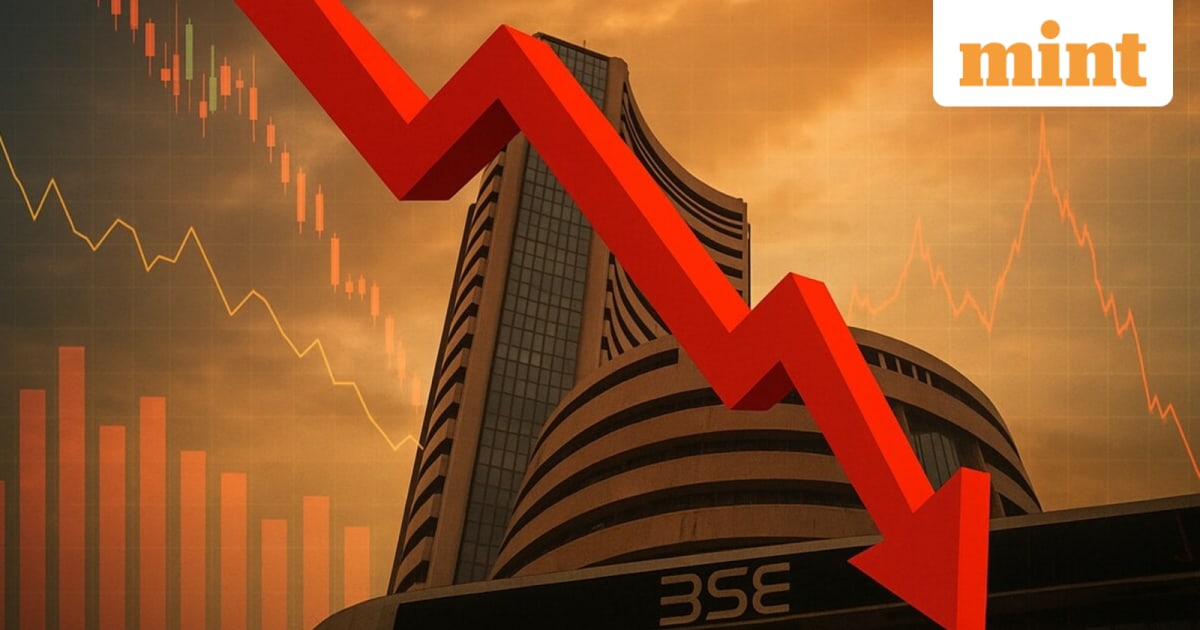
India's stock market heavyweights are facing a significant valuation reset, led by a massive decline in Reliance Industries' market cap. This deep dive explores the systemic risks of index-heavyweight selling, the impact of FII outflows on the Sensex, and provides an actionable playbook for navigating this bearish turn in large-cap sentiment.
The Great Valuation Reset: Why India’s Heavyweights are Bleeding
The Indian equity markets, long characterized by their 'Teflon-like' resilience, have finally hit a wall of institutional skepticism. In a week that saw the benchmark Nifty 50 and Sensex struggle for direction, the most alarming data point wasn't the index percentage drop, but the absolute destruction of value at the top of the pyramid. Seven of India's ten most valued companies collectively lost ₹1,54,477.38 crore in market capitalization. Leading this retreat was the undisputed king of the Indian indices, Reliance Industries (RELIANCE), which saw its valuation contract by a staggering amount, single-handedly dampening investor sentiment across the board.
This is not merely a routine correction; it is a structural reassessment. For the past two years, the Indian market has been buoyed by domestic liquidity, often ignoring global macro headwinds. However, as Foreign Institutional Investors (FIIs) turn net sellers and the 'higher-for-longer' interest rate narrative persists globally, the premium valuations of Indian blue-chips are being interrogated. When the top 10 firms—which represent the lion's share of index weightage—begin to crumble, the broader market's technical support levels become increasingly fragile.
Why is Reliance Industries falling, and what does it mean for the Nifty 50?
To understand the current market malaise, one must look at Reliance Industries (RELIANCE). As the stock with the highest weightage in the Nifty 50, its movements are the primary driver of index direction. The recent erosion in its market cap is a confluence of three factors: softening Gross Refining Margins (GRMs) in the O2C segment, a perceived slowdown in the aggressive growth of its Retail arm, and the lack of immediate catalysts following the Jio Financial Services demerger. When Reliance loses value, it triggers algorithmic selling in Nifty ETFs and index funds, creating a cascading effect that pulls down other heavyweights like HDFC Bank and ICICI Bank.
Deep Market Impact Analysis: Connecting the Dots
The erosion of ₹1.54 lakh crore is a liquidity event. Historically, when 70% of the top 10 firms lose significant value simultaneously, it precedes a period of heightened volatility and 'sector rotation.' We saw a similar pattern in early 2022 following the onset of the Russia-Ukraine conflict, where the Nifty corrected nearly 10% before finding a floor. Currently, the Nifty 50's Price-to-Earnings (P/E) ratio is hovering around 23x, which is significantly higher than its 10-year average of 20.2x. This 'valuation gap' makes the index vulnerable to even minor earnings misses.
- Index Concentration Risk: The top 10 stocks account for nearly 60% of the Nifty 50's weightage. A collective decline here means the remaining 40 stocks must perform exceptionally well just to keep the index flat.
- FII Exodus: The selling pressure in TCS, INFY, and HDFC BANK is often a proxy for FII sentiment. If foreign funds are trimming their 'India overweight' positions, these liquid blue-chips are the first to be offloaded.
- The Wealth Effect: Large-cap erosion affects the collateral value for many institutional players and high-net-worth individuals, potentially leading to margin calls in the mid-cap and small-cap segments.
"The market is transitioning from a momentum-driven phase to an earnings-justified phase. The erosion in Reliance and the banking majors is a signal that the 'easy money' has been made, and now the market demands fundamental delivery." — Senior Research Analyst, WelthWest
How will the RBI's stance on inflation affect large-cap bank stocks?
Investors are closely watching the Reserve Bank of India (RBI). With the central bank maintaining a hawkish 'withdrawal of accommodation' stance, the cost of funds for HDFC Bank (HDFCBANK) and SBI (SBIN) remains elevated. The narrowing Net Interest Margins (NIMs) are a primary reason why these banking behemoths are part of the current m-cap erosion. If the RBI delays rate cuts into 2025, the banking sector—the backbone of the Sensex—could see further valuation compression.
Stock-by-Stock Breakdown: The Heavyweights Under Fire
1. Reliance Industries (RELIANCE)
The biggest laggard in the recent sell-off, Reliance is facing a 'triple whammy.' The global slowdown is hitting chemical demand, the telecom sector's ARPU (Average Revenue Per User) growth is plateauing, and the market is pricing in the massive capex required for its New Energy ventures. Support is currently seen at the ₹2,850 – ₹2,900 levels; a break below this could trigger a move toward ₹2,700.
2. HDFC Bank (HDFCBANK)
Post-merger, HDFC Bank has struggled to maintain its historical premium. The challenge remains the integration of the mortgage book and the pressure to increase deposits at a higher cost. While its P/E is at a historical low of around 18x, the market is waiting for a clear trajectory on credit-to-deposit ratio improvement before re-rating the stock.
3. Tata Consultancy Services (TCS) & Infosys (INFY)
The IT twins are suffering from 'guidance fatigue.' While AI is a long-term tailwind, the immediate reality is a reduction in discretionary spending by US and European BFSI (Banking, Financial Services, and Insurance) clients. TCS and INFY remain sensitive to US 10-year Treasury yields; as yields rise, IT valuations typically contract.
4. Bharti Airtel (BHARTIARTL)
Interestingly, while Airtel saw some erosion, it remains a favorite for those betting on the telecom oligopoly. However, the recent spectrum auction obligations and the heavy investment in 5G infrastructure have made investors cautious about short-term free cash flow (FCF) generation.
Expert Perspective: The Bull vs. Bear Debate
The Bear Case: Bears argue that the Indian market is in a 'distribution phase.' They point to the fact that while the index is near all-time highs, the 'advance-decline ratio' is weakening. The erosion of m-cap in leaders like Reliance is seen as a precursor to a broader 10-15% correction, driven by a global recession and a pivot of FII money to cheaper markets like China or Brazil.
The Bull Case: Bulls view this as a healthy 'shakeout' of weak hands. They argue that India's GDP growth (projected at 7%+) is the best among major economies. For them, the dip in ICICI BANK and RELIANCE is a generational buying opportunity. They believe that once the US Fed begins its rate-cut cycle, a flood of liquidity will return to Indian large-caps, pushing the Nifty toward the 26,000 mark.
Actionable Investor Playbook: Navigating the Storm
In this environment, a 'buy the dip' strategy must be replaced with a 'buy the value' strategy. Here is the WelthWest tactical approach:
- For Long-term Investors: Focus on 'Quality at Reasonable Price' (QARP). ICICI Bank and Larsen & Toubro (LT) show stronger relative strength than their peers. Use a SIP (Systematic Investment Plan) approach specifically for these blue-chips during this correction.
- For Traders: The Nifty 50 has a strong psychological support at 24,000. If the index stays below this for more than three sessions, look to hedge long positions with Nifty Put options or shift to defensive sectors like FMCG (HUL, ITC) and Pharma (SUNPHARMA).
- Entry Points: Watch for Reliance to stabilize near its 200-day Moving Average (DMA). Historically, this has been a high-probability entry point for a 5-8% swing trade.
Risk Matrix: What Could Go Wrong?
| Risk Factor | Probability | Impact on Market |
|---|---|---|
| Persistent FII Selling | High | Severe: Could lead to another 5% drop in index heavyweights. |
| Geopolitical Escalation (Middle East) | Medium | Moderate: Spike in crude oil prices directly hurts Reliance and OMCs. |
| Q2 Earnings Miss | Medium | High: If top-tier IT and Bank earnings disappoint, the Nifty floor will drop. |
| RBI Hawkish Surprise | Low | Moderate: Would further depress Bank Nifty valuations. |
What to Watch Next: The Catalysts
The story of India's m-cap erosion is far from over. Investors must keep a close eye on the following upcoming events:
- US Federal Reserve Minutes: Any hint of a delay in rate cuts will prolong the pain for Indian IT and high-growth stocks.
- Monthly F&O Expiry: Expect heightened volatility as institutional players roll over their positions in RELIANCE and HDFCBANK.
- Corporate Earnings Calendar: The start of the Q2 earnings season will be the ultimate litmus test. Look for management commentary on 'demand recovery' and 'margin stability.'
The erosion of ₹1.54 lakh crore is a wake-up call. It serves as a reminder that even the mightiest giants are not immune to the laws of valuation. For the savvy investor, this is not a time for panic, but a time for precision.
Disclaimer: This content is generated by WelthWest Research Desk based on publicly available reports and is for informational purposes only. It does not constitute financial advice, investment recommendations, or an offer to buy or sell securities. Always consult a qualified financial advisor before making investment decisions.