Key Takeaway
A ceasefire in Ukraine would trigger a massive 'risk-on' rally in Indian equities, driven by a sharp correction in crude oil and a reversal of FII outflows. Investors should pivot from defensive commodities to high-beta consumption and margin-expansion plays like OMCs and Paints.
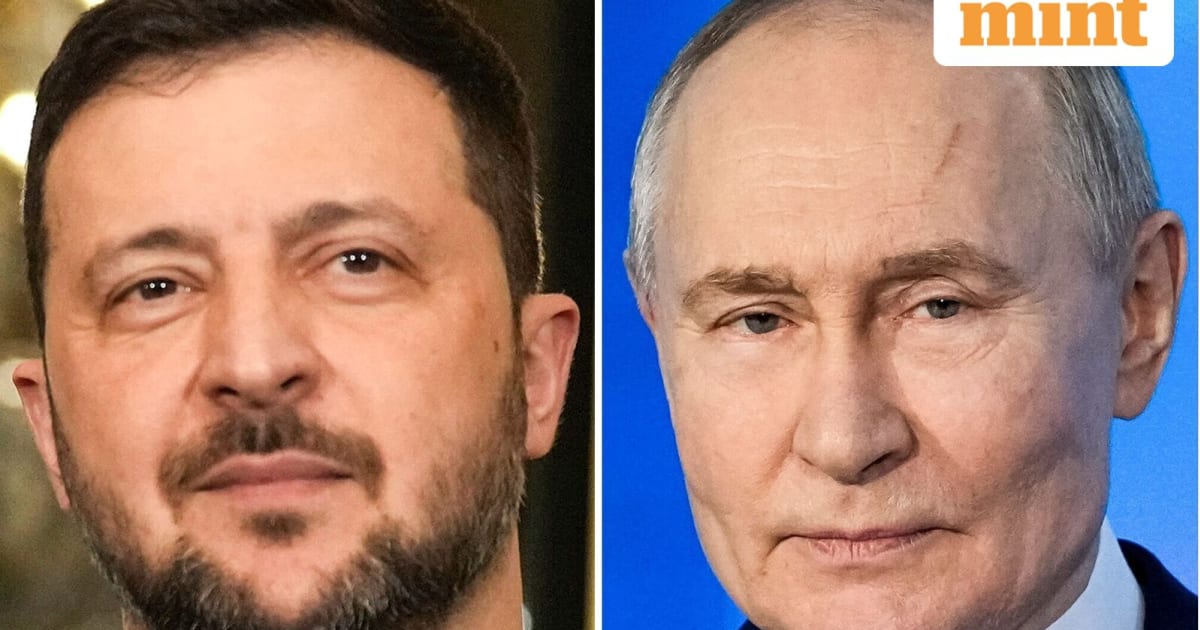
President Zelensky's willingness to freeze battle lines marks a structural shift in global geopolitics, potentially ending the inflationary pressure that has dogged markets since 2022. For the Indian market, this represents a 'Goldilocks' scenario: lower imported inflation, a stronger Rupee, and a surge in foreign capital. We analyze the specific sectors and stocks poised to gain or lose from this historic de-escalation.
The Pivot Toward Peace: Decoding Zelensky’s Strategic Shift
In a move that has sent shockwaves through global commodity desks and diplomatic circles, Ukrainian President Volodymyr Zelensky has signaled a potential willingness to 'freeze' current battle lines to bring an end to the active phase of the Russia-Ukraine war. This represents the most significant diplomatic de-escalation since February 2022. While the geopolitical implications are vast, the financial implications for the Indian equity market are nothing short of transformative.
For the last 30 months, the 'War Premium' has been baked into everything from the price of a barrel of Brent crude to the cost of a bag of fertilizer in Punjab. A freeze in hostilities doesn't just stop the fighting; it removes the systemic risk of a sudden energy supply shock. When the risk of a 'black swan' event in the Black Sea diminishes, global capital seeks high-growth emerging markets. India, with its robust domestic macro-environment, stands as the primary beneficiary of this global 'Risk-Off to Risk-On' rotation.
How Will a Russia-Ukraine Ceasefire Affect Indian Oil Stocks?
The most immediate and violent reaction to a ceasefire will occur in the energy markets. India imports nearly 85% of its crude oil requirements. Historically, every $10 drop in the price of crude oil leads to a roughly 30-40 basis point reduction in India’s Consumer Price Index (CPI) inflation and significantly narrows the Current Account Deficit (CAD). When the war began in February 2022, Brent crude spiked to nearly $139 per barrel, causing the Nifty 50 to correct by over 12% in a matter of weeks. A reversal of this trend could provide the tailwinds needed for Nifty to breach the next psychological resistance levels.
The 'Margin Expansion' Play: For Oil Marketing Companies (OMCs) like HPCL (NSE: HINDPETRO) and BPCL (NSE: BPCL), lower crude prices are a double blessing. They reduce the cost of raw materials while retail fuel prices in India often remain sticky, allowing these firms to capture massive marketing margins. We expect a re-rating of the OMC sector as their earnings visibility improves and the threat of 'under-recoveries' vanishes.
Deep Market Impact Analysis: The Macro-Linkages
Beyond oil, the 'Peace Dividend' for India manifests in three critical areas:
- FII Inflows: Foreign Institutional Investors (FIIs) have been cautious, often treating India as a 'proxy' for global risk. A peace deal would likely trigger a massive short-covering rally by FIIs who have been sitting on the sidelines or hedged in safe havens like Gold and US Treasuries.
- Currency Stability: A lower oil bill reduces the demand for Dollars, supporting the Indian Rupee (INR). A stronger Rupee makes Indian assets more attractive to global funds, creating a virtuous cycle of appreciation.
- Input Cost Deflation: From specialty chemicals to FMCG, corporate India has been battling 'sticky' input costs. A cooling of global commodity prices (Aluminum, Nickel, Wheat, and Neon gas) will lead to a significant expansion in EBITDA margins across the Nifty 50 constituents in Q3 and Q4 of the current fiscal.
Stock-by-Stock Breakdown: Winners and Losers
To navigate this transition, investors must differentiate between companies that benefit from lower costs and those that lose their 'scarcity premium.'
1. Asian Paints (NSE: ASIANPAINT) - The Crude Derivative Beneficiary
Crude oil and its derivatives make up nearly 30-35% of the raw material costs for the paint industry. Asian Paints, currently trading at a P/E of approximately 52x (well below its 5-year peak of 85x), is a primary beneficiary. As TiO2 (Titanium Dioxide) and monomer prices cool, we anticipate a 200-300 bps expansion in gross margins. Peer Berger Paints is also expected to see similar traction.
2. InterGlobe Aviation / IndiGo (NSE: INDIGO) - ATF Tailwinds
Aviation Turbine Fuel (ATF) accounts for nearly 40% of the operating expenses for IndiGo. With Brent crude potentially settling in the $65-$75 range post-ceasefire, IndiGo’s path to record profitability becomes much clearer. The stock has shown resilience, but a sharp drop in fuel costs would be the ultimate catalyst for a breakout above its 52-week highs.
3. Maruti Suzuki (NSE: MARUTI) - Consumption and Cost Synergy
The automotive sector benefits from two angles. First, lower fuel prices boost consumer sentiment and lower the 'Total Cost of Ownership' (TCO) for car buyers. Second, the cost of steel, aluminum, and plastics (all energy-intensive) will likely soften. Maruti Suzuki, with its dominant market share, is perfectly positioned to capture this renewed discretionary spending.
4. ONGC (NSE: ONGC) - The Upstream Loser
On the flip side, upstream producers like ONGC and Oil India will see their realizations drop. These stocks are 'price takers'—when global crude prices fall, their top-line shrinks directly. While they remain dividend yield plays, the capital appreciation story weakens significantly in a low-oil-price environment.
5. HAL & Defense PSUs - A Cooling of Urgency?
Hindustan Aeronautics Limited (NSE: HAL) and Bharat Dynamics (NSE: BDL) have been the darlings of the bull market, fueled by the global rush to re-arm. While India’s 'Atmanirbhar Bharat' (Self-Reliant India) policy is a long-term structural shift, a global de-escalation might lead to a temporary 'valuation cool-off' in defense stocks as the sense of immediate global crisis fades.
Expert Perspective: The Bull vs. Bear Debate
"The market is currently pricing in a 'forever war.' Any credible sign of a freeze will lead to a 5-7% instantaneous re-rating of the Nifty as the 'uncertainty discount' is removed." — WelthWest Strategy Note
The Bull Case: Bulls argue that the end of the war is the final piece of the puzzle for a massive Indian bull run. With inflation already moderating, a peace deal would give the RBI the room it needs to pivot toward interest rate cuts by late 2024, further fueling the equity fire.
The Bear Case: Contrarians warn that a 'freeze' is not a 'peace treaty.' Sanctions on Russia may remain in place for years, keeping energy supply chains fragmented. Furthermore, if the war ends because of a global economic slowdown (reducing demand), the 'earnings growth' story for Indian exports might be challenged.
Actionable Investor Playbook: How to Position Your Portfolio
Investors should not wait for the final signature on a peace deal; the market moves on expectations, not just events. Here is the WelthWest recommended strategy:
- Phase 1 (Immediate): Accumulate OMCs (HPCL, BPCL) and Aviation (IndiGo). These are the most direct proxies for falling oil.
- Phase 2 (1-3 Months): Increase exposure to 'High-Alpha' consumption stocks. Titan and Asian Paints are prime candidates as lower inflation boosts middle-class disposable income.
- Phase 3 (The Hedge): Trim positions in Gold and Defense PSUs that have reached parabolic valuations. Reallocate that capital into Chemical stocks like SRF or Navin Fluorine, which will benefit from lower energy costs in their manufacturing processes.
Risk Matrix: What Could Go Wrong?
- The 'Kremlin Rejection' (Probability: High): Putin may view a 'freeze' as a sign of weakness or an attempt by the West to re-arm Ukraine, leading to an escalation instead of a de-escalation.
- Sanction Persistence (Probability: Very High): Even if the shooting stops, the 'Iron Curtain 2.0' might stay. If Russian oil remains sanctioned, the price floor for Brent might stay higher than historical norms (around $75-$80).
- The China Factor (Probability: Medium): If peace in Europe allows the US to pivot its full military and economic focus toward the Indo-Pacific, geopolitical tensions closer to India’s home could rise.
What to Watch Next: The Catalysts
Investors should monitor the following triggers over the next 30 days:
- The 'Open Letter' Response: Any official statement from the Kremlin regarding Zelensky's proposal.
- OPEC+ Meeting Minutes: Watch if Saudi Arabia signals a shift in production strategy in response to a potential peace deal.
- US Dollar Index (DXY): A sharp drop in the DXY below 103 would confirm that global markets are pricing in a de-escalation and a softer landing.
- FII Net Flow Data: Look for three consecutive days of >₹2,000 crore net buying by FIIs as a confirmation of the trend reversal.
Disclaimer: This content is generated by WelthWest Research Desk based on publicly available reports and is for informational purposes only. It does not constitute financial advice, investment recommendations, or an offer to buy or sell securities. Always consult a qualified financial advisor before making investment decisions.