Key Takeaway
Samsung’s aggressive $100B+ capacity expansion triggers a global memory arms race. While this threatens margins for legacy players, it forces Indian electronics manufacturing services (EMS) to accelerate scale or risk permanent exclusion from the global value chain.
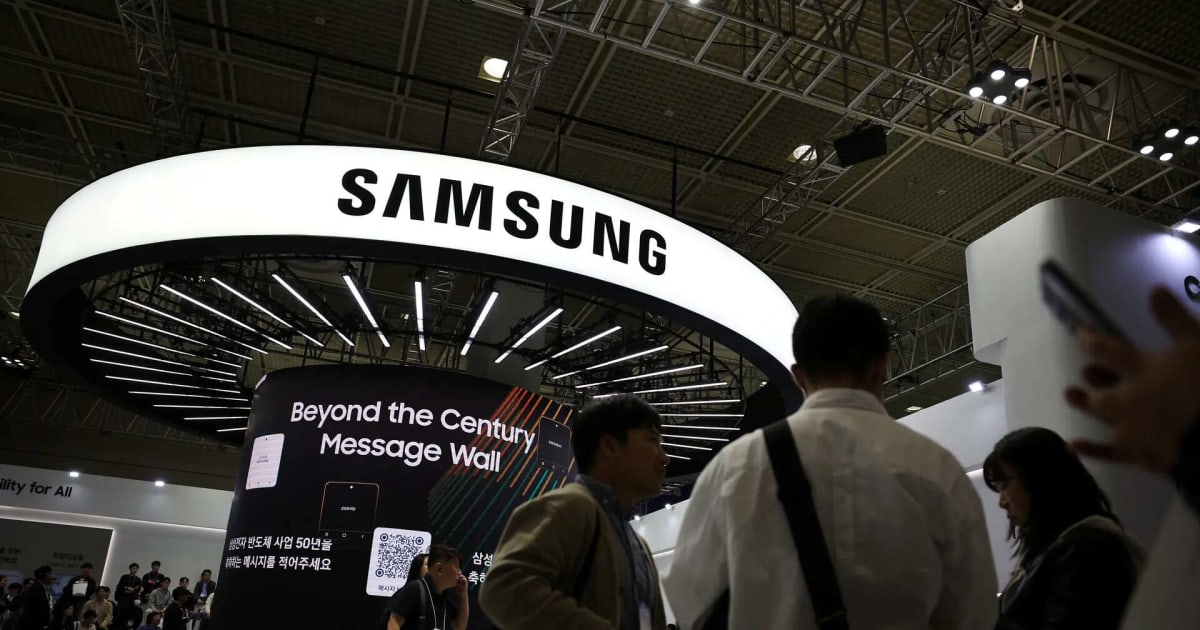
Samsung Electronics has fast-tracked its Yongin semiconductor mega-cluster to 2029, signaling a massive shift in global chip supply dynamics. We analyze the ripple effects on India’s semiconductor ambitions, the threat of an impending memory glut, and the specific impact on key NSE-listed tech and manufacturing entities.
The South Korean Silicon Gambit: Why 2029 Matters
In a move that has sent shockwaves through global capital markets, Samsung Electronics has officially pulled forward the operational timeline for its Yongin mega-fab complex to 2029. This is not merely an infrastructure project; it is a geopolitical and economic statement. By accelerating capital expenditure (CAPEX) in the face of cyclical memory chip volatility, Samsung is forcing a 'survival of the fittest' scenario upon the global semiconductor landscape.
Historically, aggressive capacity expansion during periods of market uncertainty—much like the 2022 inventory glut that saw DRAM prices crater by over 40%—often leads to a 'commoditization trap.' However, Samsung’s pivot suggests a long-term bet on AI-driven high-bandwidth memory (HBM) demand. For the Indian market, this creates a double-edged sword: the threat of massive price dumping from Korean conglomerates versus the opportunity for Indian firms to capture the 'China+1' electronics manufacturing migration.
How will the Samsung 2029 fab expansion impact Indian semiconductor ambitions?
India’s semiconductor mission, anchored by the $10 billion PLI (Production Linked Incentive) scheme, is currently in its nascent stage. Samsung’s move creates a 'crowding out' effect. As global equipment manufacturers (like ASML or Applied Materials) prioritize massive orders for the Yongin cluster, smaller, emerging hubs in India may face lead-time delays for critical lithography and deposition tools.
Furthermore, the memory chip market is notoriously cyclical. If Samsung’s expansion leads to a supply glut by 2029, global price floors could collapse, rendering smaller, less-efficient domestic chip assembly units uncompetitive. Indian firms must pivot from simple assembly to value-added design-led manufacturing (DLM) to insulate themselves from these global price shocks.
Stock-by-Stock Analysis: The Ripple Effect on NSE/BSE
The impact of this shift is asymmetric across the Indian IT and manufacturing sectors. We have identified four key tickers sensitive to this global supply chain reconfiguration:
- TATAELXSI (Tata Elxsi): As a leader in embedded product design, Tata Elxsi stands to benefit from the software-defined silicon trend. If Samsung’s new fab focuses on AI-integrated chips, the demand for specialized software validation and testing services will surge. Current P/E: ~65x. Watch for volume growth in their transportation and media verticals as they integrate more AI-on-chip capabilities.
- HCLTECH (HCL Technologies): HCL’s 'Semicon' vertical is a direct beneficiary of global fab automation. As Samsung accelerates its facility build-out, the demand for industrial IoT (IIoT) and smart factory software solutions—HCL’s core competency—will likely see a sustained order inflow.
- DIXON (Dixon Technologies): Dixon is the bellwether for India’s EMS growth. While they are consumer electronics-focused, a global memory glut (lowered chip prices) could actually expand their operating margins in the short term by reducing input costs for televisions and smartphones.
- CYIENT (Cyient): With a strong footprint in design-led manufacturing for aerospace and medical devices, Cyient faces a 'wait and see' scenario. If the global chip supply stabilizes, their ability to provide integrated chip design services becomes a high-margin moat.
Expert Perspective: The Bull vs. Bear Case
The Bull Case: Analysts argue that Samsung’s expansion signals an absolute floor for memory chip demand. For Indian tech firms, this is a rising tide that lifts all boats—more chips mean more devices, more software integration, and higher demand for Indian engineering services.
The Bear Case: Contrarians warn of a 'Capex Trap.' If Samsung overbuilds, we are looking at a repeat of the 2022-2023 memory crash, which saw Nifty IT index volatility spike to 15-year highs. Smaller semiconductor players in India may find themselves unable to compete with the sheer scale and state-backed financing of South Korean conglomerates.
Actionable Investor Playbook: 2024-2029
Investors should adopt a 'barbell strategy' in response to this news:
- Accumulate Design-Led Players: Focus on firms with strong IP in chip architecture (like Tata Elxsi or Cyient). They are less vulnerable to commodity price crashes than pure-play assembly units.
- Monitor EMS Margins: For Dixon and similar manufacturing stocks, watch for quarterly margin expansions. If memory prices drop, look for a 150-200 bps improvement in EBITDA margins over the next 4-6 quarters.
- Time Horizon: This is a 5-year structural play. Avoid short-term volatility induced by quarterly memory price fluctuations. Build positions during market corrections when the 'overcapacity' narrative dominates news cycles.
Risk Matrix
| Risk | Impact | Probability |
|---|---|---|
| Memory Supply Glut | High | Medium |
| Equipment Supply Chain Squeeze | Medium | High |
| Geopolitical Trade Barriers | High | Low |
| Indian PLI Policy Delays | Medium | Medium |
What to Watch Next
The next major catalyst will be the Q3 Global Semiconductor Equipment Billings report. If year-over-year growth exceeds 12%, it confirms that Samsung and its peers are locked in a high-stakes CAPEX battle. Additionally, monitor the Ministry of Electronics and IT (MeitY) updates regarding the next phase of the semiconductor incentive rollout; any deviation from the current schedule will be a critical signal for domestic manufacturing resilience.
Disclaimer: This content is generated by WelthWest Research Desk based on publicly available reports and is for informational purposes only. It does not constitute financial advice, investment recommendations, or an offer to buy or sell securities. Always consult a qualified financial advisor before making investment decisions.


