Key Takeaway
SBI is transitioning from a legacy lender to a digital financial conglomerate, signaling a structural shift that could close the 40% valuation gap with private peers and trigger a multi-year re-rating across the PSU banking index.
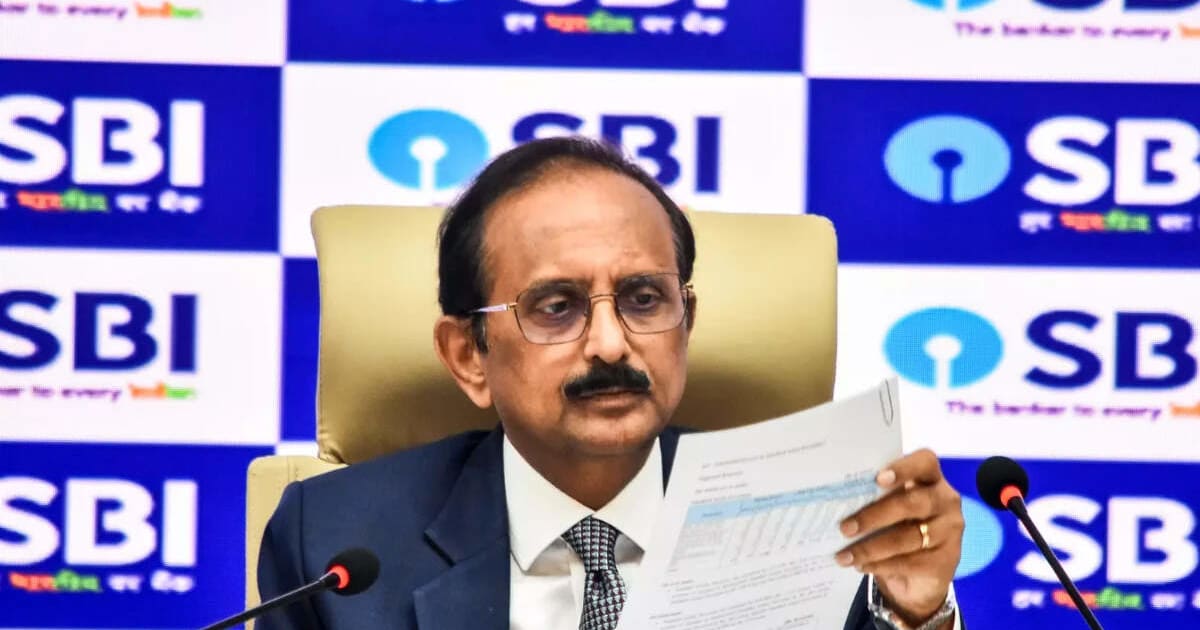
State Bank of India (SBIN) Chairman CS Setty has officially signaled that the market is undervaluing the nation's largest lender despite record-breaking fundamentals. This analysis explores how digital platforms like Yono and subsidiary value unlocking are transforming SBI into a high-RoE powerhouse, creating a massive 'catch-up' opportunity for the entire PSU banking sector.
The Great PSU Re-rating: Why the 'SBI Discount' is No Longer Justified
For over a decade, the Indian banking narrative was dominated by the 'Private vs. Public' divide. Private lenders commanded premium valuations for their efficiency and asset quality, while Public Sector Undertakings (PSUs) were relegated to the 'value trap' bin. However, the recent proclamation by State Bank of India (SBIN) Chairman CS Setty marks a definitive turning point. Setty’s call for a valuation re-rating isn't just corporate optimism; it is a data-backed challenge to the status quo of the Nifty Bank index.
Currently, SBI trades at a Price-to-Book (P/B) ratio significantly lower than peers like HDFC Bank and ICICI Bank, despite delivering Return on Assets (RoA) and Return on Equity (RoE) that are now firmly in the private-sector territory. As the anchor of the Indian financial system, a re-rating of SBI doesn't happen in a vacuum—it serves as a catalyst for a sector-wide rerating of the Nifty PSU Bank index, potentially shifting billions in capital from overvalued private players to undervalued state-backed giants.
The Fundamentals: Beyond the 'Lender of Last Resort' Tag
To understand why SBI is demanding a higher multiple, one must look at the quality of its balance sheet. Historically, SBI’s Gross Non-Performing Assets (GNPA) were a drag on its valuation. Today, the bank has cleaned its house. With GNPA levels hovering around 2.2% to 2.5% and a Provision Coverage Ratio (PCR) exceeding 75%, the credit risk profile of SBI is the healthiest it has been in twenty years. In FY24, SBI reported a net profit exceeding ₹61,000 crore, making it one of the most profitable corporations in India.
When we look at the Price-to-Earnings (P/E) ratio, SBI often trades at 8x-10x forward earnings, while its private counterparts frequently command 15x-20x. This 50% discount persists despite SBI’s systemic importance and its massive deposit franchise, which provides a lower cost of funds—a critical advantage in a high-interest-rate environment.
How will Yono 2.0 and Digital Transformation impact SBI’s stock price?
One of the strongest arguments for a valuation re-rating is the 'Yono Factor.' SBI is no longer just a bank; it is a tech-enabled financial ecosystem. Yono (You Only Need One) has evolved into a powerhouse with over 70 million registered users. If Yono were a standalone fintech startup, its valuation would likely rival that of the largest listed Indian unicorns.
- Digital Sourcing: Over 60% of retail savings accounts and nearly 40% of personal loans are now sourced through Yono, drastically reducing the cost of acquisition.
- Data Monetization: The bank is sitting on a goldmine of transaction data that allows for precision cross-selling of insurance, credit cards, and mutual funds.
- Yono 2.0: The upcoming iteration of the platform aims to integrate more third-party services and AI-driven personalized banking, further narrowing the gap between SBI and 'digital-first' private competitors.
Investors are starting to realize that SBI should be valued as a financial conglomerate. The Sum-of-the-Parts (SOTP) valuation, which includes SBILIFE (SBI Life Insurance), SBICARD (SBI Cards & Payment Services), and its asset management arm, suggests that the core banking business is being valued at a steep discount by the market.
Historical Parallels: Lessons from the 2021-2022 PSU Rally
We have seen this movie before. In late 2021, a similar sentiment shift occurred when PSU banks began reporting consistent quarterly profits after years of losses. During that period, the Nifty PSU Bank Index outperformed the broader Nifty 50 by nearly 40% in a single year. The current setup is even more potent because it is driven by fundamental RoA expansion rather than just a recovery from a low base. Last time SBI crossed the ₹600 mark, it triggered a massive 'catch-up' rally in mid-tier PSU banks like Bank of Baroda (BANKBARODA) and Canara Bank (CANBK).
Stock-by-Stock Breakdown: The Winners of the Re-rating Cycle
The call for re-rating will create a ripple effect across the NSE. Here is how specific stocks are positioned:
1. State Bank of India (NSE: SBIN)
The primary beneficiary. With a market cap exceeding ₹7 lakh crore, any expansion in P/B multiples from the current ~1.6x to a more reasonable 2.0x could see the stock price targeting the ₹1,000 mark. The focus here is on sustainable RoAs of 1% and above.
2. SBI Cards and Payment Services (NSE: SBICARD)
As the parent bank gains valuation, its subsidiaries often see renewed institutional interest. SBICARD remains a high-growth play on India's discretionary spending. If SBI’s digital push succeeds, the synergy in card issuance through Yono will provide a massive tailwind for this stock.
3. Bank of Baroda (NSE: BANKBARODA)
Historically, BoB tracks SBI's movements with a high correlation. It is currently one of the most efficiently run PSU banks after SBI, with a robust corporate book. If the sector re-rates, BoB is often the 'beta play' that delivers higher percentage gains than the anchor stock.
4. Punjab National Bank (NSE: PNB)
PNB represents the 'turnaround' play. While its fundamentals are not as pristine as SBI's, a sector-wide valuation lift helps PNB more in terms of percentage growth as it moves from a 'deep value' to a 'fair value' zone. Watch for its credit-to-deposit ratio improvements.
5. Canara Bank (NSE: CANBK)
Canara Bank has been a dark horse in the PSU space, consistently delivering strong credit growth. Its focus on RAM (Retail, Agriculture, and MSME) sectors aligns with the government's current economic priorities, making it a favorite for institutional investors looking for PSU exposure beyond SBI.
Are PSU bank stocks a buy-on-dip opportunity?
The short answer is yes, but with a caveat. The 'buy-on-dip' strategy for PSU banks works best when the macroeconomic indicators—specifically credit growth and interest rate cycles—are in sync. Currently, India is seeing credit growth in the 14-16% range, while deposit growth is lagging at 11-12%. This 'liquidity gap' is the primary reason for recent volatility.
"The market is finally recognizing that the 'Public Sector' tag does not mean 'Public Service' at the cost of 'Profitability.' The efficiency gap has closed; the valuation gap is next." — Senior Research Analyst, WelthWest
Expert Perspective: The Bull vs. Bear Case
The Bull Case: Bulls argue that the structural reforms in the Indian banking sector (Insolvency and Bankruptcy Code, National Asset Reconstruction Company) have permanently lowered the credit cost for PSU banks. They believe SBI's 18% RoE is sustainable, justifying a valuation closer to 2.2x P/B.
The Bear Case: Contrarians point to the rising cost of deposits. As the RBI maintains a 'withdrawal of accommodation' stance, banks are forced to raise deposit rates to fund credit growth. This leads to Net Interest Margin (NIM) compression. If NIMs drop by 15-20 basis points, the earnings growth could stall, making the re-rating argument harder to sell to conservative FIIs (Foreign Institutional Investors).
Actionable Investor Playbook: Navigating the Re-rating
- Entry Points: For long-term investors, SBIN shows strong support in the ₹780-₹810 range. Accumulating on dips toward these levels offers a favorable risk-reward ratio.
- Time Horizon: This is not a 'swing trade.' A structural re-rating typically plays out over 18 to 24 months as the market digests multiple quarters of consistent performance.
- Sector Rotation: Watch for capital moving out of high-P/E private banks into PSU banks. If HDFC Bank remains sideways while SBI climbs, it confirms the rotation is underway.
Risk Matrix: What Could Go Wrong?
- Liquidity Tightening (Probability: High | Impact: Medium): If the RBI keeps liquidity tight, the cost of funds will rise, eating into the very profits that fuel the re-rating.
- Asset Quality Slippage (Probability: Low | Impact: High): Any unexpected spike in MSME or Agriculture bad loans due to climate or economic shocks would immediately halt the re-rating narrative.
- Government Policy (Probability: Medium | Impact: Medium): While the current government has been supportive of PSU autonomy, any return to 'directed lending' or populist schemes could hurt valuations.
What to Watch Next: The Catalysts
Investors should keep an eye on three key triggers: First, the RBI Monetary Policy Committee (MPC) meetings—any hint of a rate cut will be a massive positive for bank valuations. Second, the quarterly NIM data; if SBI can maintain NIMs above 3.2% despite rising deposit costs, the re-rating is almost guaranteed. Finally, any news regarding the monetization of Yono or an IPO for SBI's mutual fund arm will act as a significant value-unlocking event for SBIN shareholders.
Disclaimer: This content is generated by WelthWest Research Desk based on publicly available reports and is for informational purposes only. It does not constitute financial advice, investment recommendations, or an offer to buy or sell securities. Always consult a qualified financial advisor before making investment decisions.