Key Takeaway
The SEC’s crackdown on cross-border options abuse signals a new era of global algorithmic surveillance. For Indian investors, this portends increased compliance costs and potential liquidity tightening for foreign-linked derivative desks.
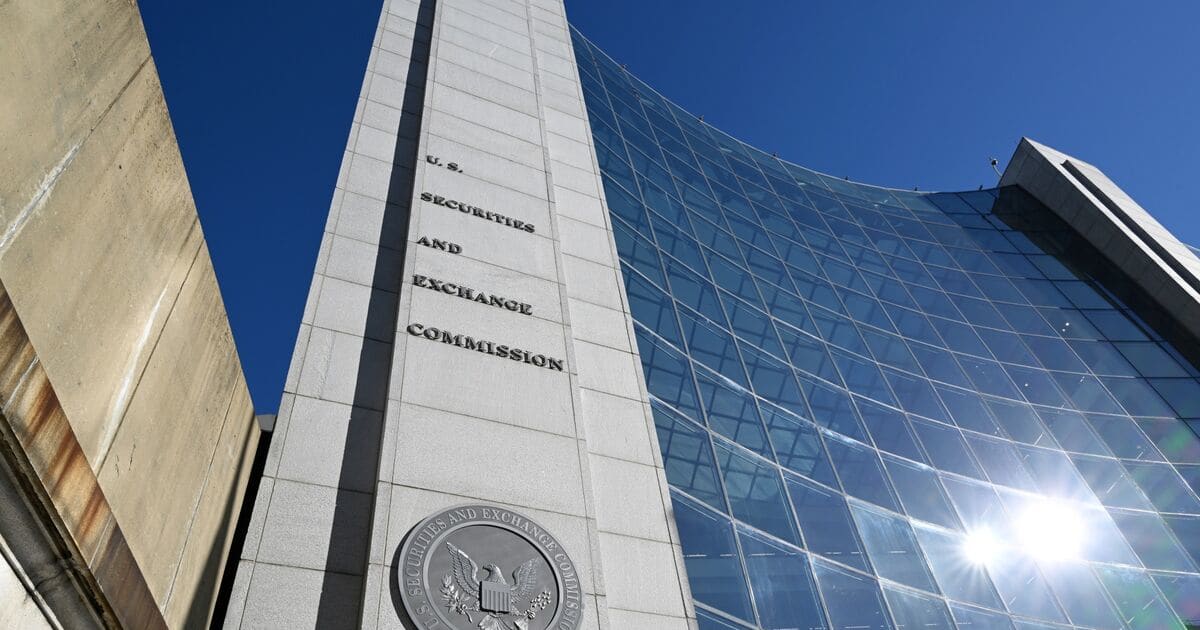
A $100M SEC investigation into insider trading linked to Chinese regulatory shifts has exposed systemic risks in global derivative markets. We analyze how this scrutiny impacts the NSE, specifically targeting major banking heavyweights and the future of cross-border capital flows.
The Anatomy of a $100M Insider Trading Probe
The Securities and Exchange Commission (SEC) has recently launched a high-profile investigation into a $100 million insider trading scheme, allegedly exploiting non-public information regarding Chinese regulatory shifts to manipulate cross-border options markets. While the investigation centers on US-based trading desks, the implications are global. This is not merely an isolated case of market abuse; it is a structural stress test for the interconnected nature of international derivatives.
For the Indian financial ecosystem, this event acts as a bellwether for how the Securities and Exchange Board of India (SEBI) and the Reserve Bank of India (RBI) may soon tighten oversight on Foreign Portfolio Investor (FPI) flows and derivative participation. When global liquidity is threatened by regulatory friction, the first assets to experience volatility are those with the highest foreign institutional ownership—namely, the Indian banking sector.
Why does an SEC investigation matter to the Nifty 50?
The core of this issue lies in regulatory arbitrage. Historically, when the SEC tightens the screws on cross-border information leakage, liquidity providers often retreat to 'safe' markets or deleverage to avoid regulatory scrutiny. In 2022, when similar probes into global hedge fund activity surfaced, the Nifty 50 saw a temporary 4% dip in banking indices as foreign desks trimmed exposure to emerging markets to meet margin calls in the US. The current probe threatens to trigger a similar cycle of 'de-risking' by global high-frequency trading (HFT) firms, which are the primary liquidity providers for Indian banking stocks.
How will increased regulatory oversight affect Indian bank stocks?
Increased scrutiny typically leads to higher operational costs for brokerages. As compliance burdens grow, the cost of executing large-block trades for foreign entities rises. This creates a drag on the price-to-earnings (P/E) ratios of stocks heavily traded by FPIs. We anticipate a shift in volume from HFT-heavy derivatives toward cash-market delivery, which may dampen short-term momentum in banking stocks while potentially stabilizing long-term valuations.
Market Impact: The Sector-Level Breakdown
The immediate winners in this environment are regulatory technology (RegTech) firms and cybersecurity providers, as financial institutions scramble to implement advanced surveillance tools to detect anomalous trading patterns. Conversely, cross-border brokerage firms and HFT desks are facing a 'liquidity crunch' scenario. These desks, which often act as market makers for NSE-listed blue chips, are likely to widen their spreads, increasing the cost of trading for retail and institutional investors alike.
Stock-by-Stock Analysis: NSE Impact
- HDFCBANK (HDFC Bank): With a market cap exceeding ₹12 trillion, HDFC Bank remains the primary vehicle for FPIs. Increased scrutiny on cross-border derivatives may lead to a temporary outflow, putting pressure on its current P/E of ~19x. Investors should watch for support at the 200-day moving average.
- ICICIBANK (ICICI Bank): ICICI has shown robust asset quality, but its high correlation with foreign derivative flows makes it sensitive to liquidity tightening. Expect volatility if FPIs reduce their net long positions in the banking sector.
- SBIN (State Bank of India): As a public sector giant, SBI is less reliant on foreign derivative liquidity than its private peers. It may act as a defensive hedge during periods of global market turbulence.
- KOTAKBANK (Kotak Mahindra Bank): Given its focus on premium banking and wealth management, Kotak may face margin pressures if its international investment banking arm is forced to upgrade compliance infrastructure in response to the SEC probe.
Expert Perspective: The Bull vs. Bear Case
The Bull Case: Regulators cleaning up the market ultimately fosters trust. Increased transparency will attract long-term sovereign wealth funds, reducing the 'hot money' volatility that has plagued the Nifty in recent quarters.
The Bear Case: The 'compliance tax' is real. By choking off the HFT firms that provide the lifeblood of liquidity to Indian markets, the SEC’s actions could inadvertently cause a liquidity vacuum, leading to flash crashes and wider bid-ask spreads for the average investor.
Actionable Investor Playbook
Investors should move away from high-beta derivative strategies and focus on cash-market accumulation of banking stocks with strong domestic deposit bases. Entry Point: Look for a 5-7% correction in banking indices to initiate long-term positions. Horizon: This is a 12-18 month play; do not look for immediate alpha.
Risk Matrix
- Regulatory Overhang (High Probability): Further SEC subpoenas could lead to a 'contagion effect' across global brokerages, triggering a broad sell-off.
- Liquidity Tightening (Medium Probability): Reduced HFT activity could lead to higher volatility in Nifty Bank index options.
- Compliance Cost Spike (High Probability): Indian brokerages may be forced to pass down costs to retail clients, reducing overall market participation.
What to watch next
Keep a close eye on the SEC’s next scheduled filings regarding the 'Susquehanna' probe and any corresponding guidance from SEBI. Additionally, watch the monthly FPI flow data releases; any sudden reversal in net inflows for the banking sector will be the primary signal that the global regulatory shift is impacting the NSE in real-time.
Disclaimer: This content is generated by WelthWest Research Desk based on publicly available reports and is for informational purposes only. It does not constitute financial advice, investment recommendations, or an offer to buy or sell securities. Always consult a qualified financial advisor before making investment decisions.