Key Takeaway
The SpaceX mega-IPO acts as a liquidity vacuum, forcing a global re-rating of space-tech valuations. While it creates a 'rising tide' effect for the satellite sector, Indian investors must prepare for short-term FII outflows as capital shifts toward this historic US listing.
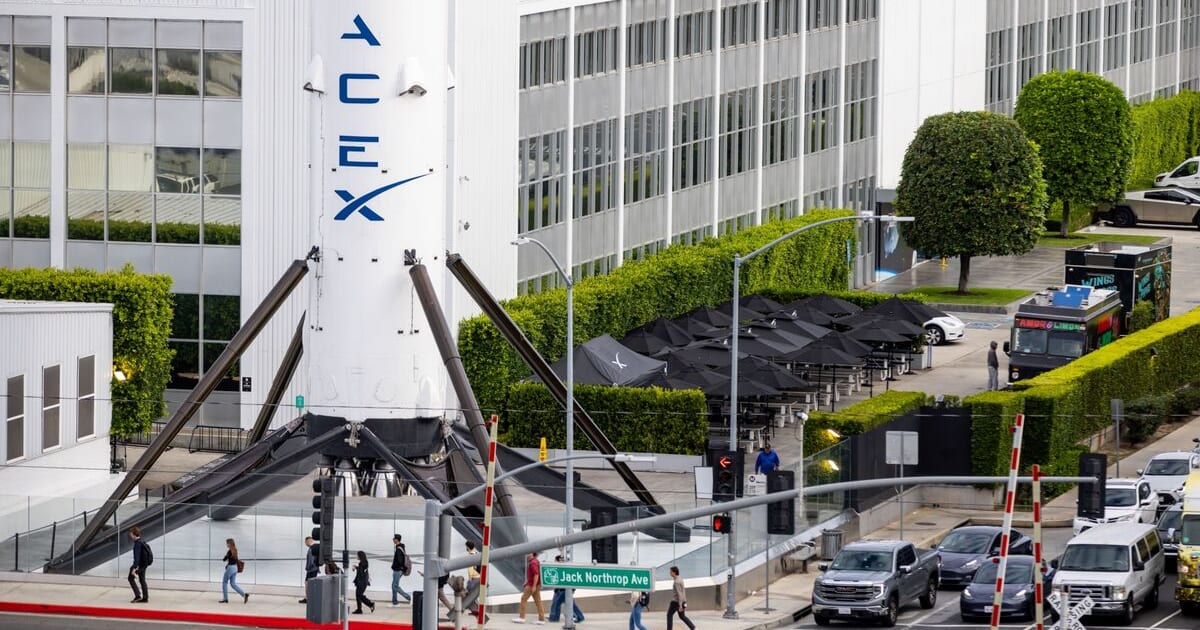
SpaceX’s impending $75 billion IPO marks the largest capital event in aerospace history. As the firm pivots toward AI-driven launch and Starlink expansion, we analyze the ripple effects on Indian defence and precision engineering stocks, evaluating the trade-off between sector validation and liquidity drainage.
The $75 Billion Gravity Well: Why SpaceX Changes Everything
SpaceX is not merely launching rockets; it is launching a new asset class. By targeting a $75 billion IPO, Elon Musk is signaling an aggressive push into the convergence of AI-driven satellite constellations and autonomous space logistics. For global markets, this represents a capital-intensive 'black hole' that will inevitably pull liquidity from emerging markets, including India, as institutional investors rebalance portfolios to capture the 'Musk Premium.'
How will the SpaceX IPO impact Indian space-tech stocks?
The correlation between SpaceX’s valuation and Indian space-tech is direct and binary. Historically, when major US tech giants go public, we observe a temporary contraction in FII (Foreign Institutional Investor) inflows into mid-cap Indian industrials as capital migrates to the primary market. However, the validation effect is profound. A $75 billion valuation provides a 'valuation floor' for the entire aerospace supply chain, allowing Indian firms to command higher P/E ratios based on their role in the global satellite manufacturing ecosystem.
The Sectoral Ripple Effect
The Indian space-tech sector has transitioned from a government-led model to a commercial powerhouse. We are currently seeing a CAGR of 13% in the Indian space economy, but the SpaceX IPO will likely compress this timeline as global players seek to diversify their supply chains away from China, placing the spotlight firmly on India’s 'Make in India' defence corridors.
Stock-by-Stock Analysis: The Indian Beneficiaries and Risks
As the SpaceX IPO approaches, we have identified four core players in the NSE/BSE ecosystem that will feel the immediate impact:
- MTAR Technologies (MTARTECH): As a leader in precision engineering for rocket engines and thrusters, MTAR is the closest proxy to SpaceX’s launch capability. Their high-margin complex manufacturing is essential for any global space entity looking to outsource non-core production.
- Data Patterns (DATAPAT): Focused on defence electronics and satellite communication, Data Patterns stands to benefit as SpaceX’s Starlink expansion forces Indian telecom incumbents to increase R&D spending on satellite-based broadband, driving demand for local hardware.
- Astra Microwave Products (ASTRAMICRO): Satellite communication is the backbone of the Starlink model. Astra’s expertise in RF and microwave systems makes them an ideal candidate for integration into the global satellite supply chain.
- Hindustan Aeronautics Ltd (HAL): While a behemoth, HAL’s role in the Indian space program provides the institutional stability that benefits from the sector-wide valuation re-rating. Expect higher institutional interest as the 'Space' narrative gains traction.
Is the SpaceX IPO a threat to Nifty liquidity?
The primary risk is a 'Liquidity Drain.' During the 2022 global tech IPO cycle, we saw Nifty IT indices face a 4-6% correction as capital was redirected to high-growth US tech assets. If the SpaceX IPO is perceived as the 'AI play of the decade,' FIIs may reduce their exposure to Indian mid-cap tech stocks to fund their participation in the SpaceX offering. This could lead to a short-term valuation dip for Indian stocks with high foreign institutional holding.
The Contrarian View: Bulls vs. Bears
The Bull Case: The IPO acts as a massive signal that space-tech is a viable, high-growth asset class. This will lead to a 'multiplier effect' where Indian startups receive increased venture capital interest, effectively decoupling from the volatility of the public markets.
The Bear Case: SpaceX’s integration of a Bitcoin treasury adds significant balance sheet volatility. If Bitcoin crashes, the correlation between SpaceX stock and crypto-assets could trigger a sell-off that spills over into the broader tech sector, hurting Indian firms with high beta to global tech trends.
Actionable Investor Playbook: Navigating the Launch
Investors should adopt a three-pronged strategy:
- Strategic Accumulation: Look for dips in MTAR and Data Patterns. If the market corrects due to FII outflows, these are your entry points.
- Sector Diversification: Avoid over-exposure to pure-play telecom if Starlink’s regulatory clearance in India accelerates, as traditional telcos may face severe margin pressure.
- Monitor the 'Bitcoin-Space' Correlation: Keep a close eye on SpaceX’s quarterly filings regarding their digital asset holdings. If this becomes a significant portion of their market cap, adjust your risk exposure accordingly.
Risk Matrix: Assessing the Volatility
- Liquidity Contraction (Probability: High): Expect a 3-5% outflow from Indian tech-focused mid-caps in the 30 days preceding the IPO.
- Regulatory Overhang (Probability: Medium): Starlink’s entry into the Indian market may face bureaucratic friction, potentially delaying the projected revenue growth for Indian satellite component suppliers.
- Macro-Economic Sensitivity (Probability: Low): Should the RBI maintain high interest rates, the cost of capital for Indian space-tech firms will remain elevated, potentially dampening the 'valuation re-rating' effect.
What to Watch Next
The critical data points to watch are the SEC F-1 filing dates and the Department of Telecommunications (DoT) updates on satellite spectrum allocation in India. These will serve as the primary catalysts for price action. Keep your focus on the Q3 earnings reports for the aforementioned Indian firms; any mention of 'global aerospace supply chain integration' is a leading indicator of future growth.
Disclaimer: This content is generated by WelthWest Research Desk based on publicly available reports and is for informational purposes only. It does not constitute financial advice, investment recommendations, or an offer to buy or sell securities. Always consult a qualified financial advisor before making investment decisions.